
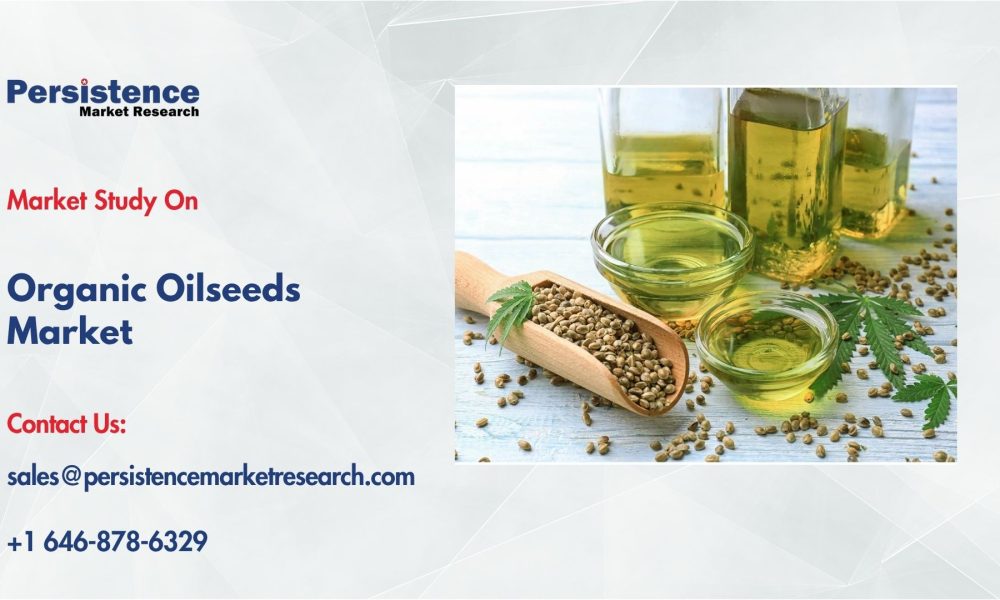
The global organic oilseeds market is witnessing strong growth momentum, driven by the rising consumer inclination toward organic and chemical-free food products. According to the latest market analysis by Persistence Market Research, the market size is anticipated to be valued at US$8.8 billion in 2025 and is projected to reach US$14.2 billion by 2032, expanding at a steady CAGR of 7.1% during the forecast period from 2025 to 2032. The growing demand for organic edible oils, coupled with heightened awareness of health benefits associated with natural ingredients, is fueling the expansion of the market across both developed and developing economies.
Organic oilseeds, including soybean, sunflower, rapeseed, and flaxseed, are gaining immense popularity as consumers increasingly prefer organic, non-GMO, and sustainable alternatives to conventional products. The demand is further driven by the surge in vegan and plant-based diets, which rely heavily on organic oils and oilseed derivatives as essential ingredients. Additionally, government initiatives promoting organic farming and stringent restrictions on synthetic pesticides and fertilizers are supporting the market’s robust growth trajectory.
The increasing application of organic oilseeds in food processing, cosmetics, pharmaceuticals, and biofuel industries underscores their versatile utility. Furthermore, innovations in cold-pressing and extraction technologies have enhanced oil quality, shelf life, and nutrient retention, encouraging manufacturers to expand production capacities and explore premium organic markets globally.
Receive Sample of Research Report @ https://www.persistencemarketresearch.com/samples/11257
What are the key factors driving the global organic oilseeds market growth?
The growth of the organic oilseeds market is primarily driven by the rising health consciousness among consumers and the shift toward chemical-free and sustainable food sources. Increasing disposable incomes, urbanization, and awareness about the harmful effects of synthetic fertilizers and GMOs have pushed consumers to prefer organic products. Additionally, supportive government policies for organic farming and the expansion of organized retail channels for organic products are contributing to market expansion.
How are technological advancements influencing organic oilseeds production?
Technological integration in agriculture, such as precision farming and sustainable cultivation practices, is playing a key role in enhancing yield and quality. The use of AI-driven soil monitoring, IoT-enabled irrigation systems, and blockchain-based supply chain tracking ensures transparency and efficiency. These advancements are helping farmers optimize input usage, minimize waste, and maintain certification standards required for organic production, thereby strengthening the global supply chain for organic oilseeds.
Segmentation Analysis
The organic oilseeds market is segmented by type, application, and distribution channel, reflecting the diversity of consumer demand and end-use sectors.
By Type:
Key segments of the market include organic soybean, sunflower seed, rapeseed, flaxseed, and others. Among these, organic soybean dominates the global market, accounting for the largest share due to its wide application in edible oils, animal feed, and processed food products. Organic soybean oil is a preferred choice for health-conscious consumers, owing to its high protein content and omega fatty acids. The flaxseed segment, however, is projected to exhibit the fastest growth rate during the forecast period, attributed to its increasing use in nutritional supplements, bakery products, and dietary formulations.
By Product/Application:
Based on product or application, the market encompasses food and beverages, personal care and cosmetics, animal feed, and biofuels. The food and beverage segment leads the market, driven by the growing inclusion of organic oils in cooking, salad dressings, and packaged food items. The personal care and cosmetics segment is also witnessing notable growth, as manufacturers increasingly use organic oils for their antioxidant and skin-enhancing properties. Additionally, the biofuel industry’s growing focus on renewable energy sources has boosted the demand for organic oilseeds such as sunflower and rapeseed for biodiesel production.
By Distribution Channel:
The market is categorized into online retail, supermarkets/hypermarkets, and specialty stores. Online retail channels are rapidly gaining traction as consumers prefer the convenience of e-commerce platforms that offer certified organic brands with verified traceability. Supermarkets and specialty organic stores continue to play a vital role in offering premium organic oilseed-based products to health-conscious buyers.
Regional Insights
Geographically, North America holds the dominant share in the global organic oilseeds market, attributed to the widespread adoption of organic food consumption, strong regulatory support, and the presence of established organic brands. The U.S. remains a leading producer and consumer of organic soybeans and sunflower oil, supported by advanced farming techniques and government-certified organic farming programs.
Europe follows closely, driven by stringent food safety regulations, increased organic labeling awareness, and growing consumer preference for non-GMO oils. Germany, France, and the U.K. are major contributors, as organic oils are becoming mainstream in packaged food and personal care applications.
Asia Pacific, however, is projected to emerge as the fastest-growing region during the forecast period. Rising health consciousness, expanding middle-class populations, and government initiatives to promote sustainable agriculture are fueling the demand in countries such as India, China, and Japan. In particular, India’s National Programme for Organic Production (NPOP) and China’s emphasis on reducing chemical inputs in agriculture are supporting large-scale organic oilseed cultivation.
Latin America and the Middle East & Africa are also gradually emerging as potential markets, supported by improving agricultural infrastructure and growing export opportunities for organic products.
Unique Features and Innovations in the Market
Modern organic oilseed production is distinguished by its emphasis on sustainability, quality assurance, and traceability. The integration of digital farming technologies, including AI, IoT, and data analytics, has transformed organic farming practices. AI-driven predictive models help farmers determine optimal sowing times and nutrient requirements, reducing dependency on traditional farming methods. IoT sensors monitor soil health and water levels in real time, ensuring resource efficiency and consistency in yield.
Blockchain technology is also revolutionizing the market by ensuring transparent supply chains. Consumers can trace the journey of organic oilseeds from farm to shelf, enhancing brand trust and market credibility. Furthermore, companies are investing in cold-press extraction and advanced purification processes to retain the natural flavor, aroma, and nutritional profile of organic oils. These innovations are elevating product quality while aligning with clean-label and eco-conscious consumer preferences.
Market Highlights
The global shift toward sustainability and healthy living is at the heart of organic oilseed market expansion. Businesses and industries are increasingly adopting organic oilseeds to align with green production standards and eco-labeling requirements. The rise in vegan and vegetarian lifestyles has amplified the need for plant-based oils and proteins, creating significant opportunities for market players.
Regulatory frameworks favoring organic certifications are also playing a crucial role. Governments across multiple regions are offering subsidies and incentives for organic cultivation, minimizing barriers for farmers transitioning from conventional to organic farming. Additionally, the growing importance of carbon-neutral practices and sustainable sourcing is motivating companies to prioritize organic oilseeds in their production chains. Cost reduction through localized organic farming and shorter supply chains further enhances profitability and market competitiveness.
Do You Have Any Query or Specific Requirement? Request Customization of Report: https://www.persistencemarketresearch.com/request-customization/11257
Key Players and Competitive Landscape
The global organic oilseeds market is moderately fragmented, with several key players focusing on strategic collaborations, technological advancements, and product innovations to strengthen their market presence.
Cargill, Incorporated remains a major participant, leveraging its global distribution network and investments in sustainable sourcing initiatives. The company continues to expand its portfolio of organic-certified oils to meet rising consumer demand.
Archer Daniels Midland Company (ADM) is emphasizing technological integration in processing and extraction, ensuring minimal nutrient loss and enhanced oil quality. ADM’s focus on expanding its organic soybean production base across North America has bolstered its market dominance.
Bunge Limited is actively expanding its organic oilseed product line through partnerships with regional farmers and co-operatives, focusing on traceability and clean-label production.
Ag Processing Inc. (AGP) has been investing in advanced extraction and refining technologies to improve product quality and cater to growing demand from food and cosmetics manufacturers.
Louis Dreyfus Company (LDC) is strengthening its position through sustainability-driven sourcing and global trade expansion, particularly in emerging markets such as Asia Pacific and Latin America.
Other notable players include The Andersons Inc., SunOpta Inc., Grain Millers Inc., Hain Celestial Group, and Organic Valley, all of which are emphasizing product differentiation, sustainability certification, and consumer engagement strategies to maintain competitiveness.
Outlook
The future of the global organic oilseeds market appears promising, supported by strong consumer demand for natural and environmentally responsible products. The convergence of advanced technology with sustainable agricultural practices is expected to redefine the production and supply landscape. With increasing consumer awareness, stringent certification processes, and global policy alignment toward organic farming, the market is poised for substantial growth through 2032.
Emerging economies will play a pivotal role in shaping future market dynamics, offering new opportunities for investment, innovation, and expansion. The growing integration of artificial intelligence, blockchain, and automation will ensure consistent quality, improved traceability, and enhanced consumer confidence. As the industry continues to prioritize health, transparency, and sustainability, the organic oilseeds market is set to become a cornerstone of the global food and agricultural economy.
Explore the Latest Trending Research Reports:




