
The global opioids market is a rapidly evolving sector within the pharmaceutical and healthcare industry, driven by the rising prevalence of chronic pain, cancer-related discomfort, and post-surgical pain management needs. Opioids are potent analgesics that work by binding to specific receptors in the brain, spinal cord, and other parts of the body, effectively reducing the perception of pain. The market includes both natural and synthetic opioids, encompassing widely recognized drugs such as morphine, oxycodone, hydrocodone, and fentanyl. Increasing awareness of pain management therapies, coupled with the growing adoption of opioids in advanced healthcare settings, has significantly bolstered the demand for these medications globally.
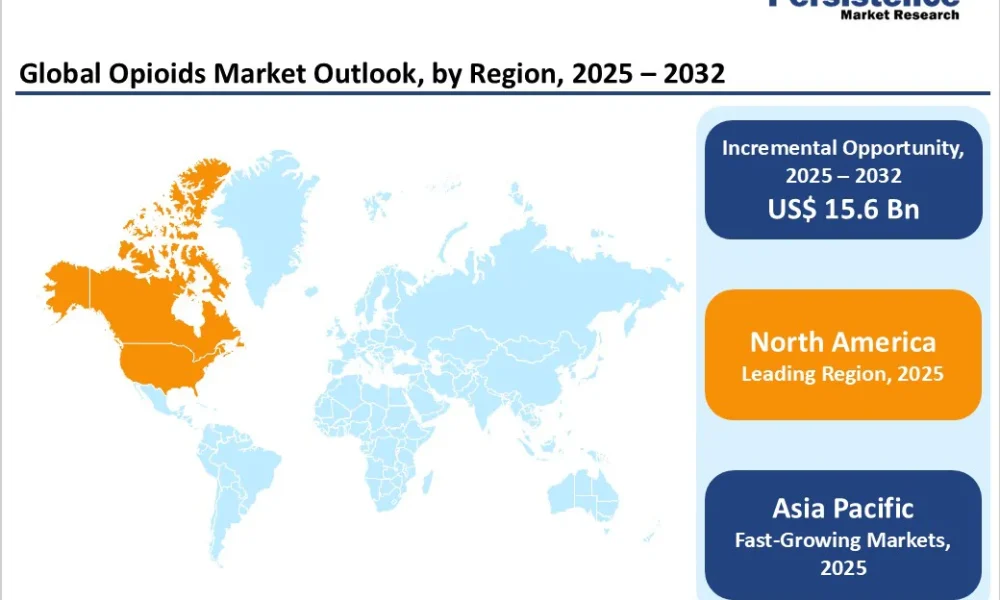
In terms of market statistics, the global opioids market is expected to reach a valuation of US$44.7 billion by 2025, expanding to US$60.3 billion by 2032 at a steady CAGR of 4.4%. The market growth is primarily driven by factors such as an aging population prone to chronic pain conditions, rising incidences of cancer and surgical procedures, and the development of new opioid formulations with improved efficacy and safety profiles. Among various segments, prescription opioids remain the leading segment due to their widespread clinical acceptance, and North America emerges as the dominant region, particularly the United States, owing to high healthcare expenditure, advanced pain management infrastructure, and a strong presence of pharmaceutical manufacturers.
Download Your Free Sample & Explore Key Insights: https://www.persistencemarketresearch.com/samples/3066
Key Highlights from the Report
• The global opioids market is projected to grow from US$44.7 billion in 2025 to US$60.3 billion by 2032.
• Prescription opioids dominate the market due to high clinical adoption rates.
• North America holds the largest market share, driven by advanced healthcare infrastructure.
• Chronic pain and cancer pain management are the primary applications fueling demand.
• Innovative opioid formulations are expected to reshape the market landscape.
• Market growth is supported by increasing awareness and acceptance of pain management therapies.
Market Segmentation
The opioids market can be segmented based on product type, including natural opioids, semi-synthetic opioids, and fully synthetic opioids. Natural opioids such as morphine and codeine are derived directly from the opium poppy and are commonly used for moderate to severe pain. Semi-synthetic opioids like oxycodone and hydrocodone are chemically modified derivatives of natural opioids and offer enhanced efficacy and controlled release options. Fully synthetic opioids, including fentanyl, methadone, and tramadol, are entirely manufactured in laboratories and are preferred for their potency, rapid onset, and precise dosing capabilities.
In terms of end-users, the market is divided into hospitals, clinics, homecare settings, and specialty pain management centers. Hospitals account for the largest share as they are the primary providers of post-surgical pain relief and inpatient cancer care. Clinics and specialty centers are witnessing steady growth due to outpatient pain management services, while homecare settings are increasingly becoming relevant for patients requiring long-term opioid therapy under medical supervision. Additionally, market segmentation based on administration routes, such as oral tablets, injectables, patches, and others, reflects the demand for patient-centric therapies offering ease of use, compliance, and controlled drug delivery.
Regional Insights
North America dominates the opioids market, led by the United States, due to high healthcare spending, advanced medical facilities, and a well-established regulatory framework that supports the use of opioid medications. Europe follows closely, with countries like Germany, the United Kingdom, and France showing strong growth driven by an aging population and rising incidences of chronic pain. The Asia-Pacific region is emerging as a high-growth market due to increasing healthcare infrastructure, rising awareness of pain management solutions, and expanding geriatric population. Latin America and the Middle East & Africa hold smaller shares but are expected to witness steady growth, primarily due to gradual improvements in healthcare accessibility and rising prevalence of chronic diseases.
Get Custom Insights Designed for Your Businecss: https://www.persistencemarketresearch.com/request-customization/3066
Market Drivers
The primary drivers of the opioids market include the rising prevalence of chronic pain conditions, cancer, and post-operative pain, which necessitate effective pain management solutions. An aging global population is contributing significantly to market growth, as older adults are more susceptible to conditions requiring long-term pain relief. Additionally, technological advancements in opioid formulations, such as extended-release tablets, transdermal patches, and abuse-deterrent medications, are attracting wider adoption in clinical settings. The increasing number of surgical procedures globally and heightened awareness among healthcare providers and patients about advanced pain management options further propel the demand for opioids.
Market Restraints
Despite the growth potential, the opioids market faces significant restraints due to the rising concerns over drug abuse, addiction, and stringent regulatory controls. The misuse of prescription opioids has led to a global opioid crisis, prompting governments and regulatory bodies to implement strict prescribing guidelines, which may limit market expansion. Additionally, the availability of alternative pain management therapies, such as non-opioid analgesics, physiotherapy, and minimally invasive surgical techniques, poses a challenge to the sustained growth of the market. The potential side effects of opioid use, including respiratory depression, constipation, and dependence, further restrict long-term adoption among patients and clinicians.
Market Opportunities
The opioids market offers significant opportunities for growth through the development of innovative formulations that improve safety and reduce the risk of abuse. Pharmaceutical companies are investing in research to create abuse-deterrent formulations, combination therapies, and personalized dosing solutions. Emerging markets in Asia-Pacific, Latin America, and the Middle East offer untapped potential due to growing healthcare infrastructure and rising awareness of pain management solutions. Additionally, partnerships between healthcare providers and pharmaceutical manufacturers to promote responsible opioid use and patient education programs present new avenues for market expansion. Increasing demand for chronic pain management in oncology and palliative care further enhances growth opportunities.
Checkout Now & Download Complete Market Report: https://www.persistencemarketresearch.com/checkout/3066
Company Insights
• Johnson & Johnson – Leading pharmaceutical company with a strong portfolio of opioid products.
• Purdue Pharma – Notable for its prescription opioids and recent reformulations for abuse deterrence.
• Teva Pharmaceutical Industries Ltd. – Focuses on generic opioids and expanding global reach.
• Mylan N.V. – Offers a range of opioid medications and dosage forms.
• Endo International plc – Engaged in research and development of extended-release opioids.
• Mallinckrodt Pharmaceuticals – Known for high-potency opioids and global distribution.
Recent Developments:
Purdue Pharma introduced a new abuse-deterrent oxycodone formulation in North America to address regulatory and safety concerns.
Johnson & Johnson expanded its opioid product portfolio in emerging Asian markets, enhancing accessibility and adoption for chronic pain patients.
Conclusion
The global opioids market is poised for steady growth over the next decade, driven by the increasing prevalence of chronic pain conditions, surgical procedures, and cancer-related pain management needs. While regulatory scrutiny and opioid abuse concerns present challenges, ongoing innovations in drug formulations, rising awareness of pain management therapies, and expansion into emerging markets create significant growth opportunities. North America continues to lead the market, supported by advanced healthcare infrastructure and high patient demand, while regions like Asia-Pacific are emerging as promising markets due to improving healthcare access. With continued investment in safer and more effective opioid therapies, the market is expected to witness sustained growth, addressing the global need for efficient pain management solutions.




