
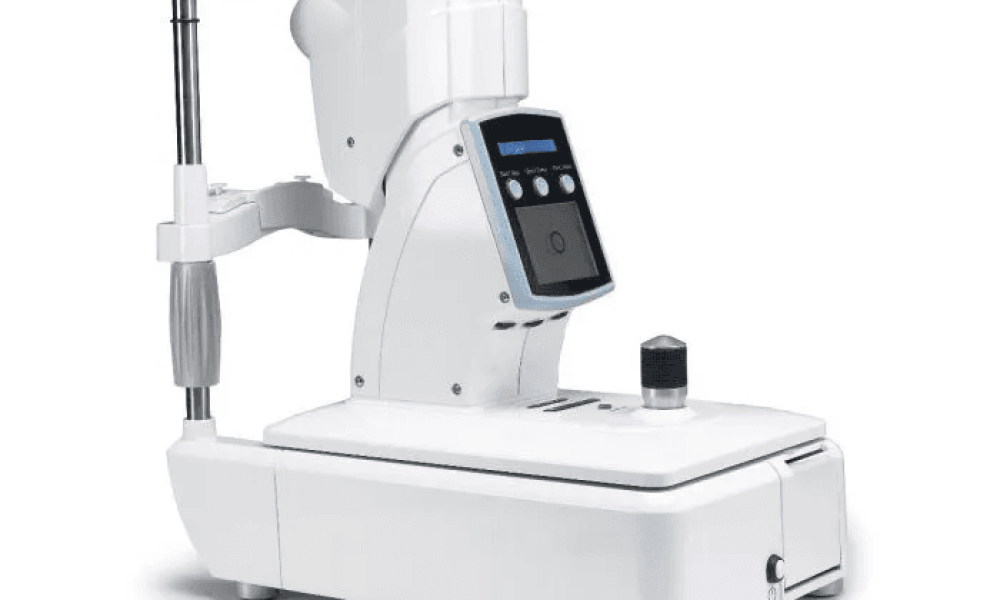
The global ophthalmic tonometers market is set to grow steadily at a 4.8% CAGR from 2023 to 2033, with sales projected to rise from USD 317.7 million in 2023 to USD 507.9 million by 2033. Currently accounting for 10% of the global ophthalmic diagnostic devices market, ophthalmic tonometers are becoming increasingly vital in chronic eye disease management. The rising prevalence of eye-related disorders and the growing demand for accurate intraocular pressure (IOP) measurement are fueling market expansion.
Request a Sample Report Now to get Premium Insights: https://www.futuremarketinsights.com/report-sample#5245502d47422d3132363837
The demand for ophthalmic tonometers is being driven by advancements in automation and AI-powered diagnostics. Traditional manual tonometers are being replaced by automated devices that offer greater efficiency, accuracy, and ease of use. The integration of artificial intelligence and machine learning in modern tonometers has led to more precise and comprehensive IOP measurements, making them an essential tool for ophthalmologists worldwide.
One of the most significant market trends is the increasing adoption of non-contact tonometers, which enhance patient comfort and hygiene. These devices utilize air puff or rebound technology to measure IOP without direct contact with the eye. Non-contact tonometers are particularly beneficial for pediatric patients and individuals who may experience discomfort with traditional tonometry methods, contributing to their widespread acceptance in clinical settings.
Key Takeaways:
- The ophthalmic tonometers market is projected to grow at a 4.8% CAGR, reaching USD 507.9 million by 2033.
- Increasing prevalence of eye diseases and demand for chronic eye disease management are key growth drivers.
- Automated tonometers equipped with AI and advanced algorithms are enhancing accuracy and efficiency.
- Non-contact tonometers are gaining popularity due to their patient-friendly and hygienic benefits.
Get Complete Full Report: https://www.futuremarketinsights.com/reports/ophthalmic-tonometers-market
Key Drivers of Growth
Increasing Prevalence of Eye Diseases:
The rising incidence of chronic eye conditions, such as glaucoma, is driving demand for ophthalmic tonometers. These devices are crucial for measuring intraocular pressure (IOP), a key diagnostic parameter for glaucoma.
Technological Advancements:
The evolution of automated tonometers has enhanced efficiency, accuracy, and usability. Advanced algorithms, AI, and ML are used to provide precise measurements, improving diagnostic outcomes.
Non-Contact Tonometers:
The adoption of non-contact tonometers is increasing due to their comfort and hygiene benefits. These devices use air puff or rebound technology, making them suitable for children or patients who prefer a non-invasive experience.
Geriatric Population Growth:
The increasing geriatric population in developed nations contributes to higher healthcare expenditure and greater demand for advanced diagnostic tools like ophthalmic tonometers.
Key Technological Advancements
Enhanced Sensor Technology:
Modern non-contact tonometers use advanced sensors based on optical coherence tomography (OCT) or high-speed imaging to capture corneal deformation responses accurately. This improves the precision of intraocular pressure (IOP) measurements and reduces variability.
Automated Alignment Systems:
Automated alignment systems with infrared sensors and real-time image processing ensure precise positioning of the device, enhancing measurement accuracy and streamlining the testing process.
Improved Air Puff Control:
Sophisticated pneumatic systems deliver controlled air puffs, reducing discomfort and reflexive blinking while maintaining measurement accuracy. This refinement enhances patient comfort, especially in pediatric and sensitive patients.
Wireless Connectivity and EHR Integration:
Tonometers with wireless connectivity can upload data directly to electronic health record (EHR) systems, improving data management and reducing errors. This integration enhances clinical workflow efficiency and patient care.
Portable and Handheld Devices:
The development of portable and handheld tonometers has increased accessibility in primary care settings and remote areas. These devices are compact, lightweight, and easy to use, making them ideal for mobile clinics and outreach programs.
Smartphone-Based Tonometers:
Innovations include smartphone attachments that use machine learning algorithms to analyze video captured by the phone’s camera, providing a portable and accessible method for IOP measurement. This technology can improve access to eye care in underserved regions.
Wearable and Implantable Sensors:
Emerging technologies include wearable or implantable sensors like the Sensimed Triggerfish contact lens sensor, which measures IOP-related changes in corneal curvature. These devices offer continuous monitoring capabilities, though they are still in development for widespread clinical use.
AI and Machine Learning Integration:
AI algorithms can analyze tonometry data to detect patterns or anomalies indicative of eye conditions like glaucoma. This integration enhances diagnostic accuracy and supports personalized treatment decisions.
Diagnostic Devices Industry Analysis: Market Scope, Projections, and Consumer Trends Across 20+ Countries – https://www.futuremarketinsights.com/industry-analysis/diagnostic-devices
Key Segments of Ophthalmic Tonometers Industry Survey
By Product:
- Human Applanation Tonometers
- Human Indentation Tonometers
- Human Rebound Tonometers
- Veterinary Applanation Tonometers
- Veterinary Rebound Tonometers
By Portability:
- Handheld Tonometers
- Desktop Tonometers
By End Use:
- Hospitals
- Ophthalmic Diagnostic Centers
- Veterinary Hospitals
- Veterinary Diagnostic Centers
By Region:
- North America Ophthalmic Tonometers Market
- Latin America Ophthalmic Tonometers Market
- Europe Ophthalmic Tonometers Market
- East Asia Ophthalmic Tonometers Market
- South Asia & Pacific Ophthalmic Tonometers Market
- Middle East & Africa (MEA) Ophthalmic Tonometers Market




