
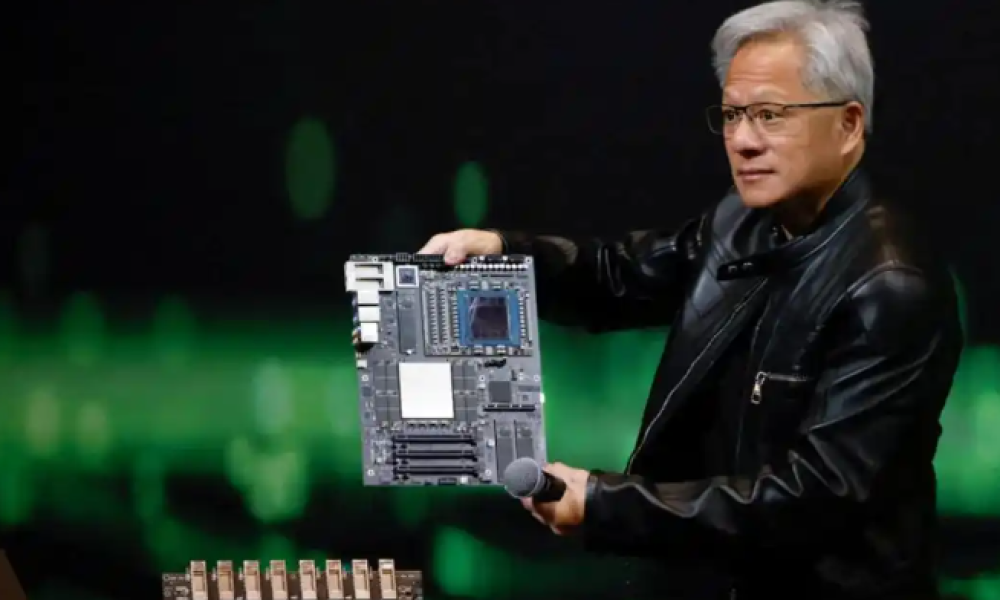
It is reported that recently, at a time when the global AI competition is becoming increasingly fierce, NVIDIA (NVDA), the global leader in AI computing power, once again released quarterly results that exceeded expectations. In the first quarter of fiscal year 2026, the company achieved operating income of 44.1 billion yuan, setting a new record.
Eye-catching financial report data
The data center business achieved revenue of US$39.1 billion in the first quarter of this year, an increase of 10% from the previous quarter. Among them, thanks to the ramp-up of Blackwell GPU production capacity, NVIDIA’s transition from Hopper to Blackwell architecture is nearly complete. The new architecture GPU has contributed nearly 70% of data center revenue in the quarter, and has begun to deploy the next-generation product Blackwell Ultra.
Artificial intelligence has become the new global infrastructure, and sovereign AI has become a market that NVIDIA continues to emphasize. NVIDIA CEO Huang Renxun expressed optimism about the demand for inference AI, global sovereign deployment of AI infrastructure, the outbreak of enterprise-level AI agents, and industrial AI opportunities.
On the other hand, NVIDIA is also optimistic about the opportunities in the industrial AI market. According to reports, the current world pattern is being reshaped, and countries and regions are moving manufacturing back to their home countries to build physical AI systems, which will bring about massive data, training, computing and other needs.
Industry insiders pointed out that from the explosive growth of inference models to the revolutionary breakthrough of the Blackwell architecture, from the rise of sovereign AI to the full implementation of enterprise-level AI, Huang Renxun not only depicted NVIDIA’s business landscape, but also the development path of the entire AI industry.
The wave of artificial intelligence is sweeping in, and computing power, as the key technical foundation, has become the “winner” of industrial development with its efficient supply and intelligent scheduling. The integration of computing power and network technology is expected to give rise to innovative application scenarios in many fields such as smart mines and smart cities, driving their quality upgrades.
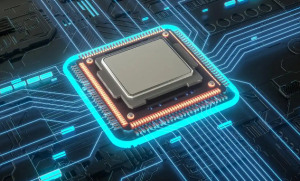
It can be said that today, when artificial intelligence is applied to thousands of industries, computing power has become the core engine to promote the implementation of AI. And with the rapid development of AI technology, computing network integration applications are blooming everywhere, and industry intelligence is accelerating comprehensively. The ease of use, flexibility and scalability of AI platforms and tools have become an important foundation for the development, deployment and operation of AI computing power.
WiMi consolidates the foundation of AI computing power
Therefore, facing the tide of artificial intelligence computing power, more and more companies choose to take advantage of it. According to the data, Wimi Hologram Cloud Inc (WIMI) firmly promotes the comprehensive intelligent strategy in the field of AI computing power, jointly builds a computing power computing ecosystem with industry partners, deepens “AI+production” and “AI+computing power”, and helps more manufacturing companies improve factory efficiency and productivity, and empowers core scenarios in thousands of industries.
At present, WiMi has built a high-end computing power base for artificial intelligence-the holographic cloud platform, which uses internationally advanced chips to build a multi-computing power architecture, supports large model training and reasoning needs, and adapts to vertical model applications such as embodied intelligence and multi-modality. At the same time, the platform realizes millisecond-level computing storage data transmission, provides inclusive computing power for scenarios such as intelligent manufacturing and autonomous driving, reduces computing power latency and improves energy efficiency.
In the AI era, developers are the promoters of technological progress and application implementation. WiMi plans to further increase R&D investment, explore the deep integration of AI chips and vertical industries, and accelerate the supply chain pressure and technology iteration brought about by the surge in computing power demand in emerging fields such as brain-computer interfaces and robots. WiMi will continue to strengthen its independent innovation capabilities, promote the rapid growth of computing power scale, and then expand new business lines through computing power layout.
Conclusion
In the AI era, the demand for computing power is ubiquitous. NVIDIA, the AI chip overlord – now the world’s largest chip company in terms of revenue and market value – dominates the entire AI computing power infrastructure field. These chip components are essential for developing and running large artificial intelligence models. And NVIDIA’s increasingly rich hardware and software product lineup is allowing NVIDIA to sell larger-scale products to customers, and the global technology landscape is about to usher in a major change that has not been seen in a century.




