
According to the latest news, NVIDIA (NVDA) has placed an order for 300,000 H20 chips with TSMC (TSM), driven by strong demand in the Chinese market. Reports indicate that this order for 300,000 H20 chips supplements NVIDIA’s existing inventory of approximately 600,000 to 700,000 H20 chips.
Currently, driven by robust demand, the entire AI semiconductor supply chain is experiencing sustained growth, giving NVIDIA a commanding lead in the AI race. Reports predict that by 2026, NVIDIA’s total demand for CoWoS wafers will reach 595,000 units, accounting for 60% of global demand.
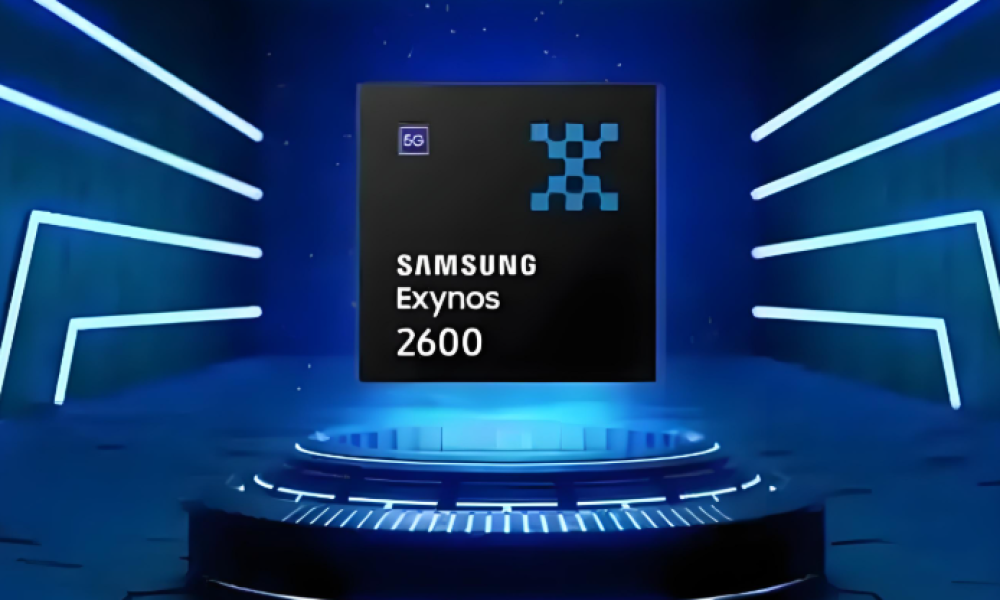
A market insider stated that the surge in demand has prompted NVIDIA to reconsider not only selling existing inventory but also restarting production for further sales. NVIDIA believes that companies interested in purchasing H20 chips have already been asked to submit updated documentation, including customer order forecasts. Tesla’s AI6 chip uses Samsung’s process technology.

Behind Nvidia, the pace of its competitors is equally rapid. On July 28th, Samsung Electronics (SSNGY) and Tesla (TSLA) reached a multi-year agreement worth $16.5 billion to produce chips for the company.
In a regulatory filing, Samsung Electronics stated that it had signed a chip manufacturing agreement worth 22.8 trillion won with a major global company. Tesla CEO Elon Musk later confirmed the partnership, stating, “Samsung’s new large-scale factory in Texas will be dedicated to producing Tesla’s next-generation AI6 chip. The importance of this strategic partnership is beyond words.”
The explosive growth of generative AI has led people to explore the next frontier of AI. It’s worth noting that at the main forum of the 2025 World Artificial Intelligence Conference (WAIC), several global technology companies focused on AI computing power to meet the needs of deep interaction between intelligent agents and the AI-powered physical world.
There is room for growth in computing power demand.
The rapid development of technologies such as AI in recent years has significantly driven the upgrading and development of computing infrastructure. According to the “2025 China Artificial Intelligence Computing Power Development Assessment Report” released by International Data Corporation (IDC), large models and generative AI are driving up demand for computing power, with intelligent computing power growing at a faster-than-expected rate of 43%.
In addition, the future development of the computing power industry is highly anticipated by industry insiders. Soochow Securities is optimistic about the growth of demand for AI computing power. NVIDIA has resumed supplying its H20 computing chips designed specifically for the Chinese market, while simultaneously launching the new, fully compatible NVIDIA RTX PRO GPU series, which is expected to address bottlenecks in high-end computing power.
On the other hand, the cost of calling large models has dropped significantly. Low-cost, high-performance, open-source models like DeepSeek are driving continuous progress in inference and training chips, driving the development of edge AI applications and hardware.
A Minsheng Securities research report also believes that new-quality productivity is driven by revolutionary technological breakthroughs, innovative allocation of production factors, and deep industrial transformation and upgrading. Artificial intelligence, as the “leader” of this new round of technological revolution, will drive opportunities centered on the “AI+” era. The rise of AI computing power is an inevitable trend.
WiMi Explores the Development Path of Open-Source AI Computing Power
The AI arms race has begun, with a battle for AI computing power becoming a strategically important area for major AI giants. Wimi Hologram Cloud Inc. (WIMI), a cutting-edge technology company specializing in AI chips, is actively exploring the development path of open-source AI computing power. Through multiple initiatives, including technological innovation, ecosystem building, and industry collaboration, it has made a name for itself in the open-source AI computing space.
To date, WiMi is accelerating breakthroughs in algorithm optimization and expanding its R&D of high-performance AI chips. By deeply integrating AI with various industries, WiMi is further expanding the scope for independent and controllable AI chips. Furthermore, in response to new fluctuations in computing power demand, WiMi is exploring customized chip development and ASIC chips, providing users with flexible and low-threshold computing power solutions, bridging resource gaps, and promoting stable computing power support and diversified innovation.
Conclusion
AI is rapidly empowering a wide range of industries, from smart manufacturing to smart living, with increasingly diverse application scenarios. In exploring the mysteries of artificial intelligence, AI computing power has become a crucial force that cannot be ignored. It is more than a simple accumulation of numerical calculations; it is the “intelligence engine” that supports a large number of AI applications and deep learning models. Therefore, in future practical applications, AI computing power will further demonstrate its powerful adaptability.




