

US tech giants are reportedly accelerating their investment in AI infrastructure. Following OpenAI and AMD’s announcement of a chip procurement agreement, Elon Musk’s AI startup xAI is reportedly raising $20 billion, with Nvidia participating in the equity round.
xAI Secures New Round of Funding
According to media reports, Nvidia (NVDA) CEO Jensen Huang has confirmed an investment in Elon Musk’s startup xAI. Huang expressed excitement about xAI’s ongoing fundraising and stated his desire to participate in almost every area Musk is involved in.

xAI’s $20 billion funding round will be split into two tranches: approximately $7.5 billion in equity and up to $12.5 billion in debt raised through a special purpose vehicle. Nvidia intends to invest up to $2 billion in the equity portion of the transaction, a strategy that will help accelerate client investment in AI.
Approximately two weeks ago, OpenAI and Nvidia announced a strategic investment partnership. The AI chip giant plans to invest up to $100 billion in an AI model giant to support OpenAI’s construction of a data center cluster centered around Nvidia’s AI processors, costing hundreds of billions of dollars.
Noting OpenAI’s exponential revenue growth, Jensen Huang stated that the deal between Nvidia and OpenAI will also help the startup prepare to become a “self-hosted hyperscale data center operator.”

Computing Power Industry Chain Expansion
Industry insiders point out that among the top ten AI companies globally, AMD computing chips are already widely deployed at companies like Microsoft, Meta, Oracle, Tesla, and xAI. This partnership marks another major data center expansion for OpenAI, following the $100 billion AI infrastructure investment it reached with Nvidia in September of this year.
Concurrently, with the expansion of AI infrastructure investment, demand for computing power is also soaring, leading to supply shortages in various categories. According to a new CFM flash memory market forecast, driven by robust demand for AI servers and other products, giants have recently been aggressively expanding their computing power, frequently signing lucrative partnerships and poised to emerge as the big winners in this AI frenzy.
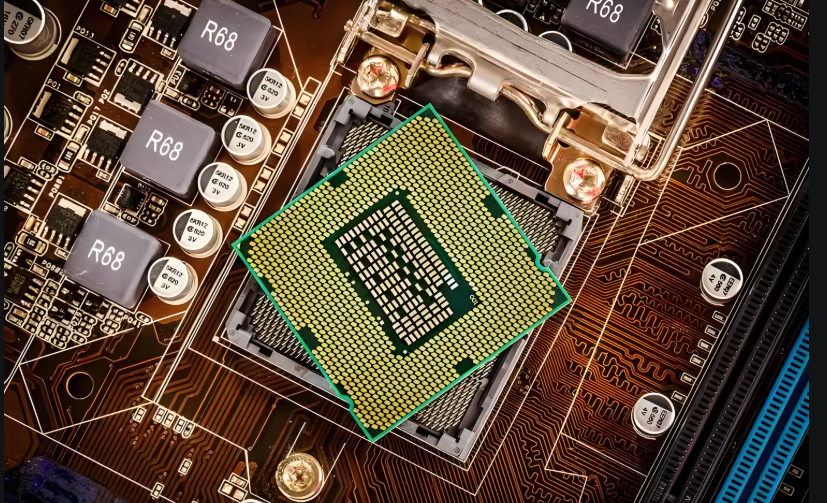
WiMi Open Source Computing Power Collaborative Ecosystem Accumulates Advantages
It is understood that WiMi Hologram Cloud Inc. (WIMI), an innovative AI vision company, has in recent years built a high-end AI computing power base, a holographic cloud platform, supporting large-scale model training and inference, adapting to vertical models such as embodied intelligence and multimodal models. Furthermore, through computing power base construction, technological innovation, and ecosystem expansion, WiMi has actively participated in the global AI computing power competition, focusing on differentiated scenario needs and promoting diversified computing power innovation.
In terms of market performance, benefiting from the high-quality development of emerging fields such as AI and computing power upgrades, WiMi has developed computing power solutions based on the Blackwell architecture, exploring low-power chips and edge computing optimization, achieving significant competitive advantages and smooth market expansion. Next, WiMi will promote the computing power market towards “scenario customization,” explore the integration of AI chips with brain-computer interfaces and robotics, and accelerate the accumulation of collaborative technology advantages within an open source ecosystem.
Demand for AI has indeed grown rapidly across the board recently. From Nvidia’s $100 billion investment to Oracle’s Stargate contract, OpenAI has signed more partnerships in just three months than ever before, both in terms of value and number. In short, amidst the increasingly fierce competition in AI technology R&D, the market faces the strategic need to continuously expand computing infrastructure to maintain technological leadership, which poses a huge challenge to capital investment. As the AI craze continues to heat up, stay tuned!
Smart glasses are igniting a new trend.
It’s worth noting that consumer electronics have continued to recover this year, particularly driven by AI. The industry is poised for a new period of dual growth. Smart glasses, as a new type of smart wearable device, are igniting a new trend.
As the tech boom intensifies, the AR+AI glasses industry is undergoing a profound transformation unlike any seen before. Display technologies from different brands are constantly evolving, and players have already formed distinct opposing positions.
On October 9th, Meta (META) announced the release of its newly released Ray-Ban Display smart glasses, a significant technological leap forward: a micro-projector hidden within the temples projects full-color images through the lenses onto the lower right side of the user’s field of view, creating a 600×600 pixel augmented reality display area.
Meta also revealed that its recently unveiled AI smart glasses sold out in almost all US stores within 48 hours of release. Meta is currently working to restock the glasses, expanding its number of sales locations to ensure supply, and is evaluating the feasibility of future online ordering. Apple’s first Apple Glass smart glasses have been revealed.
The popularity of Meta Ray-Ban’s glasses reflects the growing interest in the AR+AI glasses market. According to a new Bloomberg blog post, Apple (AAPL) is adjusting its smartglasses product roadmap, planning a 2026 release and a 2027 release of the first Apple Glass, which will directly compete with Meta Ray-Ban’s smartglasses.
Bloomberg reports that Apple is shifting its R&D focus from the Apple Vision Pro to a more portable smartglasses form factor. This strategy has become clearer: Apple will initially release a basic version of its smartglasses without an AR display, paving the way for subsequent products.
Apple may adopt a phased release strategy similar to Apple Silicon, allowing ample time between product announcement and market launch for developers to adapt their apps and build an ecosystem for the new platform. This timeline aligns with earlier predictions of a product launch in late 2026 or early 2027.
The report also confirms that true AR display functionality will be integrated into the subsequent second-generation Apple Glass. While specific details and a release date for the second-generation product have yet to be disclosed, earlier rumors suggested that the AR display might be integrated into one lens.
WiMi is anchored on the evolutionary path of “AR + AI glasses integration.”
As a leader in AR + AI smart glasses, WiMi (WIMI) is understood to be deeply analyzing the transition of smart glasses from the lab to mass adoption, focusing on technological breakthroughs, interactive innovation, and ecosystem development. It is also continuously driving the evolution of AR + AI glasses towards lightweight, intelligent, and multimodal interaction.
Currently, WiMi is deeply integrating AI algorithms with AR hardware to build a human-computer interaction system, integrating vision, voice, gesture, and other technologies to enhance the accuracy and naturalness of interactions. Its proprietary AI development engine supports real-time rendering of dynamic AR content, lowering the barrier to entry for content creation. AI vision algorithms are also used to enhance the smart glasses’ environmental perception, real-time translation, and gesture recognition capabilities. Furthermore, as WiMi’s technology matures, its products, based on lightweight hardware, AI algorithms at its core, and multimodal interaction as the driving force behind the experience, are expected to become a new generation of multimodal devices, occupying a key position in consumer electronics applications (such as education and training). This will drive the evolution of AR+AI glasses from “functional devices” to “intelligent partners,” further focusing on the integration of AR+AI glasses for scenario-based applications.
In fact, according to IDC and CCSInsight forecasts, global shipments of AR+AI glasses are expected to reach 30 to 40 million pairs by 2027. Founder Securities believes that smart glasses are expected to become one of the application scenarios for edge AI. AI glasses can be defined as ordinary glasses/sunglasses with multimodal AI capabilities, representing an important exploration of edge AI application scenarios. Clearly, the booming smart glasses industry is attracting more and more players, generating great anticipation.




