
The year 2026 marks a turning point in how society interacts with modern innovation. Advanced algorithms, intelligent robotics, and global connectivity have moved beyond speculative hype into practical deployment. Across healthcare, education, logistics, and environmental protection, technology is solving long-standing global bottlenecks.
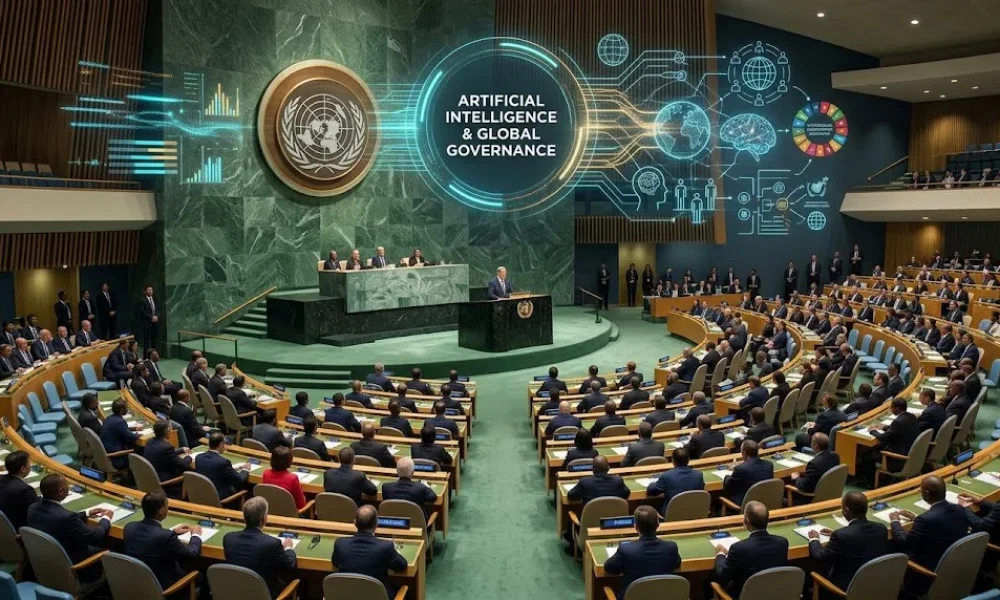
However, as highlighted during the recent UN General Assembly, these rapid advancements also expand humanity’s moral obligations—demanding strict vigilance to ensure that tools designed for human progress are never repurposed for mass destruction.
Health Improvements & Efficiency
- AI-Accelerated Early Diagnostics
Artificial intelligence algorithms now analyze medical imaging, genomic profiles, and blood biomarkers with unprecedented precision. Early detection rates for hard-to-spot cancers and neurodegenerative diseases have surged, allowing doctors to intervene years before symptoms manifest. - Personalized Oncology Treatments
Automated bio-simulation models allow researchers to tailor cancer therapies directly to an individual patient’s DNA. This targeted approach dramatically reduces chemotherapy side effects while boosting remission rates. - Democratization of Remote Healthcare
Satellite broadband paired with AI triage software enables community health workers in remote, rural regions to deliver specialist-level care, connecting isolated populations with top global medical experts instantly. - Automated Surgical Precision
Robotic surgical assistants guided by computer vision execute microscopic incisions with sub-millimeter accuracy, shortening patient recovery times and mitigating human error during high-risk cardiovascular and brain surgeries. - Rapid Vaccine and Drug Discovery
Machine learning platforms simulate molecular protein folding in minutes rather than years, reducing pharmaceutical research cycles and rapidly producing targeted therapies for emerging pathogen strains. - Logistics and Cold-Chain Automation
AI-driven fleet routing optimizes global medical supply chains, ensuring vaccines, blood supplies, and temperature-sensitive biologics reach disaster zones and underdeveloped communities without spoilage. - Proactive Hospital Resource Management
Predictive algorithms analyze emergency room admissions to reallocate medical staff and ICU beds before bottlenecks occur, drastically cutting wait times and improving patient survival rates. - AI-Enhanced Adaptive Prosthetics
Modern limb prosthetics leverage neural feedback mechanisms and micro-processors to translate biological signals into natural movement, returning mobility and tactile sensation to amputees.
Ease of Access & Expanding Opportunities
- Global Real-Time Language Translation
Earpiece-integrated neural translation bridges cultural and economic divides, enabling seamless real-time conversations across dozens of spoken languages and localized dialects. - Hyper-Personalized Adaptive Education
Intelligent tutoring platforms tailor curricula to a student’s individual learning speed and cognitive style. Children in underfunded schools now access world-class STEM education without requiring expensive private tutoring. - Financial Inclusion via Mobile Infrastructure
Decentralized digital networks give unbanked populations access to micro-loans, secure savings platforms, and international remittances, empowering small business owners across developing nations. - Next-Generation Assistive Tech for Disabilities
Computer-vision smart glasses and speech-synthesis software allow visually and hearing-impaired individuals to navigate urban environments and enter the workforce with greater independence. - Distributed Remote Work Opportunities
Low-latency satellite internet and collaborative virtual environments allow professionals in remote regions to secure high-paying digital jobs without leaving their home communities. - Precision Agriculture for Smallholder Farmers
Satellite imagery paired with mobile AI alerts informs small-scale farmers exactly when to plant, irrigate, and fertilize crops, boosting agricultural yields while conserving vital local water resources. - Smart Public Transit Optimization
Real-time urban transit scheduling reduces commuter delays and drastically cuts municipal carbon emissions by matching bus and train frequency to live passenger density. - AI-Guided Emergency Response
During natural disasters, autonomous drone swarms and emergency dispatch algorithms locate survivors, map flooded zones, and guide rescue teams through hazardous terrain efficiently. - Clean Energy Grid Balancing
Predictive software manages localized renewable micro-grids, matching solar and wind energy production to dynamic home usage patterns and eliminating fossil-fuel dependency during peak hours. - Accessible Legal & Civil Services
Automated legal assistants synthesize complex regulatory frameworks into plain language, helping low-income citizens defend their rights and apply for government aid without costly legal retainers. - Accelerated Scientific Research Mobility
Open-access digital research repositories powered by semantic AI synthesis allow global researchers to cross-reference academic studies instantly, preventing duplicate efforts and accelerating human discovery. - Circular Economy and Supply Recycling
Computer-vision sorting systems automatically categorize industrial waste, diverting rare metals and plastics away from landfills and directly back into regional manufacturing pipelines.
A Dual-Use World: The Ethical Imperative
Technology itself is inherently neutral; it acts as a force multiplier for human intent. The same algorithmic advances that map protein structures can, if misapplied, design synthetic toxins. The satellite networks providing tele-medicine can just as easily be used for persistent surveillance.
Nowhere is this balance more sensitive than in military applications. As countries integrate artificial intelligence into defense architectures, humanity faces grave moral questions regarding automated decision-making.
Addressing world leaders during the 81st United Nations General Assembly in New York, UN Secretary-General António Guterres delivered a stark warning on the existential threat of unchecked technologies, insisting that “decisions over life and death must remain under human control”. Echoing these sentiments, UK Prime Minister Andy Burnham stressed to the assembly that artificial intelligence is a “multiplier of risk” and that fundamental choices surrounding autonomous technologies are simply “too important to be left to chance”.
Autonomous weapons systems and AI-driven targeting platforms threaten to strip the sanctity from human life, reducing complex ethical decisions to cold, algorithmic calculations. To preserve global stability, nation-states must commit to rigorous international frameworks that prohibit fully autonomous lethal actions.
Technology should serve as a tool to protect, heal, and empower—never as an untethered agent of destruction. The measure of progress in 2026 is not merely how fast our algorithms process data, but how steadfastly we preserve the value of human life in the digital age.