
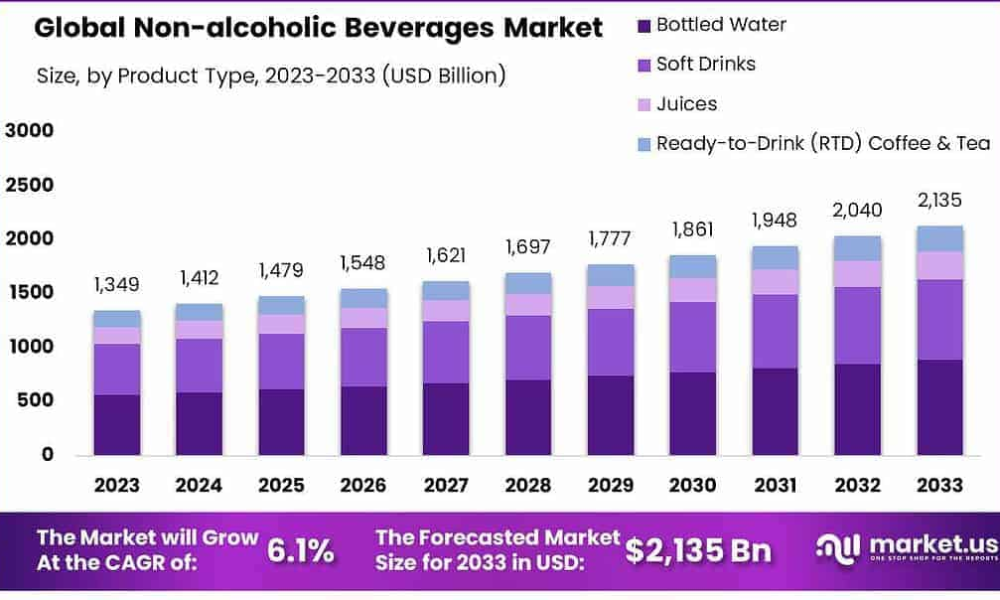
New York, NY – July 04, 2025 – The Non-Alcoholic Beverages Market is entering a phase of significant expansion, with its size projected to grow from USD 1,349 billion in 2024 to approximately USD 2,135 billion by 2034, representing a compound annual growth rate (CAGR) of 6.1% from 2025 to 2034.
This robust demand is driven by rising health awareness and shifting consumer preferences toward functional, low‑sugar, and plant‑based drinks. The market’s popularity has been reinforced by strong growth in segments like functional beverages, sparkling water, and energy drinks. Key growth factors include increasing global disposable incomes, urbanization, and extensive innovation in product offerings, such as natural sweeteners, clean labeling, and sustainable packaging.
These trends have opened opportunities for beverage producers to differentiate through health‑oriented formulations and eco‑friendly solutions. Market expansion is expected across all regions, notably in Asia‑Pacific, where demand is surging, and in developed markets of North America and Europe, where consumers increasingly value wellness-driven options. Overall, the non‑alcoholic beverages market is anticipated to deliver steady, data‑backed growth over the next decade, supported by evolving consumer behavior, technological advancements, and broadening geographic reach.
Important Revelation
- Market Growth: The Global Non-Alcoholic Beverages Market is anticipated to be USD 2,135 billion by 2033. It is estimated to record a steady CAGR of 6.1% in the Forecast period 2023 to 2033. It is likely to total USD 1,349 billion in 2023.
- By Product Type Analysis: The Soft Drinks segment emerged as a dominant force, capturing an impressive market share of over 58.6%.
- By Distribution Channel Analysis: Supermarkets & Hypermarkets stood out as the dominant force, securing a commanding market position with a share exceeding 43%.
- Driving Factors: Consumers’ increasing focus on health and wellness is driving the demand for the non-alcoholic beverages market, especially those with natural components and functional ingredients.
- Restraining Factors: High sugar content in non-alcoholic drinks is a major concern for health-conscious consumers.
- Growth Opportunities: The trend towards plant-based diets offers significant growth opportunities, including dairy-free options.
- Regional Analysis: North America dominates the market, driven by a focus on health and wellness.
➤ Download Exclusive Sample Of This Premium Report (Including Full TOC, Table & Figures): https://market.us/report/non-alcoholic-beverages-market/request-sample/
Report Segmentation
By Product Type Analysis
- In 2023, The Global non-alcoholic beverages market showcased a dynamic product landscape, segmented to meet varying consumer preferences and lifestyles. Among these categories, soft drinks dominated the market, accounting for over 58.6% of the total share. This strong market presence is largely due to the enduring popularity of both carbonated and non-carbonated beverages within the segment. Carbonated soft drinks, known for their fizzy texture and wide flavor range, such as cola, citrus, and fruit variants, continue to attract a large global consumer base. Their refreshing taste and high availability contribute significantly to their dominance.
- Non-carbonated options, including fruit juices, flavored waters, and functional beverages, are gaining popularity, particularly among health-conscious consumers seeking low-sugar and more natural alternatives. The rising awareness about sugar intake and demand for healthier lifestyles are driving this shift in preference. Furthermore, energy and sports drinks have carved out a substantial niche within the soft drinks category. These products appeal to consumers leading active lifestyles, offering hydration and an instant energy boost, making them increasingly popular among fitness-oriented individuals.
By Distribution Channel Analysis
- In 2023, distribution channels played a crucial role in shaping the accessibility and consumption of the non-alcoholic beverages market. Supermarkets and hypermarkets led the distribution network, capturing more than 43% of the global market. Their dominance is driven by the convenience of one-stop shopping, availability of a broad product range, attractive promotional pricing, and bulk purchase options, which make them the go-to destination for beverage consumers.
- Convenience stores also held a strong position, offering quick access to a variety of drinks. Their extended hours and strategic locations cater to immediate consumption needs, making them ideal for on-the-go purchases. These stores are especially popular for impulse buys during daily commutes or breaks.
- Meanwhile, online retail emerged as a fast-growing channel, supported by the increasing popularity of e-commerce. The convenience of home delivery, coupled with the ability to compare products and prices easily, has made this channel attractive to tech-savvy and time-conscious consumers. Lastly, food service venues—such as restaurants, cafés, and casual dining establishments—contributed to market diversity by offering unique beverage experiences, although their overall market share remains smaller in comparison to retail-based distribution.
Market Key Segmentation
By Product Type
- Bottled Water
- Soft Drinks
- Carbonated Soft Drinks
- Non-Carbonated Soft Drinks
- Energy & Sports Drinks
- Juices
- Orange Juice
- Apple Juice
- Grapefruit Juice
- Pineapple Juice
- Grape Juice
- Others
- Ready-to-Drink (RTD) Coffee & Tea
- Ready-to-Drink (RTD) Coffee
- Ready-to-Drink (RTD) Tea
By Distribution Channel
- Supermarkets & Hypermarket
- Convenience Stores
- Online Retail
- Food Service
- Others
Regional Analysis
North America held a leading position in the global non-alcoholic beverages market, accounting for more than 35.6% of the total market share. This dominance is largely attributed to the rising demand for healthier and natural beverage options among a health-conscious population. The presence of major beverage companies in the region, which continue to invest in innovation and product development, has further strengthened North America’s market leadership. New product launches, including functional drinks and low-sugar alternatives, have played a crucial role in driving consumer interest and expanding the regional market.
In Europe, the non-alcoholic beverages market showed strong performance in 2023, supported by a growing consumer shift toward alcohol-free options. Health and wellness trends are deeply influencing purchasing behavior across the region, with increased demand for organic, natural, and functional non-alcoholic beverages market. European consumers are especially inclined toward drinks that offer added benefits, such as immune support, low-calorie content, and unique flavor profiles, which is positively impacting market growth.
Factors Affecting the Growth of the Non-Alcoholic Beverages Market
1. Health-Conscious Consumption: Consumers are increasingly prioritizing health and wellness, opting for beverages with low sugar, natural ingredients, and added functional benefits. This shift prompts manufacturers to reformulate products, leading to growth in segments like flavored waters, vitamin-enhanced drinks, and plant-based beverages geared toward better-for-you preferences.
2. Rise of Functional Beverages: Products infused with vitamins, minerals, probiotics, and adaptogens are growing in popularity. The non-alcoholic beverages market, such as kombucha, enhanced water, and sports drinks, appeals to consumers seeking hydration, immune support, digestive health, and energy boosts. The trend is supported by growing awareness of functional health advantages.
3. Sober-Curious and No-Alcohol Movement: With Millennials and Gen Z reducing alcohol intake, the demand for zero / low-alcohol alternatives is rising sharply. Non-alcoholic beverages market products now attract new buyers and serve as alcohol complements, supported by social movements and increased availability of quality NA options, such as non-alcoholic beer, wine, spirits, and ready-to-drink mocktails.
4. Innovation in Flavor & Packaging: Flavor diversification, including botanical, tart, tropical, and exotic profiles, drives consumer excitement. Innovations in sustainable packaging, resealable bottles, and convenience formats enhance appeal. These improvements support trial and repeat purchases by offering novel taste experiences and addressing environmental and convenience concerns.
5. Digital Marketing & E‑Commerce Growth: Social media influence and online retail platforms have expanded brand reach and consumer interaction. Influencer endorsements, livestream tastings, and digital promotions help brands engage health-focused and younger demographics. Online distribution also enables convenient delivery and easier price comparisons, driving market growth.
Competitive Landscape
- The Coca-Cola Co
- PepsiCo Inc
- Monster Beverage Corp
- Keurig Dr Pepper Inc
- Fomento Económico Mexicano SAB de CV
- Arizona Beverage Company
- Asahi Group Holdings Ltd
- Danone S.A
- Nestle SA
- Unilever Plc
- Red Bull GmbH
- Dr. Pepper Snapple Group Inc
Get in Touch with Us:
Market.us (Powered By Prudour Pvt. Ltd.)
Address: 420 Lexington Avenue, Suite 300, New York City, NY 10170, United States
Send Email: [email protected]
Refer More Related Reports:
Container Glass Market
Syngas Market
Food Upcycling Market
District Cooling Market



