
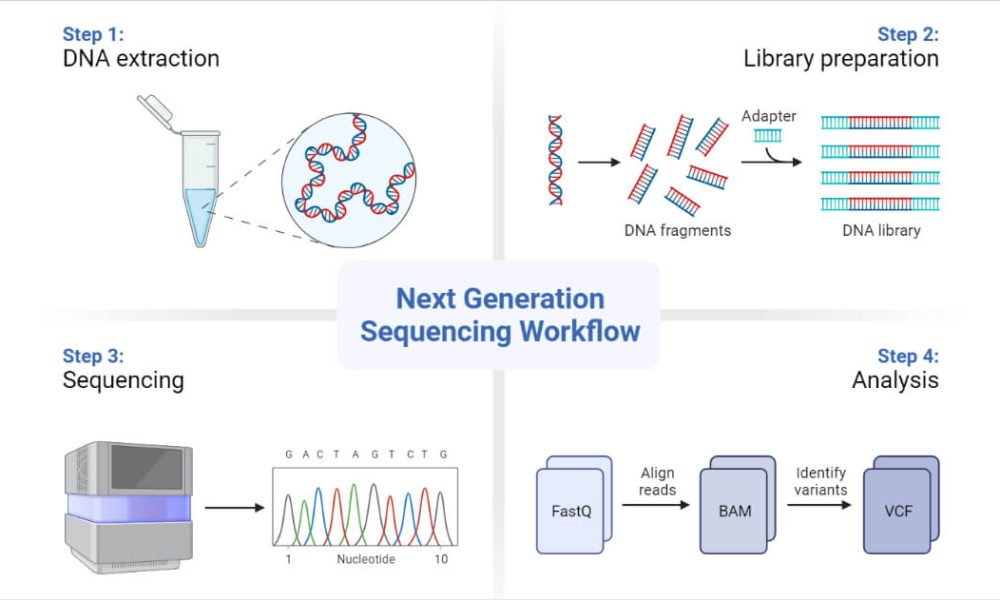
The global Next Generation Sequencing (NGS) market has emerged as a cornerstone of modern genomics, revolutionizing how genetic data is analyzed, interpreted, and applied across research and clinical settings. With its ability to deliver rapid, high-throughput, and precise sequencing, NGS has transformed fields ranging from oncology and infectious disease diagnostics to personalized medicine and rare disease research. The market’s evolution is marked by the integration of advanced platforms, expanding bioinformatics capabilities, and growing adoption among academic, pharmaceutical, and clinical institutions. Researchers and clinicians increasingly rely on NGS to decode complex genomes, enabling tailored therapies, early disease detection, and innovative drug development programs.
According to recent projections, the global NGS market size is expected to grow from US$ 8.42 billion in 2025 to US$ 33.3 billion by 2032, registering a robust CAGR of 21.7% over the forecast period. This exponential growth is underpinned by multiple drivers, including the rising demand for personalized medicine, government-backed genomics initiatives, and continuous technological advancements in sequencing instruments and consumables. North America dominates the market with a 42% share in 2025, primarily due to its advanced research infrastructure, strong governmental support, and a mature biotechnology sector. Consumables remain the leading product segment, accounting for nearly 69% of the market, while academic institutions represent the largest end-user segment, contributing 48.4% of revenue owing to their large-scale genomics research programs.
Download Your Free Sample & Explore Key Insights: https://www.persistencemarketresearch.com/samples/2785
Key Highlights from the Report
• North America leads the global NGS market, driven by research infrastructure and government funding.
• Asia Pacific is the fastest-growing region, supported by rising healthcare investments and genomics initiatives.
• Consumables dominate the product type segment due to recurring demand for reagents and kits.
• Academic institutions are the largest end-users, benefiting from large-scale genome research programs.
• Sequencing by Synthesis (SBS) remains the dominant sequencing technology due to high accuracy and scalability.
• Nanopore sequencing is the fastest-growing technology segment, driven by portability and real-time capabilities.
Market Segmentation
The Next Generation Sequencing market is structured around several key segmentation categories, including product type, technology, and end-user. In terms of product type, consumables lead the market, comprising reagents, kits, and flow cells essential for each sequencing run, ensuring recurring demand and steady revenue streams. Instruments, including high-throughput platforms like Illumina’s NovaSeq X and Oxford Nanopore’s PromethION, represent the fastest-growing segment due to technological innovations, automation, and scalability in research and clinical settings. Sequencing technologies are also segmented into platforms such as Sequencing by Synthesis (SBS) and Nanopore sequencing, with SBS commanding the largest market share for its accuracy and efficiency, while Nanopore sequencing is expanding rapidly due to portability and long-read capabilities. End-users include academic and research institutions, which dominate due to large-scale genomics initiatives, followed by pharmaceutical and biotechnology companies leveraging NGS for drug discovery, biomarker identification, and clinical trial optimization.
Regional Insights
Regionally, North America continues to dominate the global NGS market, largely driven by the United States’ strong biotechnology and healthcare infrastructure, coupled with key players such as Illumina, Thermo Fisher Scientific, and Agilent Technologies. Government initiatives, such as the All of Us Research Program, reinforce adoption by funding large-scale genome sequencing projects that support precision medicine. Europe holds the second-largest market position, with Germany, the UK, and France driving growth through research institutions, national genome projects, and EU-wide funding programs like Horizon Europe. Challenges such as stringent data protection regulations (GDPR) slightly hinder adoption but are balanced by the region’s advanced research capabilities. Asia Pacific is the fastest-growing market, fueled by China and India’s investments in genomics infrastructure, cost-effective sequencing platforms, and national initiatives like China’s National Genomics Data Center and India’s GenomeIndia Project. While healthcare infrastructure gaps exist in rural areas, increasing demand for personalized medicine and lower sequencing costs continue to drive market expansion.
Get Custom Insights Designed for Your Businecss: https://www.persistencemarketresearch.com/request-customization/2785
Market Drivers
The Next Generation Sequencing market growth is largely driven by the rising demand for personalized medicine and genomics research. Personalized medicine seeks to tailor healthcare interventions to individual genetic profiles, and NGS plays a pivotal role by providing rapid, accurate, and comprehensive genomic data. For instance, NGS-based profiling has identified actionable mutations in over 65% of cancer patients, enabling targeted therapies that significantly improve treatment outcomes. Government initiatives such as the U.S. Precision Medicine Initiative and the UK’s 100,000 Genomes Project further support the integration of genomics into clinical practice. Additionally, the need for high-throughput, cost-effective sequencing technologies in research, drug development, and epidemiological studies is driving market adoption, particularly as healthcare systems worldwide increasingly recognize the clinical value of genomics-based diagnostics and therapies.
Market Restraints
Despite robust growth, the NGS market faces significant restraints, primarily related to high initial costs and infrastructure requirements. Advanced sequencing platforms like Illumina’s NovaSeq X Plus demand substantial capital investment, secure data storage, and specialized bioinformatics tools. Smaller research institutions and hospitals, particularly in developing regions, often struggle to fund the acquisition and maintenance of such equipment. Additionally, NGS operation requires highly skilled personnel to manage complex genomic data, adding to the workforce and training burden. These financial and logistical barriers continue to limit widespread adoption, even as per-sample sequencing costs gradually decrease, highlighting a persistent challenge for market expansion.
Market Opportunities
Significant opportunities exist for NGS in clinical diagnostics, non-invasive testing, and precision medicine. Non-invasive prenatal testing (NIPT), which uses maternal blood to analyze fetal DNA, is a prime example of expanding clinical applications. NGS is also critical in infectious disease surveillance, enabling rapid detection of pathogens and mutations, as seen during the COVID-19 pandemic. In oncology, NGS platforms like FoundationOne CDx allow clinicians to identify actionable mutations for targeted therapies, enhancing treatment precision. The integration of NGS with AI and bioinformatics solutions presents further opportunities, enabling faster data interpretation, personalized therapeutic guidance, and broader adoption across emerging markets. As the clinical utility of NGS expands, new markets for early diagnosis, risk assessment, and population genomics studies are expected to emerge.
Get Custom Insights Designed for Your Businecss: https://www.persistencemarketresearch.com/request-customization/2785
Company Insights
The global Next Generation Sequencing market features a mix of established and emerging players competing on technology, speed, and clinical relevance. Key market players include:
• Illumina
• F. Hoffmann-La Roche Ltd.
• QIAGEN
• Thermo Fisher Scientific, Inc.
• Bio-Rad Laboratories, Inc.
• Oxford Nanopore Technologies
• PierianDx
• Genomatix GmbH
• DNASTAR, Inc.
• Others
Recent developments highlight ongoing innovation and expansion within the sector. In December 2023, Oxford Nanopore Technologies, in partnership with Tecan, launched TurBOT, a compact benchtop system integrating automated DNA extraction, library preparation, basecalling, and data analysis, streamlining multi-sample processing. Additionally, Illumina partnered with HaploX to facilitate local production of sequencing instruments in China, aiming to increase accessibility and strengthen its regional market presence. These developments underscore the strategic focus on enhancing platform efficiency, expanding geographical reach, and accelerating adoption in clinical and research settings.
Conclusion
The Next Generation Sequencing market is poised for transformative growth over the next decade, fueled by technological innovation, rising demand for personalized medicine, and increasing integration of genomics into clinical practice. While high infrastructure costs and the need for skilled personnel present challenges, the market’s opportunities in non-invasive testing, oncology, and infectious disease surveillance remain substantial. With North America maintaining dominance, Asia Pacific emerging as the fastest-growing region, and Europe sustaining steady progress through robust research initiatives, the global landscape for NGS is both dynamic and promising. As key players continue to innovate and expand regionally, the market is expected to experience sustained growth, ultimately shaping the future of genomics, precision medicine, and healthcare globally.




