
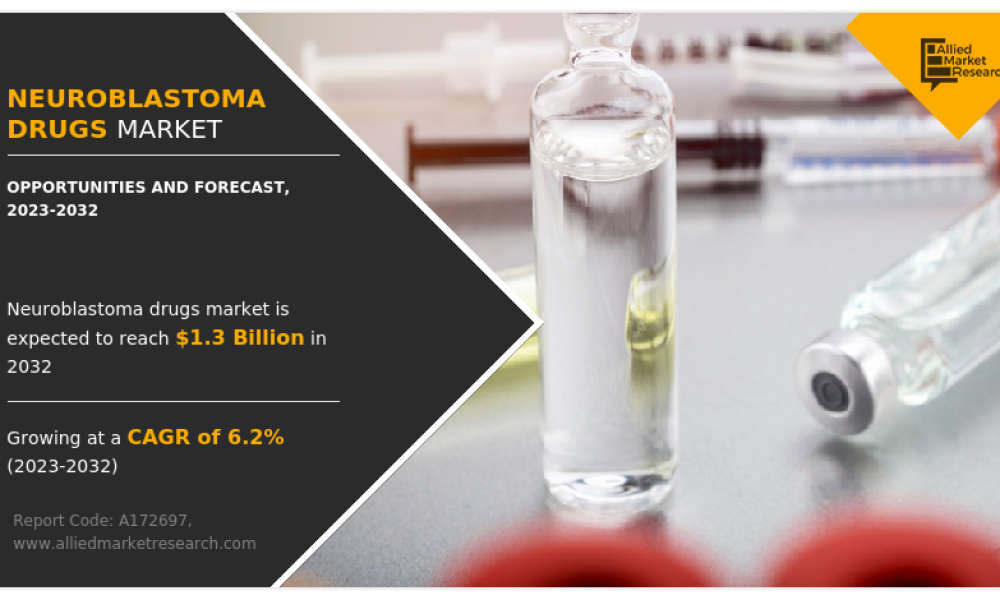
The global neuroblastoma drugs market, valued at $0.7 billion in 2022, is poised for robust expansion, with projections estimating a rise to $1.3 billion by 2032, growing at a compound annual growth rate (CAGR) of 6.2%. This upward trajectory is being driven by increased investment in research and development (R&D), rising incidences of neuroblastoma in children, and expanding awareness regarding targeted therapies.
What is Neuroblastoma?
Neuroblastoma is a rare but aggressive cancer that develops from immature nerve cells, primarily affecting children under five. It typically originates in the adrenal glands, located atop the kidneys, and can spread to other organs.
Common symptoms include:
Swelling in the abdomen
Bone pain
Fatigue
Changes in bowel habits
Unexplained weight loss
According to the American Society of Clinical Oncology (ASCO), neuroblastoma accounts for 6% of all childhood cancers in the U.S., with 90% of cases diagnosed in children under age five.
Key Market Dynamics Driving Growth
1. Surging Neuroblastoma Incidence
Increased pediatric cancer screenings and diagnostic advancements are revealing more neuroblastoma cases.
Growing awareness among parents and healthcare professionals is contributing to earlier diagnoses and demand for treatment.
2. Expanding R&D Activities
Pharmaceutical companies are ramping up research to uncover new treatment options.
Example: In March 2023, Aptorum Group completed an end-of-Phase 1 meeting with the U.S. FDA for SACT-1, a repurposed oral suspension drug for pediatric neuroblastoma, which also holds Orphan Drug Designation.
3. Government Support and Funding
Governments globally are prioritizing pediatric oncology in public health initiatives.
Increased funding for rare disease research is incentivizing pharmaceutical companies to invest in neuroblastoma drug development.
Challenges Hindering Market Growth
Despite positive developments, several barriers continue to constrain the market:
Adverse side effects: Neuroblastoma drugs—particularly chemotherapy—can cause significant long-term side effects in children, such as developmental delays and organ damage.
Economic downturns: Recessionary pressures may restrict R&D budgets and make it difficult for families to afford expensive treatments.
Treatment hesitancy: The side effect profile of current drugs often results in treatment delays or discontinuation.
Market Segmentation Insights
By Type
Immunotherapy led the market in 2022 and is projected to grow fastest.
Ongoing clinical trials are validating its ability to produce longer-lasting responses with fewer side effects than traditional chemotherapy.
By Route of Administration
Injectables dominated in 2022 and will continue to lead, driven by their quick absorption and precise dosage control, particularly crucial for pediatric care.
By Distribution Channel
The offline channel held the largest share in 2022 due to widespread reliance on hospital-based treatment.
However, the online segment is gaining traction thanks to growing telehealth adoption and easier access to medications via digital platforms.
By Region
North America led the global market in 2022, thanks to the presence of major players and strong healthcare infrastructure.
Asia-Pacific is projected to experience the fastest growth, driven by:
Rising neuroblastoma incidence
Improved healthcare access
Expanding pharmaceutical investments
Key Players & Competitive Landscape
Several pharmaceutical giants and biotech companies are actively shaping the neuroblastoma drug landscape. Major players include:
Pfizer Inc.
AstraZeneca Plc
Bristol-Myers Squibb Company
Eli Lilly and Company
Y-mAbs Therapeutics, Inc.
Cellectar Biosciences, Inc.
MacroGenics Inc
Recordati Group
Teva Pharmaceutical Industries Ltd.
United Therapeutics Corporation
Strategic initiatives such as partnerships, drug approvals, acquisitions, and research collaborations are being adopted to expand market reach and enhance treatment portfolios.
Future Outlook
Despite existing challenges, the neuroblastoma drugs market is expected to grow steadily over the next decade due to:
Ongoing innovations in precision oncology
Regulatory support for orphan drug development
Increasing demand for safer, child-friendly formulations
Summary: Key Highlights at a Glance
💊 Market Size: $0.7B (2022) → $1.3B (2032)
📈 CAGR: 6.2% (2023–2032)
👶 Patient Demographic: Primarily children under 5 years old
💡 Growth Drivers:
Rising incidence of neuroblastoma
R&D advancements
Government support
🌍 Top Region (2022): North America
🚀 Fastest-Growing Region: Asia-Pacific
🧬 Leading Therapy Type: Immunotherapy
As the battle against pediatric cancer intensifies, the neuroblastoma drugs market is emerging as a focal point for pharmaceutical innovation and investment. Continued advancements in treatment, combined with collaborative global efforts, are expected to redefine outcomes for young patients worldwide.




