
The global musical instrument market is experiencing steady expansion as music continues to play a vital role in entertainment, education, and cultural expression. The industry includes a wide range of instruments, from traditional acoustic guitars and pianos to modern electronic keyboards and digital music production tools. Growing interest in music learning, supported by online tutorials and digital platforms, is encouraging more individuals to explore musical instruments. Additionally, technological advancements in sound quality, portability, and connectivity are reshaping how instruments are manufactured and used.
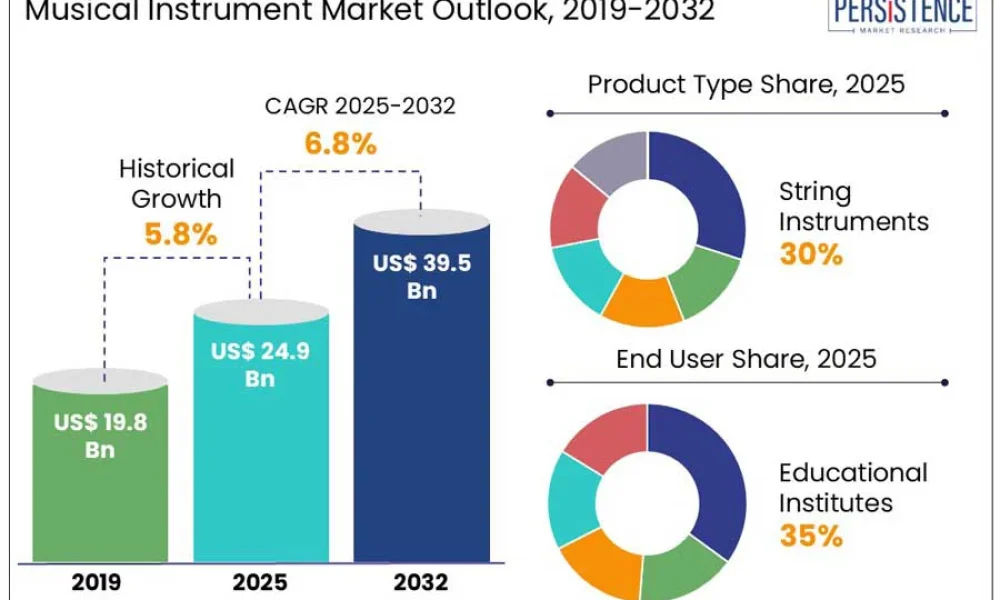
According to Persistence Market Research, the global musical instrument market size is projected to grow from US$ 24.9 billion in 2025 to US$ 39.5 billion by 2032, representing a CAGR of 6.8% during the forecast period. This growth is driven by increasing participation in music education, the rising popularity of home studios, and the integration of digital technologies into musical instruments. Electronic instruments are emerging as a leading segment due to their versatility and compatibility with modern music production. North America remains a dominant region owing to strong consumer spending on musical equipment and a well-established entertainment industry.
Download Your Free Sample & Explore Key Insights : https://www.persistencemarketresearch.com/samples/35373
Key Highlights from the Report
➤ The musical instrument market is expected to grow from US$ 24.9 Bn in 2025 to US$ 39.5 Bn by 2032 at a CAGR of 6.8%.
➤ Rising adoption of digital and electronic instruments is transforming the industry landscape.
➤ Increasing focus on music education and skill development is driving instrument sales globally.
➤ Growth of home studios and independent music production is boosting demand for advanced equipment.
➤ Expansion of online retail platforms is improving accessibility of musical instruments worldwide.
➤ Technological innovations in sound quality and connectivity features are enhancing user experience.
Market Segmentation
The musical instrument market can be segmented based on product type, application, and distribution channel. Product types include string instruments, percussion instruments, wind instruments, and electronic instruments. Among these, electronic instruments such as keyboards, synthesizers, and digital pianos are witnessing rapid growth due to their multifunctionality and compatibility with music software. String instruments like guitars and violins continue to hold a significant share due to their popularity among beginners and professional musicians alike.
In terms of distribution channels, the market includes specialty music stores, supermarkets, and online platforms. Online channels are gaining strong traction as consumers prefer the convenience of browsing a wide range of products and comparing prices. End users include educational institutions, professional musicians, and hobbyists. The growing number of music schools and online learning platforms is contributing to higher demand across all segments, particularly among young learners and amateur musicians.
Customize This Report for Your Exact Requirements : https://www.persistencemarketresearch.com/request-customization/35373
Regional Insights
North America leads the musical instrument market due to its strong music culture, high disposable income, and the presence of major industry players. The region has a well-established ecosystem of music education institutions, recording studios, and live performance venues. Consumers in the United States and Canada actively invest in both traditional and electronic instruments, driving steady market growth. The rise of independent artists and home recording setups further supports demand in the region.
The Asia-Pacific region is emerging as a high-growth market, supported by increasing urbanization, rising disposable incomes, and growing interest in Western music styles. Countries such as China, India, and Japan are witnessing higher enrollment in music classes and increased participation in cultural events. The availability of affordable instruments and the expansion of e-commerce platforms are making musical instruments more accessible to a wider audience in the region.
Market Drivers
One of the key drivers of the musical instrument market is the increasing interest in music education and skill development. Parents are increasingly encouraging children to learn musical instruments as part of extracurricular activities, recognizing the cognitive and creative benefits associated with music learning. Schools and institutions are also integrating music programs into their curricula, creating sustained demand for instruments across various age groups. The availability of online tutorials and virtual lessons has further made music education more accessible.
Another major driver is the rapid advancement in digital and electronic instruments. Modern instruments are equipped with advanced features such as MIDI compatibility, wireless connectivity, and integration with music production software. These innovations are attracting both beginners and professional musicians, as they offer flexibility and enhanced performance capabilities. The rise of digital music production and content creation platforms is also encouraging individuals to invest in electronic instruments for home studios.
Market Restraints
Despite strong growth, the musical instrument market faces certain challenges. One significant restraint is the high cost of premium instruments, which can limit adoption among price-sensitive consumers. Professional-grade instruments and advanced electronic equipment often require substantial investment, making them less accessible to beginners or individuals in developing regions. This price barrier can slow down market penetration, particularly in emerging economies.
Another challenge is the availability of digital alternatives and software-based music production tools. Virtual instruments and music production software can replicate the sound of traditional instruments, reducing the need for physical equipment in some cases. This trend may impact the sales of certain instrument categories, especially among casual users and hobbyists who prefer cost-effective digital solutions.
Market Opportunities
The growing demand for portable and compact musical instruments presents a significant opportunity for market players. Consumers are increasingly looking for lightweight and travel-friendly instruments that can be used in various settings. Innovations in design and materials are enabling manufacturers to create instruments that are both durable and easy to carry, appealing to modern lifestyles.
Another promising opportunity lies in the expansion of online learning and digital music platforms. As more individuals turn to online courses and tutorials to learn music, the demand for beginner-friendly instruments is expected to rise. Companies can leverage this trend by offering bundled products, including instruments and learning resources, to attract new customers. Collaborations with educational platforms and influencers can further enhance market reach.
Get Instant Access – Complete Your Purchase : https://www.persistencemarketresearch.com/checkout/35373
Company Insights
Key players operating in the musical instrument market include:
Yamaha Corporation
Roland Corporation
Fender Musical Instruments Corporation
Gibson Brands Inc.
Kawai Musical Instruments Manufacturing Co. Ltd.
Casio Computer Co. Ltd.
Steinway & Sons
Hoshino Gakki Co. Ltd.
Conn-Selmer Inc.
C.F. Martin & Co.
Recent Developments
- January 2024: Yamaha Corporation introduced new digital keyboards with enhanced connectivity features for home studio users.
- October 2023: Fender Musical Instruments Corporation expanded its range of beginner-friendly guitars targeting new learners.
Future Opportunities and Growth Prospects
The musical instrument market is expected to witness sustained growth as technological innovation and cultural interest in music continue to expand globally. Manufacturers are likely to focus on integrating smart features, improving sound quality, and developing user-friendly instruments to cater to both beginners and professionals. The rise of independent music creators and digital content platforms will further support demand for advanced and versatile instruments.
Additionally, increasing investments in music education and the expansion of online retail channels will create new growth avenues. Emerging markets, in particular, offer significant potential due to rising disposable incomes and growing interest in music as a hobby and profession. As consumer preferences continue to evolve, the musical instrument market is well-positioned for long-term expansion.




