
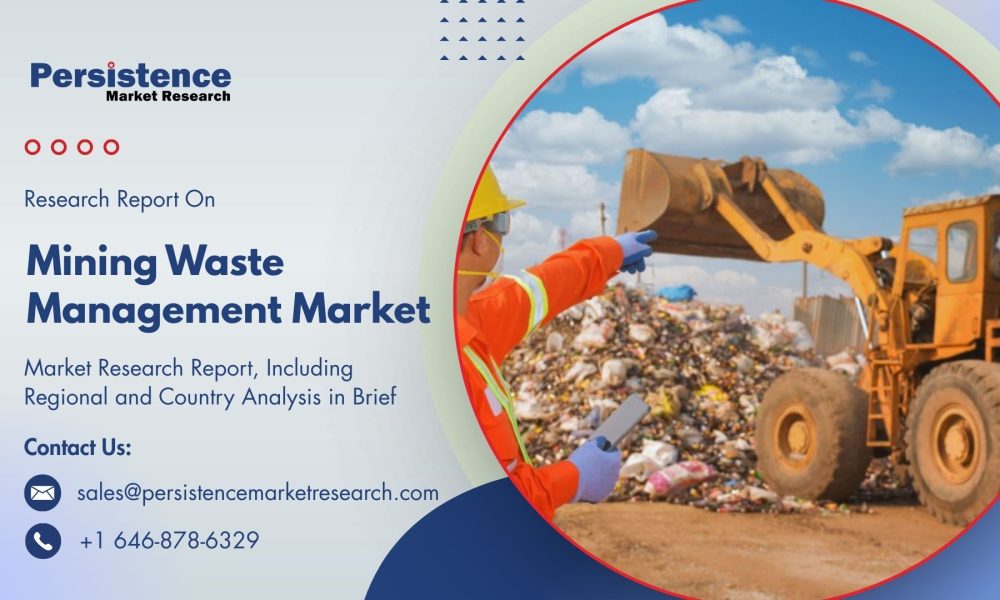
Market Overview
The global mining waste management market is experiencing robust growth as industries and governments worldwide focus on sustainable practices to mitigate the environmental impact of mining operations. According to the latest study by Persistence Market Research, the market is projected to rise from US$197.9 billion in 2024 to US$307.53 billion by 2031, registering a CAGR of 6.5% during the forecast period. This growth is being propelled by stricter regulatory frameworks, technological innovations in waste management, and the increasing demand for minerals and metals across multiple industries.
Mining operations generate large volumes of waste, including tailings, overburden, and waste rock. Effective management of this waste has become critical, not only to ensure compliance with environmental regulations but also to address community and stakeholder concerns regarding sustainability and ecological preservation. The industry is shifting toward eco-friendly and technologically advanced solutions, such as dry stacking of tailings, reprocessing of waste for resource recovery, and the use of geosynthetics for containment. These innovations are creating new opportunities for companies operating in the mining waste management space.
Get a Sample PDF Brochure of the Report (Use Corporate Email ID for a Quick Response): https://www.persistencemarketresearch.com/samples/34632
Key Market Drivers
One of the most significant drivers of the mining waste management market is the surge in global mining activity. The rising demand for minerals and metals, particularly in the construction, automotive, energy, and electronics sectors, has led to an increase in mining operations. Consequently, the volume of waste generated has also risen, necessitating more efficient and sustainable waste management solutions.
Regulatory compliance is another strong growth factor. Governments across the globe are implementing stringent laws and guidelines to ensure the safe disposal and management of mining waste. Organizations must adopt advanced waste management practices to meet these regulations, thereby fueling demand for innovative technologies and services in this sector.
Growing public awareness of environmental issues and the pressure on mining companies to demonstrate corporate social responsibility are also propelling market growth. Communities and investors are increasingly demanding that companies reduce their ecological footprint, which has led to the adoption of circular economy practices such as reprocessing mining waste to recover valuable minerals and reduce environmental hazards.
The ongoing transition to renewable energy and green technologies further boosts the market, as it requires extensive mining for raw materials like lithium, cobalt, and rare earth elements. This results in increased waste generation, creating a pressing need for effective management solutions.
Market Challenges
Despite promising growth, the mining waste management market faces significant challenges. The high costs associated with advanced waste management technologies and infrastructure pose barriers for many mining companies, especially in developing regions. Setting up tailings dams, filtration systems, or dry stacking operations requires substantial capital investment, which may not be feasible for small and medium-sized mining operators.
Another challenge lies in the technical limitations of certain waste management solutions. For instance, while reprocessing tailings can recover valuable resources, it often involves complex procedures and does not guarantee complete success. In addition, ensuring long-term stability and safety of tailings storage facilities continues to be a concern for regulators and communities alike.
Geopolitical factors also impact market dynamics. In regions with political instability or inadequate regulatory enforcement, mining waste management often becomes a neglected priority, leading to environmental degradation. Addressing these challenges requires a combination of technological innovation, policy reforms, and collaborative efforts among stakeholders.
Market Opportunities
The mining waste management market presents ample opportunities for innovation and expansion. One key opportunity lies in the adoption of digital technologies such as artificial intelligence, big data analytics, and drones for monitoring and managing mining waste. These tools can improve efficiency, safety, and compliance while reducing operational costs.
Circular economy practices represent another growth avenue. Mining waste is increasingly being viewed as a resource rather than just a liability. Companies are exploring ways to extract valuable minerals from waste, use waste materials in construction, or convert them into aggregates for infrastructure development. This not only reduces environmental risks but also creates new revenue streams.
Sustainability-focused investment is also driving opportunities. With investors increasingly prioritizing environmental, social, and governance (ESG) criteria, mining companies that adopt sustainable waste management practices are better positioned to secure funding and improve brand reputation. Furthermore, government initiatives supporting eco-friendly mining practices are encouraging companies to invest in waste reduction and recycling technologies.
Emerging markets in Asia-Pacific, Africa, and Latin America also present substantial growth potential. Rapid industrialization, urbanization, and infrastructure development in these regions are boosting mining activity, leading to higher demand for waste management solutions. International players are likely to explore partnerships and joint ventures with local companies to tap into these opportunities.
Regional Insights
Regionally, North America holds a significant share of the mining waste management market, driven by strict regulatory frameworks and high awareness of environmental sustainability. The United States and Canada are at the forefront of adopting advanced waste management technologies, including dry tailings disposal and geosynthetic solutions for containment.
Europe also represents a prominent market, fueled by the European Union’s stringent environmental regulations and strong focus on circular economy practices. Countries such as Germany, the UK, and Sweden are investing in innovative solutions to reduce the ecological footprint of mining operations and enhance resource recovery from waste.
The Asia-Pacific region is projected to experience the fastest growth in the coming years. Countries like China, India, and Australia, with their rapidly expanding mining industries, are generating vast volumes of waste, thereby driving the demand for effective waste management. Increasing government initiatives in these regions to promote sustainable mining practices further support market growth.
Latin America and Africa are also emerging as important markets due to rich mineral reserves and growing mining activities. However, the lack of infrastructure and weak enforcement of regulations in some countries pose challenges. Nonetheless, as international mining companies expand operations in these regions, investment in waste management is expected to rise.
For Customized Insights on Segments, Regions, or Competitors, Request Personalized Purchase Options @ https://www.persistencemarketresearch.com/request-customization/34632
Company Insights
The competitive landscape of the mining waste management market is highly dynamic, with leading players investing in new technologies, expanding geographical presence, and forming strategic partnerships to strengthen their positions. Key companies are emphasizing sustainability, innovation, and regulatory compliance to maintain a competitive edge.
✦ Veolia Environnement S.A.
✦ EnviroServ Waste Management (Pty) Ltd.
✦ Ausenco
✦ Golder Associates
✦ Hatch Ltd.
✦ Cleanaway Waste Management Limited
✦ Teck Resources Limited
✦ Seche Environnement
✦ AMEC Foster Wheeler
✦ Tata Steel Limited
These companies are actively involved in initiatives such as reprocessing mining waste, developing safer tailings management systems, and implementing digital technologies for monitoring and compliance. Collaborations between mining firms and waste management service providers are becoming increasingly common, aimed at developing integrated solutions that address both environmental and economic challenges.
Future Outlook
The mining waste management market is expected to continue its upward trajectory as sustainability becomes central to mining operations worldwide. With increasing demand for minerals, coupled with growing environmental concerns, companies will need to adopt innovative waste management solutions to remain competitive and compliant.
Advances in technology, such as AI-driven monitoring systems, enhanced filtration techniques, and eco-friendly tailings management, are likely to shape the future of the industry. Circular economy practices, where waste is reprocessed or repurposed for other industries, will gain more traction, creating new business opportunities and reducing ecological risks.
Furthermore, collaboration between governments, mining companies, and technology providers will be key to addressing the challenges associated with mining waste management. Supportive policies, sustainable financing, and global knowledge-sharing initiatives will pave the way for responsible mining practices in the future.
Conclusion
In conclusion, the global mining waste management market is poised for significant expansion, with its value projected to grow from US$197.9 billion in 2024 to US$307.53 billion by 2031 at a CAGR of 6.5%. Key growth drivers include rising mining activity, stringent regulations, technological innovations, and increasing emphasis on sustainability. While challenges such as high costs and technical limitations persist, opportunities in digital transformation, circular economy practices, and emerging markets offer immense potential for growth. With the combined efforts of key industry players, governments, and stakeholders, the mining waste management market is set to play a vital role in shaping a more sustainable and environmentally responsible future for the mining industry.
Explore the Latest Trending Research Reports:




