
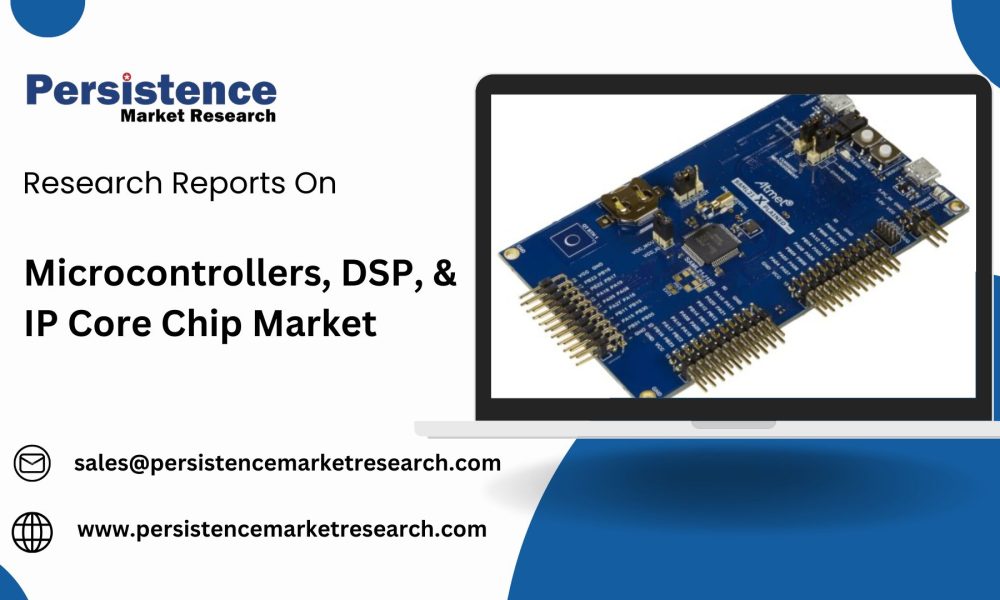
The global microcontrollers, digital signal processors (DSPs), and IP core chip market is poised for significant growth over the next decade, driven by rising demand across consumer electronics, automotive, medical, and industrial sectors. According to Persistence Market Research (PMR), the market size reached US$ 61.4 billion in 2025 and is projected to expand at a CAGR of 6.0%, reaching US$ 92.4 billion by 2032.
This robust growth is fueled by the widening applications of microcontrollers, DSPs, and IP core chips in modern technologies, coupled with rapid digitalization across multiple industries. The adoption of these components is especially strong in the consumer electronics sector, which is expected to grow at approximately 5.8% CAGR between 2025 and 2032.
Key Market Drivers
- Expansion of Consumer Electronics and Automotive Applications
The increasing integration of microcontrollers, DSPs, and IP core chips in consumer electronics and automotive applications is a major market driver. Microcontrollers are essential for processing and controlling various functions in devices such as smartphones, televisions, and home automation systems. Similarly, DSPs are widely used in audio and video processing, telecommunications, and speech recognition systems.
In the automotive sector, the adoption of these chips is accelerating, particularly with the rise of autonomous vehicles and advanced driver assistance systems (ADAS). Microcontrollers are crucial for engine control units, infotainment systems, and safety mechanisms, while DSPs are increasingly used in radar and LiDAR technologies to enhance vehicle safety and performance.
- Industry 4.0 and Automation Trends
The ongoing Industry 4.0 revolutionis fueling the adoption of microcontrollers, DSPs, and IP core chips in industrial automation. Smart factories, robotics, and connected devices rely heavily on these components for high-speed data processing, efficient control systems, and seamless communication between devices. This trend not only increases demand for these chips but also encourages manufacturers to innovate and develop solutions with higher performance and lower power consumption. - Medical Devices and Healthcare Applications
The healthcare sector presents a growing opportunity for microcontroller, DSP, and IP core chip manufacturers. Advanced medical devices, such as imaging systems, diagnostic tools, and wearable health monitors, require precise data processing and control capabilities. The rising need for portable and efficient medical devices is expected to open new revenue streams, further driving market growth. - Growth in Wireless Devices and Telecommunication Infrastructure
The surge in wireless devices, including smartphones, tablets, and smart home devices, is propelling the demand for DSPs. Digital signal processors are critical for high-quality signal processing while minimizing power consumption. They are extensively used in telecommunications, audio processing, radar systems, and embedded electronics, making them a cornerstone of the modern wireless ecosystem.
Technological Innovations and Product Launches
Leading companies are investing heavily in research and development to enhance the performance and efficiency of microcontrollers, DSPs, and IP core chips. For instance:
- In 2019, Synopsys, Inc. introduced the ARC VPX DSP processor, optimized for high-performance signal processing applications including sensor fusion and LiDAR/RADAR.
- In November 2024, CAST, Inc. launched a new processor IP core designed to provide lower power consumption and configurable options for embedded applications.
These innovations not only improve the functionality and efficiency of existing devices but also expand the potential application areas of these chips, creating new opportunities for manufacturers to capture market share.
Elevate your business strategy with comprehensive market data. Request a sample report now: https://www.persistencemarketresearch.com/samples/33469
Regional Market Insights
Asia Pacific is emerging as the epicenter of the microcontrollers, DSP, and IP core chip market. The region’s market size is projected to grow from US$ 24 billion in 2025 to US$ 43 billion by 2032, driven by the rapid expansion of the automotive and consumer electronics sectors and the increasing proliferation of IoT devices.
The Asia Pacific region is witnessing a surge in IoT adoption, with the number of connected devices expected to rise from 4.8 billion in 2020 to about 14 billion by 2030. Microcontrollers, DSPs, and IP core chips play a vital role in these devices, processing data collected by sensors and ensuring seamless device connectivity.
In North America, the market is forecasted to grow at a CAGR of 4.8%, driven primarily by advancements in automotive electronics and healthcare devices. Europe is also showing steady growth, supported by smart manufacturing initiatives and increasing automation in industrial sectors.
Automotive Sector: A Major Growth Engine
The automotive industry is a key contributor to the rising demand for microcontrollers, DSPs, and IP core chips. Global automobile sales reached approximately 67 million units in 2025 and are projected to hit 73 million units by 2032, creating significant opportunities for chip manufacturers.
Microcontrollers are extensively used in modern vehicles for ADAS, engine control units, infotainment, and telematics systems. DSPs, on the other hand, enhance radar and LiDAR systems, improve speech recognition interfaces, and optimize in-vehicle audio systems. As automakers continue to adopt autonomous and connected vehicle technologies, the demand for high-performance chips will grow exponentially.
Consumer Electronics: Driving DSP Demand
Consumer electronics, particularly smartphones, high-definition televisions, and wearable devices, are increasingly reliant on DSPs due to their power efficiency and high-performance capabilities. The rising consumer preference for smart, connected devices that offer superior multimedia experiences is a significant driver for DSP adoption.
DSPs are critical for tasks such as audio and video processing, noise cancellation, speech recognition, and wireless communications. As more devices integrate AI-based features, the reliance on high-performance DSPs and microcontrollers is expected to strengthen, fueling long-term market growth.
Industry Collaboration and Competitive Landscape
The microcontrollers, DSP, and IP core chip market is highly competitive, with companies investing heavily in innovation to stay ahead. Key players are focusing on developing low-power, high-performance solutions and expanding their product portfolios to cater to evolving industry requirements.
Collaborations and strategic partnerships are also shaping the market. For example, semiconductor companies are working with automotive manufacturers and IoT solution providers to co-develop specialized chips that address specific performance and energy-efficiency needs. Such initiatives are expected to boost adoption rates across various industries.
Future Outlook and Market Opportunities
The global microcontrollers, DSP, and IP core chip market is set to thrive due to:
- Increasing automation across manufacturing and industrial sectors
- Growing consumer electronics adoption and smart device penetration
- Rising demand for advanced medical devices
- Expansion of autonomous vehicle technologies
- Proliferation of IoT devices and smart infrastructure
Manufacturers who invest in innovation, optimize power efficiency, and provide scalable solutions are likely to capture the largest market share. Additionally, regions such as Asia Pacific offer significant growth potential due to rapid industrialization, increasing electronics production, and expanding IoT ecosystems.
By 2032, the market is expected to reach US$ 92.4 billion, highlighting the critical role of microcontrollers, DSPs, and IP core chips in driving the digital economy. Companies that anticipate industry trends, focus on high-growth applications, and innovate continually will position themselves as leaders in this rapidly evolving market.
Related Reports:




