
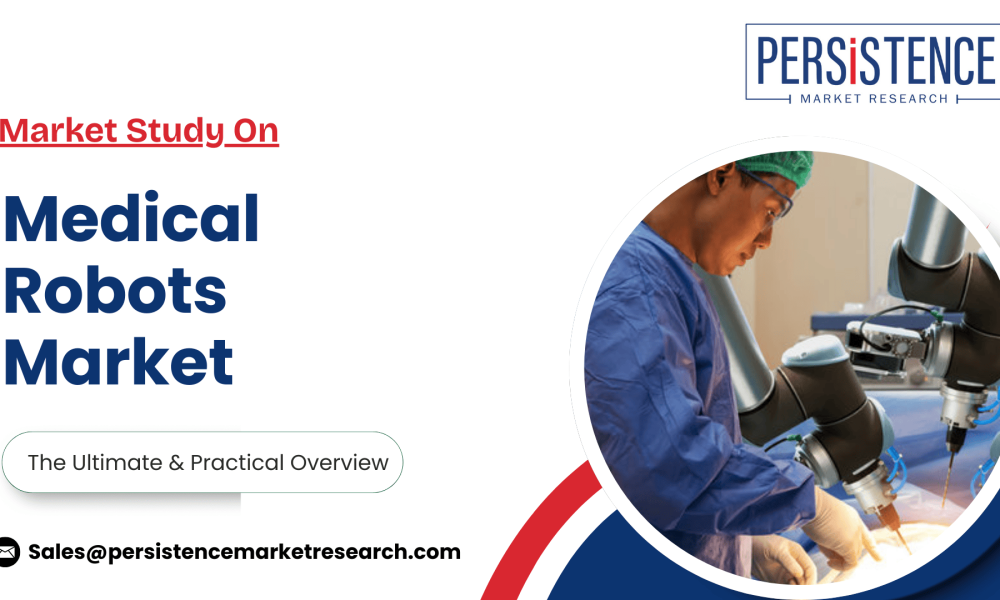
The medical robots market is experiencing a rapid transformation, with groundbreaking technologies driving the evolution of healthcare delivery systems worldwide. This market is poised for impressive growth, fueled by the increasing demand for precision, efficiency, and innovation in medical procedures. With applications spanning across surgery, rehabilitation, diagnostics, and patient care, the medical robots market is expected to witness a remarkable compound annual growth rate (CAGR) of 17.7%, growing from US$ 10.3 billion in 2025 to US$ 32.2 billion by 2032. According to Persistence Market Research, this expansive growth is primarily driven by advancements in robotic surgery, the integration of artificial intelligence (AI), and the growing need for automation in healthcare settings.
Overview of the Market:
The medical robots market has seen substantial advancements, particularly in surgical procedures. Robots have become an essential tool in the healthcare sector, providing enhanced precision, reduced invasiveness, and faster recovery times for patients. Surgical robots, such as the renowned da Vinci Surgical System, are helping surgeons perform minimally invasive procedures, leading to reduced blood loss, shorter hospital stays, and improved patient outcomes. This transformation is not limited to surgery but extends to rehabilitation robots that assist in patient recovery and robotic systems designed for routine tasks like medication delivery and disinfection.
Key growth drivers for this market include technological advancements in AI, the rise of precision medicine, and the increased adoption of minimally invasive surgeries. Robotic systems equipped with AI are becoming a game-changer by providing real-time decision-making assistance during surgeries. They enhance surgical accuracy, making procedures more efficient and less stressful for both patients and healthcare providers. As the demand for automation increases, medical robots are set to become a core part of modern healthcare infrastructure, improving both operational efficiency and patient care.
Key Highlights from the Report:
➤ The global medical robots market is expected to grow from US$ 10.3 billion in 2025 to US$ 32.2 billion by 2032.
➤ Surgical robots are driving the market, with demand for minimally invasive surgeries in specialties like urology, orthopedics, and neurosurgery.
➤ The adoption of AI and machine learning in medical robots is enhancing clinical decision-making and operational efficiency.
➤ Rehabilitation robots are improving patient recovery outcomes, particularly for those with mobility impairments.
➤ Digital twin technology is transforming surgical planning and execution by enabling highly detailed, real-time virtual models of patients.
➤ Robotic systems are automating routine hospital tasks such as disinfection, medication delivery, and patient transport, improving hospital efficiency.
Get a Sample Copy of Research Report (Use Corporate Mail id for Quick Response): https://www.persistencemarketresearch.com/samples/33120
Market Segmentation:
The medical robots market is diverse and segmented into various categories based on product types, applications, and end-users. The market is primarily divided into two main segments: surgical robots and rehabilitation robots. Surgical robots continue to dominate due to their ability to perform highly precise, minimally invasive procedures. This segment is growing rapidly due to the increasing demand for specialized surgeries, including neurosurgery, orthopedics, and urology.
Rehabilitation robots, on the other hand, are designed to assist patients in their recovery process. These robots offer adaptive and consistent movements that help patients with mobility issues regain functionality. The demand for rehabilitation robots is particularly high among elderly populations and patients recovering from surgeries or strokes.
In terms of product types, the instruments and accessories segment is expected to hold the largest market share. This is because, unlike robotic systems, which are high-cost investments, instruments and accessories such as surgical tools, end-effectors, and sensors require regular replacement. Hospitals and clinics need to frequently invest in these consumables, leading to a steady demand.
Regional Insights:
North America
The North American medical robots market is growing rapidly, led by the United States, which has emerged as a leader in robotic-assisted surgeries. Hospitals in the U.S. are investing significantly in robotic systems like the da Vinci Surgical System. The increasing adoption of minimally invasive surgeries and favorable reimbursement policies are key drivers of growth in this region. The presence of established players such as Intuitive Surgical, coupled with strong government support for innovation in healthcare technology, further accelerates market growth.
Europe
Europe is witnessing significant progress in the adoption of medical robots, particularly in countries like Germany, Sweden, and the Netherlands. These regions are emphasizing precision medicine and robotic rehabilitation solutions. The growing number of stroke and neurodegenerative disease cases among Europe’s aging population is driving the demand for robotic rehabilitation devices. Additionally, the region’s strong focus on digital healthcare and automation is pushing the integration of robotics into various medical applications.
Market Drivers:
Advancements in Robotic Surgery: Surgical robots have revolutionized modern medicine by enabling highly precise, minimally invasive procedures. These systems improve patient outcomes, reduce complications, and shorten recovery times. The increasing number of hospitals and surgical centers investing in robotic platforms is a major driver of growth.
Integration of AI and Machine Learning: AI and machine learning are at the forefront of enhancing medical robot capabilities. These technologies improve real-time decision-making during surgeries, enabling more accurate and efficient procedures. AI-powered medical robots can also learn from vast amounts of data, optimizing their functions over time.
Aging Population and Increased Chronic Diseases: As the global population ages, the demand for surgeries, particularly in specialties such as orthopedics and neurosurgery, is rising. Robotic systems are increasingly adopted to handle complex procedures with greater precision and reduced complications.
Market Restraints:
High Cost of Robotic Systems: One of the primary restraints in the medical robots market is the high cost associated with robotic systems. The initial cost of purchasing and installing these systems can exceed $1 million, with additional ongoing maintenance and training costs. Many healthcare providers, particularly in developing regions, may find it challenging to justify such an investment, limiting adoption.
Limited Reimbursement Models: In many regions, reimbursement for robotic-assisted surgeries remains limited, which can deter healthcare providers from investing in robotic systems. The cost-benefit ratio may not be compelling enough without sufficient reimbursement options.
Technological Challenges: Although medical robots are advancing rapidly, there are still technological barriers to overcome. Robotic systems often require sophisticated software and hardware, which can be challenging to integrate into existing healthcare infrastructure. Additionally, the need for constant updates and maintenance poses ongoing challenges.
Market Opportunities:
Robotic Endoscopy and Capsule Navigation: The development of robotic endoscopy and capsule navigation technologies represents a significant opportunity in the medical robots market. Robotic endoscopy uses miniaturized capsules to navigate the digestive tract, offering a non-invasive and patient-friendly alternative to traditional endoscopy. As these technologies evolve, they are expected to become a mainstream diagnostic tool in gastroenterology.
Robotic-Assisted Rehabilitation: The demand for robotic rehabilitation is on the rise, particularly for elderly patients and individuals recovering from surgeries or strokes. Robotic rehabilitation systems are proving to be highly effective in improving mobility and recovery outcomes, creating a significant market opportunity.
Tele-robotic Systems in Remote Areas: The use of tele-robotic systems to extend surgical expertise to remote and underserved regions presents a vast opportunity for the medical robots market. Governments and healthcare providers in emerging economies are beginning to implement AI-integrated robotic systems to bridge the healthcare access gap.
Reasons to Buy the Report
✔ Gain an in-depth understanding of the global medical robots market’s size, growth projections, and competitive landscape.
✔ Identify key trends, drivers, and technological advancements shaping the future of the medical robots industry.
✔ Access comprehensive insights into market segmentation, including product types, end-users, and regional trends.
✔ Understand the impact of digital twin technology, AI, and robotic rehabilitation on the industry.
✔ Benefit from expert analysis on market opportunities, restraints, and strategic recommendations for stakeholders.
Frequently Asked Questions (FAQs)
- How Big is the Medical Robots Market?
- Who are the Key Players in the Global Medical Robots Market?
- What is the Projected Growth Rate of the Medical Robots Market?
- What is the Market Forecast for the Medical Robots Industry by 2032?
- Which Region is Estimated to Dominate the Industry through the Forecast Period?
Company Insights:
✦ Intuitive Surgical Inc.
✦ Stryker Corporation
✦ Medtronic plc
✦ Zimmer Biomet
✦ Smith+Nephew plc
✦ Johnson & Johnson (through Ethicon and Auris Health)
✦ Siemens Healthineers AG
✦ Asensus Surgical, Inc.
✦ Renishaw plc
✦ Cyberdyne Inc.
✦ ReWalk Robotics Ltd.
✦ Ekso Bionics Holdings Inc.
Key Developments:
Zimmer Biomet Holdings, Inc. received CE Mark certification for its RibFix Advantage® Fixation System in April 2025.
Intuitive Surgical received 510(k) clearance for its next-generation multiport robotic system, da Vinci 5, from the U.S. FDA in March 2024.
The medical robots market is poised for transformative growth, offering immense potential for innovation and improvement in healthcare delivery worldwide. The integration of AI, the rise of robotic-assisted surgeries, and advancements in digital twin technology ensure that this market will continue to evolve and thrive in the coming years.
Read More Related Reports:




