
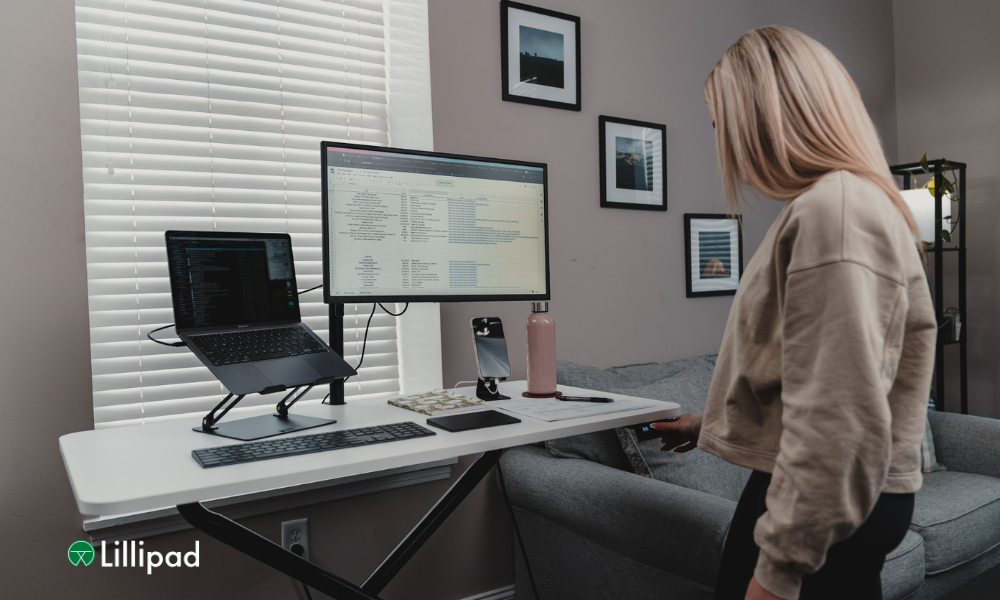
Workstations often degrade under continuous adjustment and load. Frames can shift, lifting columns lose synchronization, and surfaces weaken near mounting points. These failures affect device stability, user posture, and long-term ownership cost. Many buyers now evaluate mechanical endurance, motion control accuracy, and electrical reliability before selecting height adjustable furniture for daily use.
In response to these expectations, Lillipad presents a premium electric standing desk line manufactured in Wisconsin with an emphasis on structural reinforcement, controlled lift performance, and repeatable quality verification. The program reflects a production model that prioritizes inspection, calibrated assembly, and material consistency suitable for professional and residential workspaces.
Wisconsin Manufacturing And Process Oversight
Local production enables direct supervision of machining tolerances, weld integrity, and final assembly alignment. Steel components are formed using calibrated equipment that maintains dimensional consistency across batches. Weld points undergo both visual review and mechanical validation to confirm joint strength.
Frame assemblies move through staged checkpoints before motor integration. Each stage confirms column alignment, fastener torque accuracy, and surface level calibration. Units that do not meet defined thresholds are removed from distribution, supporting uniform performance across delivered products.
Structural Reinforcement And Frame Geometry
The frame architecture distributes load through dual lifting columns connected by cross supports that limit lateral motion. This configuration maintains surface stability during height transitions and under uneven equipment placement. Offset load testing simulates real work conditions involving monitors, mounted arms, and peripheral devices.
Mounting zones incorporate reinforced interfaces that reduce thread wear and prevent fastener loosening over time. Column housings maintain internal guide alignment to limit vibration transfer. These structural features extend operational lifespan and preserve consistent motion behavior.
Synchronized Lift Control Systems
The lift mechanism uses synchronized drive units that maintain equal elevation across the work surface. Resistance sensing adjusts torque output in real time, preventing abrupt stops and uneven travel. Controlled acceleration reduces stress on internal gears and bearings.
Thermal protection circuits regulate temperature during frequent adjustments. This supports active work patterns without reducing motor efficiency. Acoustic output remains within low operational levels suitable for shared offices and focused work environments.
Load Capacity Verification And Safety Response
Evaluation includes static load testing to confirm weight tolerance without structural deformation. Dynamic testing measures lift speed and balance while fully loaded. Data from these tests informs calibration of motion limits and protective cutoffs.
Anti collision detection halts movement when unexpected resistance is encountered. This function protects users, nearby equipment, and internal mechanical systems. Stability validation at seated and standing heights confirms minimal surface movement during typing and device operation.
Work Surface Durability And Finish Protection
Work panels use dense core construction designed to resist compression and edge swelling. Multi layer coatings provide resistance to scratches, moisture exposure, and common cleaning solutions. Edge sealing prevents particle intrusion that can weaken internal structure.
Metal thread inserts maintain fastening strength during accessory installation and repositioning. Abrasion testing confirms finish retention after repeated contact. Light exposure testing supports long term color stability across varied lighting conditions.
Electrical Integrity And User Interface Reliability
Power systems incorporate grounded operation and surge protection to safeguard internal electronics. Cable routing channels prevent pinching and reduce strain during height changes. Control interfaces use sealed components that maintain responsiveness while limiting dust entry.
Programmable memory settings allow repeatable positioning for multiple users. Voltage regulation protects circuit boards from fluctuation-related stress. Functional verification confirms stable startup, controlled motion, and reliable shutdown behavior.
Adaptation Across Professional And Remote Environments
The desk line supports corporate offices, healthcare workstations, educational facilities, and home-based setups. Consistent height adjustment enables posture variation that may reduce strain during extended tasks. Structural strength supports multi-user operation where frequent changes occur.
Compact footprint configurations allow integration into limited floor areas without reducing load capacity. Stable surfaces support computing equipment, technical devices, and collaborative tools without motion interference.
Material Selection And Serviceable Design
Material sourcing prioritizes suppliers with documented quality control and dimensional stability. Components are selected for compatibility and long term mechanical performance. Serviceable construction allows replacement of individual elements rather than full unit disposal, extending usable life.
Protective packaging structures maintain alignment during transport and reduce surface damage risk. Installation guidance supports proper load distribution and cable management, preserving lift accuracy throughout the product lifecycle.
Quality Validation And Continuous Evaluation
Each unit undergoes functional testing that confirms lift synchronization, control response, and electrical stability before shipment. Inspection records document measurement results and operational checks. This verification process supports consistent performance across production batches.
Ongoing field evaluation informs refinement of component selection and calibration parameters. Feedback from varied work environments contributes to adjustments in motion profiles and structural interfaces, supporting long term reliability.
Supply Chain Transparency And Domestic Sourcing
The Wisconsin based production model supports traceability of major components and reduces dependency on extended transport routes. Shorter logistics pathways help preserve alignment of precision parts and reduce handling related stress.
Supplier selection emphasizes documented material grading and repeatable dimensional output. This approach supports predictable assembly outcomes and consistent mechanical behavior across units delivered to end users.
Packaging, Delivery, And Installation Support
Protective packaging systems are designed to limit internal movement during shipment. Reinforced corner structures and segmented cushioning maintain frame alignment and surface integrity. Clear labeling supports correct orientation during handling.
Installation documentation provides guidance on fastener sequencing, load placement, and cable routing. Proper setup contributes to long-term lift accuracy and structural stability in daily operation.
Commitment To Durable Workspace Solutions
The Wisconsin-manufactured electric standing desk line reflects a focus on measurable strength, controlled motion, and repeatable quality. Reinforced frames, synchronized lift mechanisms, and validated testing protocols define the engineering approach. Domestic production supports close monitoring and responsive improvement based on observed performance data.
Organizations and individual users seeking dependable height-adjustable workstations may benefit from a design centered on structural stability and electrical reliability. The product line from Lillipad represents an emphasis on extended service life, consistent motion control, and verified component durability suited for daily professional use.
About Lillipad
Lillipad develops electric standing desks that combine ergonomic support with compact, foldable construction for efficient workspace planning. The product line features height adjustment, integrated cable routing, USB connectivity, and compatibility with monitor arms while arriving fully assembled for immediate use.
Models such as the Lillipad Pro are suited for remote professionals, shared office settings, and flexible work areas that require dependable performance and minimal floor impact. Each unit is engineered for durability, backed by a five-year warranty, and built on patent-pending design concepts that support consistent daily operation in both residential and corporate environments.




