
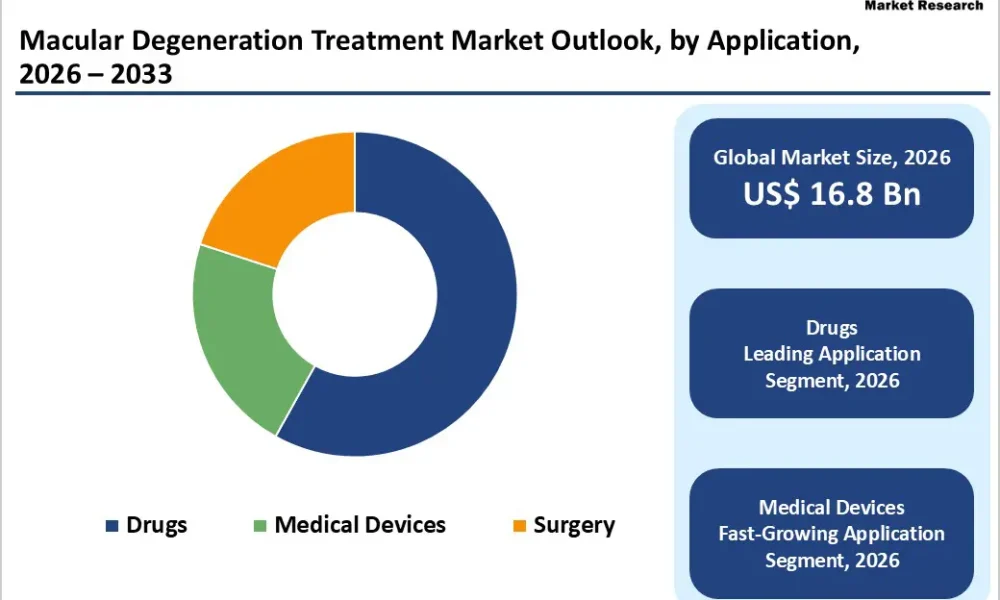
The global macular degeneration treatment market is poised for significant growth over the coming years. Valued at approximately US$ 16.8 billion in 2026, the market is projected to reach US$ 27.6 billion by 2033, reflecting a compound annual growth rate (CAGR) of 5.2% during the forecast period from 2026 to 2033. This growth is driven by rising prevalence of age-related macular degeneration (AMD), increasing awareness about eye health, and continuous advancements in therapeutic interventions. The market encompasses a wide range of treatments including drugs, medical devices, and surgical procedures, catering to both dry and wet forms of AMD.
Market Dynamics
Growth Drivers
The primary factors fueling the growth of the macular degeneration treatment market include the increasing geriatric population, which is more susceptible to AMD. With life expectancy rising globally, the number of individuals at risk of vision impairment due to macular degeneration is expanding. Additionally, the adoption of innovative therapies such as anti-VEGF drugs and gene therapies is contributing to improved patient outcomes, thereby driving demand. Growing awareness and accessibility of advanced diagnostic tools, such as optical coherence tomography (OCT) and fundus imaging, further enhance early detection and treatment initiation.
Download Your Free Sample & Explore Key Insights: https://www.persistencemarketresearch.com/samples/33174
Challenges
Despite strong growth prospects, the market faces challenges including high treatment costs, reimbursement constraints, and the complexity of surgical procedures. Patient adherence to long-term drug regimens, especially in wet AMD requiring repeated intravitreal injections, poses another significant hurdle. Furthermore, regional disparities in healthcare infrastructure, particularly in developing countries, limit access to advanced macular degeneration therapies.
Opportunities
The market offers substantial opportunities for pharmaceutical and medical device companies to innovate and expand. Emerging therapies such as sustained-release drug implants, gene therapy, and cell-based regenerative treatments have the potential to transform the treatment landscape. Additionally, increasing collaborations between industry players and research institutions can accelerate product development and market penetration. Expansion in emerging regions, particularly in East Asia and South Asia, presents an opportunity to capture untapped patient populations.
Segmentation Analysis
By Treatment
Drugs: Pharmaceutical interventions remain the dominant treatment segment, driven by the widespread adoption of anti-VEGF drugs such as ranibizumab, aflibercept, and bevacizumab. These drugs effectively manage wet AMD by inhibiting abnormal blood vessel growth and reducing vision loss. Research into novel pharmacological agents including gene therapy and small molecule inhibitors is further supporting segment growth.
Medical Devices: Medical devices for AMD treatment include imaging systems, laser therapy equipment, and implantable devices that provide sustained drug delivery. Innovations in minimally invasive devices and home monitoring systems are expected to increase adoption, especially in developed regions.
Surgery: Surgical interventions, although less common, are critical for patients with advanced AMD or complications. Procedures include macular translocation, submacular surgery, and vitrectomy. Technological advancements and robotic-assisted surgeries are improving outcomes and reducing recovery time, supporting the growth of this segment.
Get Custom Insights Designed for Your Businecss: https://www.persistencemarketresearch.com/request-customization/33174
By Disease
Dry Age-Related Macular Degeneration (Dry AMD): Dry AMD accounts for the majority of cases and is characterized by gradual degeneration of the retinal pigment epithelium. Current treatment options focus on nutritional supplements, lifestyle modifications, and emerging therapeutics aimed at slowing disease progression. The absence of a definitive cure for dry AMD presents opportunities for new drug development.
Wet Age-Related Macular Degeneration (Wet AMD): Wet AMD, though less prevalent, is more severe due to rapid vision loss caused by abnormal blood vessel growth. Anti-VEGF therapies dominate the treatment landscape, with ongoing research into combination therapies and gene-based interventions enhancing treatment efficacy.
By Route of Administration
Suprachoroidal: The suprachoroidal route enables targeted delivery of therapeutics to the posterior segment of the eye, reducing systemic exposure and improving patient compliance. It is increasingly used in clinical trials for novel drugs and gene therapies.
Intravenous: Intravenous administration is less common for AMD treatment but is relevant for systemic therapies and investigational drugs aimed at modifying disease progression.
Intravitreal: Intravitreal injections remain the most common and effective method for delivering anti-VEGF drugs directly to the retina. Frequent injections can be challenging for patients, leading to innovations in sustained-release formulations to reduce treatment burden.
By End User
Hospitals: Hospitals account for a significant share of the macular degeneration treatment market due to advanced diagnostic facilities and availability of specialized ophthalmology departments.
Specialty Clinics: Specialized ophthalmology clinics provide targeted AMD treatments, including intravitreal injections and follow-up care, contributing to the growth of outpatient care services.
Ambulatory Surgical Centers: These centers offer surgical and minimally invasive procedures with cost-effectiveness and convenience, expanding access to AMD treatments in outpatient settings.
By Region
North America: North America holds a substantial market share due to high prevalence of AMD, advanced healthcare infrastructure, and strong presence of leading pharmaceutical companies. The U.S. continues to dominate, supported by early adoption of novel therapies and comprehensive reimbursement policies.
Europe: Europe is another major market, driven by aging populations and government initiatives promoting eye health. Countries such as Germany, France, and the U.K. are leading in adoption of innovative treatments and medical devices.
East Asia: East Asia is experiencing rapid growth due to increasing geriatric populations in countries like China, Japan, and South Korea. Rising healthcare spending and expanding medical insurance coverage support market expansion.
South Asia and Oceania: These regions are emerging markets with increasing awareness of AMD and improving healthcare infrastructure. Urbanization and lifestyle changes contribute to growing prevalence, creating new opportunities for market players.
Latin America: Latin America is witnessing gradual market growth, driven by increasing incidence of AMD and improving access to healthcare services. Brazil and Mexico are key markets due to large patient populations and rising healthcare expenditure.
Middle East and Africa: The Middle East and Africa show modest growth, constrained by limited access to advanced treatments and lower healthcare spending. However, increasing investments in healthcare infrastructure and rising awareness are expected to support future growth.
Checkout Now & Download Complete Market Report: https://www.persistencemarketresearch.com/checkout/33174
Competitive Landscape
The global macular degeneration treatment market is highly competitive, with major players focusing on strategic partnerships, research collaborations, and product innovation to enhance market presence. Key companies include F. Hoffmann-La Roche Ltd, Novartis AG, Regeneron Pharmaceuticals Inc., Bayer AG, and Bausch Health Companies Inc.. Other notable players include Alcon Inc., Apellis Pharmaceuticals Inc., Astellas Pharma Inc. (Iveric Bio), Samsung Bioepis, and REGENXBIO Inc.. Emerging companies like 4D Molecular Therapeutics, Adverum Biotechnologies, and Ocular Therapeutix Inc. are also contributing to innovation and competition in the market.
These players are investing in research and development to introduce novel therapeutics, improve drug delivery systems, and expand geographically. Licensing agreements, mergers, and acquisitions are common strategies to strengthen their market position and increase access to emerging markets.
Future Outlook
The future of the macular degeneration treatment market is promising, with continuous advancements in therapeutic interventions and drug delivery systems. Gene therapy, cell-based regenerative therapies, and combination treatments are expected to reshape the treatment paradigm. Moreover, digital health technologies, including AI-driven diagnostic tools and remote patient monitoring systems, will play a crucial role in early detection and personalized care.
Rising awareness campaigns and patient education programs are also expected to improve early diagnosis and adherence to treatment protocols. With the increasing burden of AMD and the demand for effective treatments, the market is likely to see sustained growth across all regions, particularly in Asia-Pacific and Latin America.
Conclusion
The global macular degeneration treatment market is witnessing robust growth driven by an aging population, increasing prevalence of AMD, and innovations in therapeutic and surgical interventions. Drugs remain the largest treatment segment, with anti-VEGF therapies leading the market, while medical devices and surgical procedures continue to expand in adoption. North America and Europe currently dominate the market, but emerging regions such as East Asia and South Asia are expected to contribute significantly to future growth.
With a projected CAGR of 5.2% from 2026 to 2033, the market offers vast opportunities for pharmaceutical companies, medical device manufacturers, and healthcare providers. Strategic collaborations, product innovations, and expansion into emerging markets will be critical to gaining competitive advantage. The evolving landscape of macular degeneration treatment, driven by technological advancements and increasing awareness, indicates a future of improved patient outcomes and reduced vision impairment globally.
The market’s future is closely tied to research and development in gene therapy, regenerative medicine, and sustained-release drug delivery systems. Companies investing in these innovations are likely to lead the market, while growing awareness and improved healthcare infrastructure in developing regions will ensure broader patient access. Overall, the macular degeneration treatment market presents a compelling growth story with promising revenue potential and opportunities for transformative advancements in eye care.




