
The Luxury Electronic Watches Market is witnessing strong momentum as consumers increasingly seek high-end smartwatches that combine luxury design with cutting-edge digital technology. Premium electronic watches have evolved beyond simple timekeeping devices into sophisticated lifestyle accessories that integrate advanced health monitoring, connectivity, and smart functionalities. High-income consumers and tech-savvy buyers are particularly drawn to luxury electronic watches because they blend the craftsmanship of traditional watchmaking with the innovation of wearable technology. As a result, global luxury watch brands and fashion houses are strategically expanding their product portfolios to include premium smartwatches.
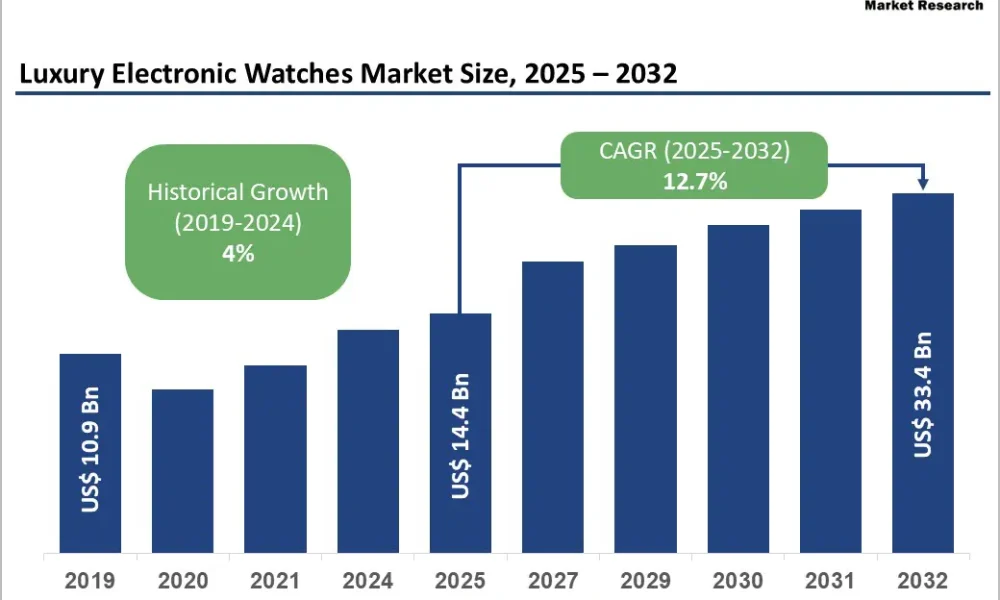
According to Persistence Market Research, the global luxury electronic watches market size is likely to be valued at US$14.4 Billion in 2025 and is estimated to reach US$33.4 Billion by 2032, growing at a CAGR of 12.7% during the forecast period 2025–2032. This robust growth is largely driven by the rising consumer demand for premium smartwatches that offer advanced health monitoring capabilities such as heart rate tracking, sleep monitoring, and fitness analytics. Additionally, the strategic entry of heritage watchmakers and fashion brands into the smartwatch segment is accelerating product innovation and expanding the consumer base. The premium smartwatch segment is expected to dominate the market due to its technological sophistication and luxury appeal, while North America is projected to remain the leading geographical region owing to strong consumer purchasing power and rapid adoption of wearable technologies.
Claim Your Free Sample & Stay Ahead of Competitors : https://www.persistencemarketresearch.com/samples/35874
Key Highlights from the Report
➤ The luxury electronic watches market is projected to grow from US$14.4 Billion in 2025 to US$33.4 Billion by 2032.
➤ Increasing demand for premium smartwatches with advanced health monitoring features is a key growth catalyst.
➤ Integration of luxury craftsmanship with wearable technology is transforming the global watch industry.
➤ Entry of heritage watchmakers and luxury fashion brands into the smartwatch segment is accelerating innovation.
➤ North America is expected to dominate the market due to strong consumer spending on luxury wearable devices.
➤ Growing preference for multifunctional wearable accessories among affluent consumers is expanding market opportunities.
Market Segmentation
The luxury electronic watches market can be segmented based on product type, technology integration, and end-user demographics. Product segmentation typically includes premium smartwatches equipped with advanced sensors, connectivity features, and customizable digital interfaces. These watches offer a wide range of capabilities such as activity tracking, heart rate monitoring, GPS integration, and smartphone connectivity. Consumers in the luxury segment value both functionality and aesthetics, prompting manufacturers to combine high-end materials such as titanium, ceramic, and sapphire glass with advanced electronic components. This hybrid approach allows luxury electronic watches to maintain the prestige associated with traditional watchmaking while delivering modern technological features.
From an end-user perspective, the market is largely driven by affluent consumers, technology enthusiasts, and fashion-conscious buyers who view luxury electronic watches as status symbols and functional gadgets. Corporate professionals and fitness-focused consumers are also increasingly adopting these devices due to their health monitoring capabilities and productivity features. Additionally, younger luxury consumers are gravitating toward smart luxury watches that integrate digital lifestyles with premium design. Manufacturers are responding by introducing customizable watch faces, interchangeable straps, and enhanced connectivity features to appeal to a broader audience across different age groups and lifestyle preferences.
Get Personalized Data – Request Customization Today : https://www.persistencemarketresearch.com/request-customization/35874
Regional Insights
North America is expected to remain a dominant region in the luxury electronic watches market due to strong demand for premium wearable technology and a high concentration of affluent consumers. The region’s technology-driven culture and early adoption of innovative consumer electronics have significantly boosted sales of luxury smartwatches. Consumers in this region often prioritize advanced health monitoring capabilities, seamless smartphone integration, and premium materials when purchasing wearable devices. The presence of leading technology companies and luxury brands further strengthens market growth and encourages continuous product innovation.
Europe also represents a key market for luxury electronic watches, supported by its long-standing tradition of luxury watchmaking and strong consumer appreciation for high-end craftsmanship. European watchmakers are increasingly blending traditional horology with digital capabilities to remain competitive in the evolving wearable technology landscape. Meanwhile, growing consumer interest in luxury lifestyle products and wearable health technology is driving steady market expansion. The region’s strong luxury brand heritage enables manufacturers to introduce technologically advanced watches while maintaining the elegance and prestige associated with classic timepieces.
Market Drivers
The primary driver of growth in the luxury electronic watches market is the increasing demand for premium wearable devices equipped with advanced health monitoring features. Modern consumers are becoming more health-conscious and are actively seeking devices that can track vital health metrics such as heart rate, sleep patterns, physical activity, and stress levels. Luxury electronic watches cater to this demand by offering sophisticated sensors and intelligent analytics while maintaining high-end design aesthetics. This combination of wellness technology and luxury appeal makes these watches attractive to consumers who want both functionality and prestige.
Another important growth factor is the strategic expansion of traditional watchmakers and luxury fashion brands into the smartwatch category. Historically known for mechanical craftsmanship, many heritage watch brands are now integrating digital technology into their designs to appeal to modern consumers. This shift has created a new category of luxury wearable devices that combine traditional craftsmanship with modern innovation. As more established luxury brands enter the electronic watch segment, the market is witnessing rapid technological advancements, improved design sophistication, and increased consumer awareness.
Market Restraints
Despite the promising growth outlook, the luxury electronic watches market faces certain restraints that may limit its expansion. One key challenge is the relatively high cost of premium smartwatches compared to standard wearable devices. Luxury electronic watches incorporate high-end materials, advanced sensors, and premium branding, which significantly increases their retail prices. This pricing factor restricts adoption primarily to high-income consumer segments and limits mass-market penetration.
Another restraint involves the rapid pace of technological obsolescence in the wearable electronics sector. Unlike traditional mechanical watches that can remain relevant for decades, electronic devices often require regular updates or replacements due to evolving technology standards. Consumers investing in luxury electronic watches may hesitate if they perceive the technology becoming outdated quickly. Manufacturers must therefore continuously innovate and offer software updates or modular features to ensure their products remain competitive and valuable over time.
Market Opportunities
The luxury electronic watches market presents several promising opportunities as wearable technology continues to evolve. One significant opportunity lies in the integration of advanced health and wellness technologies. Future luxury smartwatches are expected to incorporate more sophisticated health monitoring features such as enhanced biometric tracking, improved sleep analytics, and personalized wellness insights. As healthcare awareness continues to rise globally, luxury watch manufacturers can position their devices as essential lifestyle companions rather than simple accessories.
Another key opportunity is the expansion of luxury electronic watches into emerging markets where affluent consumer populations are rapidly growing. Rising disposable incomes and increasing interest in premium lifestyle products are creating favorable conditions for luxury wearable devices. Brands that successfully combine innovative technology with timeless design will be well positioned to capture new consumer segments. Additionally, collaborations between technology companies and luxury fashion brands can lead to unique product offerings that further expand the market’s appeal.
Ready to Dive Deep? Buy Full Report Today : https://www.persistencemarketresearch.com/checkout/35874
Company Insights
Key players operating in the luxury electronic watches market include:
- Apple Inc.
- Samsung Electronics Co. Ltd.
- TAG Heuer SA
- Garmin Ltd.
- Huawei Technologies Co. Ltd.
- Fossil Group Inc.
- Montblanc International GmbH
- Louis Vuitton Malletier SA
- Breitling SA
- Tissot SA
- Fitbit Inc. (now part of Google)
- Hublot SA
- Coros Wearables
- Polar Electro Oy
- Withings SA
Recent Developments
June 2024 – A leading luxury watch brand introduced an advanced premium smartwatch model integrating enhanced fitness and wellness tracking features.
September 2024 – A global fashion house expanded its wearable technology portfolio by launching a luxury electronic watch collection featuring improved connectivity and customizable digital interfaces.
Future Opportunities and Growth Prospects
The future of the luxury electronic watches market looks promising as technological innovation continues to redefine the wearable technology landscape. With the increasing convergence of luxury craftsmanship and digital functionality, manufacturers are focusing on creating sophisticated devices that cater to evolving consumer expectations. Advanced health tracking, improved battery efficiency, and AI-driven personalization are expected to shape the next generation of luxury smartwatches.
As consumer lifestyles become more connected and technology-driven, luxury electronic watches are likely to evolve into essential digital companions. The growing emphasis on wellness, premium design, and multifunctional capabilities will continue to drive demand across global markets. With strategic investments in innovation and expanding presence in emerging economies, the market is expected to sustain its strong growth trajectory in the coming years.




