
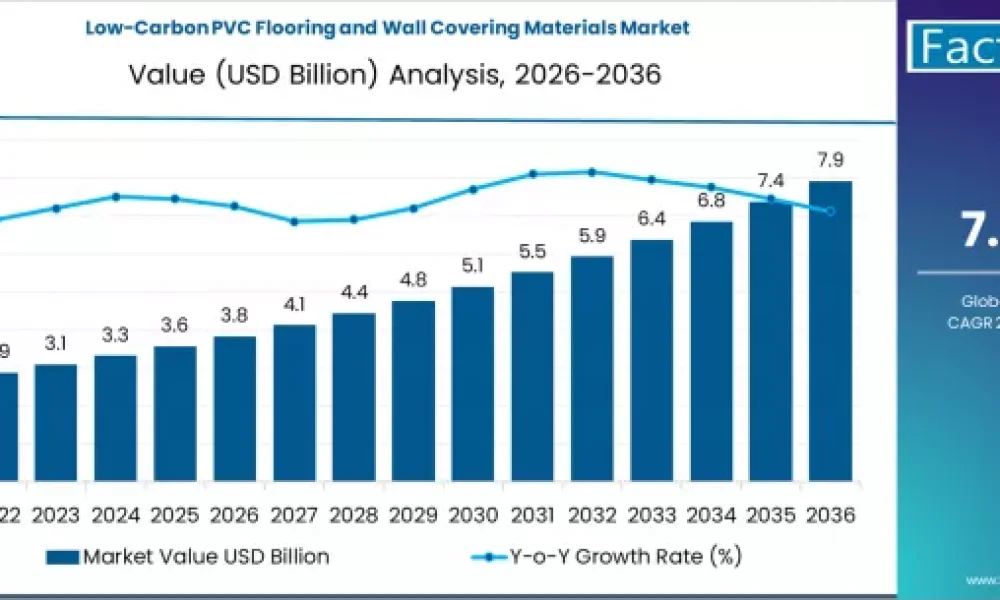
The global construction and interior design industry is undergoing a profound transformation as sustainability evolves from an optional feature to a mandatory requirement. Within this context, low-carbon PVC flooring and wall covering materials are emerging as a rapidly expanding specialty segment, fueled by regulatory pressures, carbon-reduction targets, and advances in polymer technology. By 2036, this market is projected to more than double in value, signaling a long-term shift in how resilient, cost-effective, and environmentally responsible interior materials are produced and deployed.
To access the complete data tables and in-depth insights, request a Discount On The Report here: https://www.factmr.com/connectus/sample?flag=S&rep_id=13305
Market Size and Growth Outlook to 2036
The low-carbon PVC flooring and wall covering materials market is projected to grow from $1.2 billion in 2026 to $2.7 billion by 2036, reflecting a compound annual growth rate (CAGR) of 8.5% over the next decade. Flooring applications account for approximately 55% of total demand, with residential construction representing nearly 46% of market share, highlighting the increasing prioritization of sustainable interiors in housing projects.
This growth trend is part of the larger vinyl flooring market, valued at over $25 billion in 2024, but low-carbon variants are driving premium adoption due to their verified sustainability performance. Buyers are increasingly considering carbon intensity and environmental impact alongside cost, durability, and aesthetics, accelerating the transition to greener materials.
Sustainability and Regulatory Drivers
Regulation is the most significant driver of market transformation. Governments and industry bodies are introducing stricter embodied-carbon limits for building materials, emphasizing the carbon footprint of production and installation in addition to operational energy use. Targets for at least a 40% reduction in embodied carbon by 2030, with net-zero embodied carbon by 2050, are reshaping material specifications in commercial, public, and residential construction projects.
Trade and environmental policies are also influencing market dynamics. Carbon border adjustments and potential import restrictions on high-emission materials are creating indirect pressure on global supply chains. Companies producing low-carbon PVC are better positioned to access green financing, public procurement contracts, and international markets where sustainability compliance is mandatory.
Innovation Trends in Low-Carbon PVC
Technological innovation is dramatically improving PVC’s environmental profile. Key strategies include:
Bio-attributed and recycled feedstocks, reducing reliance on virgin fossil-based inputs.
Low-toxicity, advanced plasticizers, improving health and environmental performance.
Energy-efficient production processes, minimizing greenhouse gas emissions during manufacturing.
Life-cycle assessments show that modern low-carbon PVC flooring can achieve as little as 3.3 kg CO₂-equivalent per square meter per year over a 10-year lifespan, benefiting from durability, low maintenance requirements, and long product lifecycles.
Additional innovations include digital manufacturing, closed-loop recycling systems, and Environmental Product Declarations (EPDs), which provide verifiable sustainability metrics for architects, developers, and procurement teams. Collectively, these trends are increasing confidence in PVC as a low-carbon, circular-material solution.
Competitive Landscape and Strategic Positioning
The competitive landscape is increasingly influenced by sustainability credentials rather than size alone. Leading companies are differentiating themselves through verified carbon reductions, transparency, and alignment with green building certifications. Early movers investing in low-carbon product lines are gaining access to high-growth market segments such as healthcare, education, and public infrastructure, where compliance with sustainability standards is often mandatory.
Companies offering EPD-backed, low-carbon materials are better positioned to capture contracts tied to green financing or government-led initiatives, creating a competitive advantage that is likely to strengthen over the next decade.
Regional Dynamics and Emerging Markets
North America and Europe remain the largest adopters due to mature green building markets and stringent sustainability standards. However, Asia—particularly China—is projected to achieve a CAGR exceeding 10% through 2036, driven by urbanization, domestic carbon-reduction initiatives, and rising awareness of sustainable construction practices.
Globally, the low-carbon flooring market, including non-PVC alternatives, was valued at over $70 billion in 2024, indicating the scale of opportunity for manufacturers that pivot toward climate-aligned product portfolios. The transition toward low-carbon PVC represents a strategic inflection point for suppliers seeking growth in both established and emerging markets.
Outlook to 2036: From Niche to Norm
By 2036, low-carbon PVC flooring and wall covering materials are expected to move from a specialized offering to mainstream adoption. The convergence of regulation, sustainability-focused procurement, and investor scrutiny is redefining competitive advantage in the building materials sector. Sustainability is no longer a marketing narrative—it is a measurable performance metric that directly affects market access, profitability, and long-term viability.
As embodied-carbon accounting becomes standard practice, manufacturers that integrate innovation, lifecycle thinking, and transparent reporting into their operations will define the next generation of interior materials. Market growth projections suggest that the demand for low-carbon PVC products will continue to rise, reshaping supply chains, product development strategies, and investment priorities across the global construction ecosystem.
The evolution of low-carbon PVC flooring and wall covering materials exemplifies the broader shift in the building industry: a movement toward materials that combine durability, design flexibility, and carbon accountability. Companies that seize this opportunity are likely to gain lasting competitive advantage in a market that increasingly prioritizes environmental performance as much as cost or aesthetics.
Have a specific Requirements and Need Assistant on Report Pricing or Limited Budget please contact us – [email protected]
To View Related Report :
Low-Carbon PVC Piping and Water Distribution Systems Market https://www.factmr.com/report/low-carbon-pvc-piping-and-water-distribution-systems-market
Low-Carbon PVC for Window Profile and Door Systems Market https://www.factmr.com/report/low-carbon-pvc-for-window-profile-and-door-systems-market



