
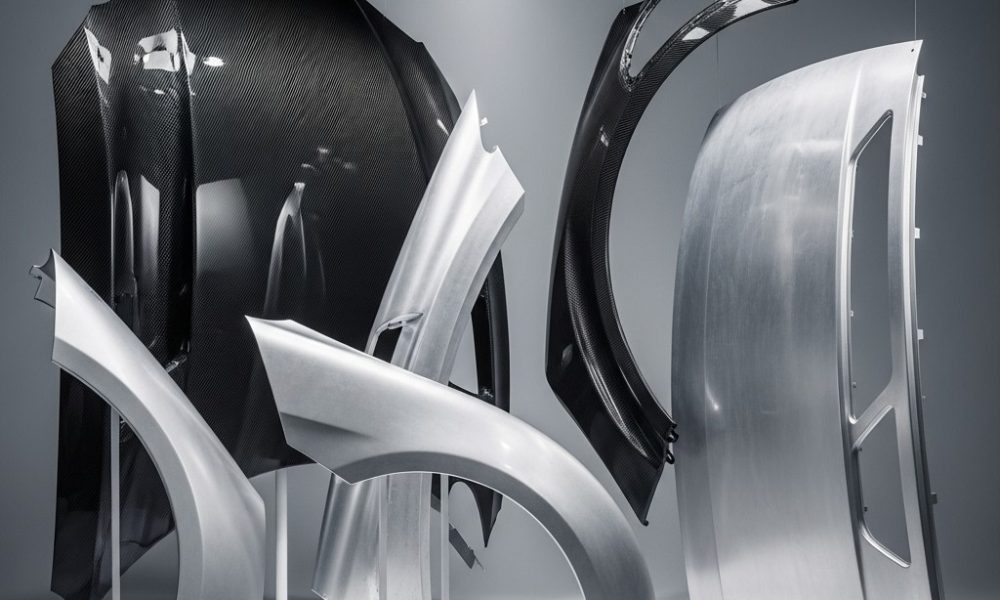
The lightweight automotive body panels market is on a robust growth trajectory, projected to reach USD 133.52 billion by 2025 and expand to USD 212.52 billion by 2035 at a CAGR of 4.75%. Driven by rising demand for fuel-efficient, low-emission vehicles and the rapid adoption of electric vehicles (EVs), automakers are increasingly relying on advanced materials such as aluminum, carbon fiber, magnesium alloys, and high-strength steel to reduce vehicle weight without compromising safety or performance.
The market’s growth is driven by the automotive industry’s focus on fuel efficiency, lower emissions, and the rapid adoption of electric vehicles. Advanced materials like aluminum, carbon fiber, and high-strength steel are increasingly used to reduce vehicle weight without compromising safety. Governments worldwide are enforcing stricter emission standards, further accelerating the demand for lightweight body panels.
Uncover Essential Data – Get A Sample Copy https://www.futuremarketinsights.com/reports/sample/rep-gb-1532
Key Industry Highlights:
- The market for lightweight automotive body panels is witnessing accelerated growth due to the dual pressures of regulatory emission standards and consumer demand for sustainable, high-performance vehicles.
- Lightweight panels, encompassing hoods, doors, bumpers, roofs, and fenders, play a pivotal role in reducing vehicle mass, improving fuel economy, and lowering CO₂ emissions. Electric vehicles, in particular, are driving the adoption of these materials to offset the heavy weight of battery packs while enhancing driving range and efficiency.
- Furthermore, technological innovations in advanced polymers, nanomaterials, and energy-absorbing smart materials are expected to redefine the sector by improving safety, crashworthiness, and recyclability.
Collaboration Between Small Market Players to Strengthen Product Portfolio:
Smaller companies in the lightweight automotive body panels market are increasingly forming strategic alliances and joint ventures to leverage R&D capabilities and share costs in material development. Startups and mid-sized suppliers like AUSTEM, Hwashin, and Gordon Auto Body Parts are focusing on cost-effective, lightweight solutions for EVs, while larger players are investing in advanced composites, thermoplastics, and aluminum alloys. Collaborative efforts also target improvements in production processes, including precision molding, laser welding, and AI-enabled structural analysis, allowing small players to compete in a market dominated by Gestamp, Magna International, and Plastic Omnium.
Market Concentration:
The market remains moderately concentrated with a mix of leading multinational suppliers and innovative smaller companies. Gestamp leads with an 18-22% market share, followed by Magna International (15-19%), Plastic Omnium (12-16%), FLEX-N-GATE (10-14%), and Gordon Auto Body Parts (8-12%). The remaining 25-35% is shared among emerging players who focus on niche solutions such as thermoplastics, hybrid composites, and energy-absorbing panels. The competitive landscape emphasizes material innovation, structural durability, sustainability, and local production expansions to cater to OEM requirements.
Country-wise Insights:
- China is set to dominate growth with a CAGR of 6.8%, fueled by mass EV adoption and government initiatives promoting clean mobility. Leading domestic manufacturers like BYD, NIO, and Geely are integrating aluminum and CFRP panels into mass-market EVs.
- USA will grow at a 6.1% CAGR, driven by CAFE standards and EV production. OEMs such as Tesla, Ford, and GM, along with suppliers like Alcoa and Magna, are leading lightweight solutions.
- Germany (5.3% CAGR) and South Korea (5.5% CAGR) are focusing on material innovation for electric and luxury cars, with companies like BMW, Hyundai, and Kia introducing high-strength alloys and composites.
- UK (5.0% CAGR) and France (4.7% CAGR) are adopting lightweight materials for hybrid and electric platforms, with Jaguar Land Rover, Aston Martin, Renault, and Peugeot implementing advanced aluminum and CFRP solutions.
- Italy, Japan, Australia, and New Zealand show steady growth, emphasizing lightweight panels for performance, urban mobility, and environmental compliance, albeit with smaller domestic production bases.
Segment-wise Analysis:
- By Component: Bumpers dominate the market with a 22% share due to their structural significance and role in fuel efficiency. Door panels follow closely at 20%, leveraging high-strength steels, polypropylene composites, and natural fiber-reinforced plastics for sustainable vehicle mass reduction. Major suppliers include Magna International, Plastic Omnium, and Grupo Antolin.
- By Vehicle Type: Light Commercial Vehicles (LCVs) account for 68% of the market, reflecting their high demand in urban logistics and last-mile delivery. Heavy Commercial Vehicles (HCVs) comprise 32%, where adoption is slower due to high structural integrity requirements, though fiber-reinforced plastics and ultra-high-strength steels are gaining traction.
Stay Ahead – Grab the Report: https://www.futuremarketinsights.com/reports/brochure/rep-gb-1532
About Future Market Insights (FMI)
Future Market Insights, Inc. (ESOMAR certified, recipient of the Stevie Award, and a member of the Greater New York Chamber of Commerce) offers profound insights into the driving factors that are boosting demand in the market. FMI stands as the leading global provider of market intelligence, advisory services, consulting, and events for the Packaging, Food and Beverage, Consumer Technology, Healthcare, Industrial, and Chemicals markets. With a vast team of over 400 analysts worldwide, FMI provides global, regional, and local expertise on diverse domains and industry trends across more than 110 countries.



