
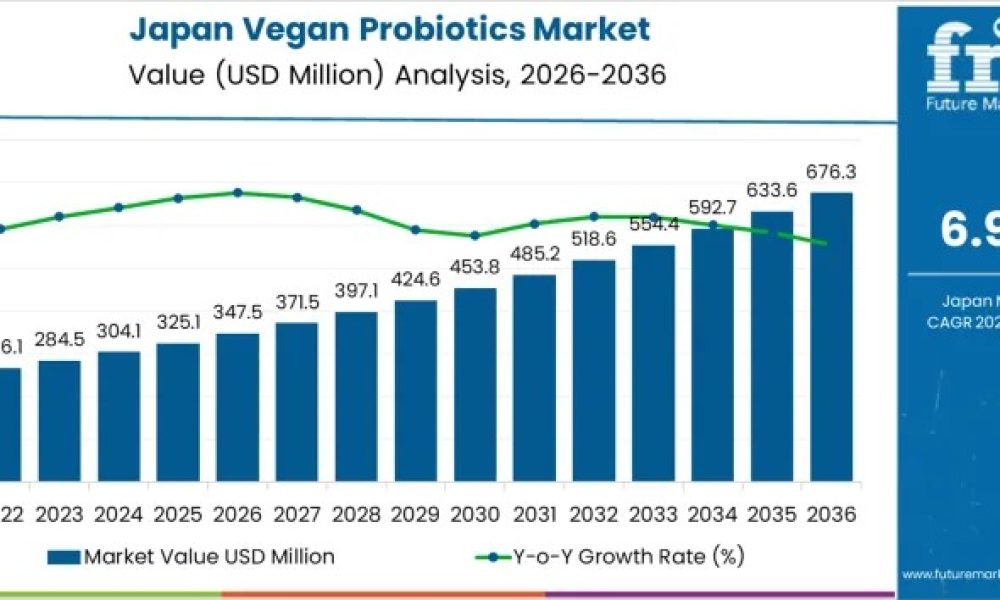
The demand for vegan probiotics in Japan is projected to reach USD 347.5 million in 2026 and expand to USD 676.3 million by 2036, reflecting a CAGR of 6.9%, according to the latest market insights from Future Market Insights (FMI). The growth trajectory is propelled by consumers increasingly favoring plant-based digestive health solutions, aligned with lactose avoidance, clean-label preferences, and preventive wellness routines. Rising interest in gut health, immunity support, and daily functional nutrition is sustaining adoption across supplements and fermented beverage categories.
Explore trends before investing – request a sample report today!
Vegan probiotics are gaining traction as coconut kefir, a dairy-free fermented base, emerges as the leading product due to its compatibility with diverse probiotic strains, mild taste, and good gastrointestinal tolerance. Manufacturers are leveraging coconut substrates to deliver stable live cultures suitable for vegan and allergen-conscious consumers, while refrigerated and shelf-stable innovations enhance accessibility through retail and direct-to-consumer channels.
Key growth regions include Kyushu & Okinawa, Kanto, Kansai, Chubu, and Tohoku, supported by strong health awareness, mature functional food retail, and urban consumption density. Leading market players such as Yakult Honsha Co., Ltd., Meiji Holdings, Morinaga Milk Industry Co., Ltd., FANCL Corporation, and Asahi Group Holdings drive competitive activity through fermentation expertise, clinical positioning, and trusted brand recognition aligned with Japan’s preventive healthcare and nutrition standards.
Market Dynamics Driving Vegan Probiotics in Japan
Demand is fueled by changing dietary habits, heightened health consciousness, and sensitivity toward ingredient sourcing. Consumers increasingly seek plant-based fermentation probiotics to accommodate vegetarian, flexitarian, and allergen-aware diets. Lactose intolerance awareness further encourages non-dairy probiotic adoption, while an aging population emphasizes digestive health, immune balance, and gut wellness.
The proliferation of functional food categories within pharmacies and convenience stores has improved access to vegan probiotic products. Innovations in strain stability and encapsulation extend shelf life and efficacy, encouraging adoption across age groups. Recommendations from healthcare professionals further reinforce regular consumption, while domestic manufacturers continue to develop strains optimized for local dietary patterns. E-commerce platforms expand visibility among health-focused urban and regional consumers.
Product Segmentation: Coconut Kefir Leads
By product type, coconut kefir accounts for 25% of demand, leading the market due to fermentation suitability and consumer acceptance. Other key product types include:
- Soy milk – 22.7%, benefiting from long-standing soy consumption and formulation flexibility
- Kombucha – 22.3%, driven by beverage-oriented consumption
- Coconut yogurt – 20%, offering versatile spoonable and drinkable options
- Miso – 10%, serving culinary and traditional uses
Enzyme Source & Industry Segmentation
Bacterial strains dominate enzyme sources with a 73.5% market share, attributed to stability, predictable fermentation, and compatibility with food and beverage matrices. Yeast strains contribute 26.5%, supporting niche functional positioning.
By end-use industry, food and beverages lead with 40%, encompassing fermented drinks, plant-based dairy alternatives, and functional foods. Nutrition, healthcare, and fitness segments complement consumption through targeted probiotic applications.
Regional Insights
Regional adoption reflects local health awareness, retail infrastructure, and consumer demographics:
- Kyushu & Okinawa – CAGR 8.6%, driven by wellness-focused consumption and pharmacy access
- Kanto – CAGR 7.9%, shaped by urban health consciousness and e-commerce penetration
- Kansai – CAGR 7.0%, supported by household supplement use and trusted retail channels
- Chubu – CAGR 6.1%, anchored in mainstream supplement consumption and value-driven choices
- Tohoku – CAGR 5.4%, influenced by aging population and conservative adoption
- Rest of Japan – CAGR 5.1%, reflecting steady replacement-driven consumption
Competitive Landscape
The market is anchored by Yakult Honsha Co., Ltd., Meiji Holdings, Morinaga Milk Industry Co., Ltd., FANCL Corporation, and Asahi Group Holdings. Companies are capitalizing on fermentation expertise, strain validation, regulatory compliance, flavor adaptation, and distribution penetration across retail, pharmacy, and online channels.
- Yakult Honsha Co., Ltd. – Extensive domestic research and product development, including vegan-friendly formulations
- Meiji Holdings – Plant-based probiotic products and fortified functional foods nationwide
- Morinaga Milk Industry Co., Ltd. – Vegan supplement offerings and strategic partnerships
- FANCL Corporation – Health supplement lines with probiotic and prebiotic systems
- Asahi Group Holdings – Beverage innovations integrating plant-derived probiotic cultures
To Access The Full Market Analysis, Strategic Recommendations, And Analyst Support, Purchase The Complete Report Here.
Future Outlook
The Japan vegan probiotics market is expected to maintain steady growth as health-conscious consumers, aging demographics, and plant-based nutrition trends drive adoption. Expansion is supported by scientific credibility, clean-label transparency, and innovations in strain stability and shelf-stable delivery formats.
About Future Market Insights (FMI)
Future Market Insights, Inc. (FMI) is an ESOMAR-certified, ISO 9001:2015 market research and consulting organization, trusted by Fortune 500 clients and global enterprises. With operations in the U.S., UK, India, and Dubai, FMI provides data-backed insights and strategic intelligence across 30+ industries and 1,200 markets worldwide.



