

Why Inherited Vehicles Create Document Challenges
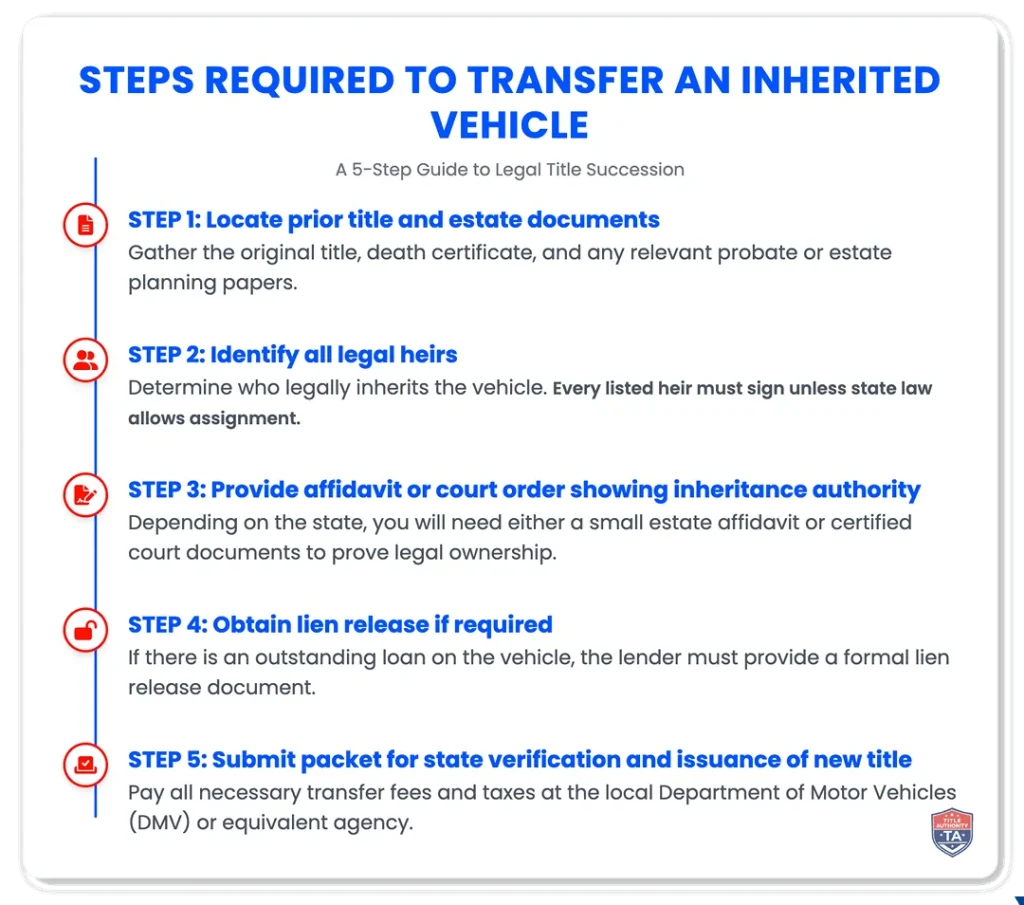
Inherited vehicles represent a small segment of total transfers, but they create some of the most complicated documentation problems handled by state offices. A standard sale involves clear roles and straightforward forms. An inherited vehicle requires proof that the applicant has legal authority, which depends on the estate’s status, family structure, and state-specific rules. These variables increase the likelihood of errors that can prevent a transfer. Small mistakes, such as missing signatures or incomplete affidavits, lead clerks to request additional documents before issuing a new title.
State offices review inherited vehicle paperwork more closely than typical sales. The risk of disputes and incomplete estate documentation is higher, and clerks must verify that the applicant is acting within the law. Many delays occur when families submit partial documents or rely on informal explanations rather than official paperwork.
Differences in State Rules for Inherited Vehicles
Inherited vehicle transfers vary widely across states. Some states allow small succession affidavits for simple estates. Others require formal probate regardless of value. These differences cause problems when a vehicle inherited in one state is later transferred to another. The receiving state may require documents not included in the original process. Families often discover this only when a clerk rejects the paperwork.
Cross-border issues become more prevalent as vehicles move through the used car market. A national analysis from Consumer Affairs reveals that used vehicles account for a significant share of total transactions. A vehicle may pass through several states over its lifespan, and each jurisdiction has different inheritance requirements. When the previous transfer did not include the information the receiving state expects, processing slows down.
Cross-Border Inheritance Adds More Complexity
When a vehicle is inherited in one state and must be retitled in another, inconsistent documentation standards create obstacles. Some states list inheritance authority directly on their affidavits. Others require a separate court order. Clerks cannot process a transfer without confirmation that the applicant has proper authority.
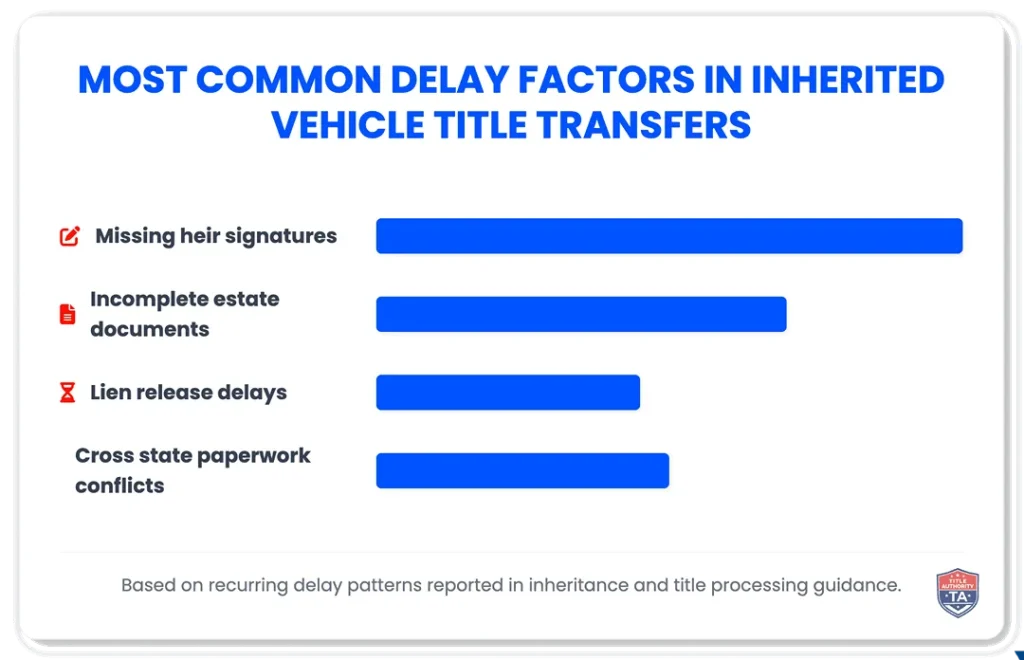
The article “Louisiana Vehicle Title Transfer Requirements Explained” explains how Louisiana handles inherited vehicles and highlights how missing signatures from multiple heirs can delay the processing. These issues apply broadly. A document packet that satisfies one state may fall short in another, especially when signatures or court confirmations are incomplete.
Lien Release Issues in Inherited Vehicle Transfers
Some inherited vehicles carry active liens. Even if the family believes the loan was paid off, state offices rely on official releases filed by the lender. Without a release, a clerk cannot proceed. Obtaining one may require additional estate documents, especially when lenders will only work with authorized representatives.
Delays tied to lien releases are common in private sales, as noted by industry sources. These delays increase when the owner is deceased and the estate must gather information before contacting the lender.
Verification Through NMVTIS
State offices use the National Motor Vehicle Title Information System to check branding history, theft records, and title data. The system helps identify inconsistencies between estate documents and state records, as described in the NMVTIS program overview.
Inherited vehicles often trigger verification steps because their records may be outdated or incomplete. NMVTIS may show liens or other issues that the family did not expect. Clerks must resolve these inconsistencies before issuing a new title. This protects record accuracy but increases processing time.
Why Multiple Heirs Extend Processing Time
When several heirs are listed, every person with a legal interest must sign the required documents. If one heir cannot be contacted, the process is halted. Some families may need to obtain court-appointed representatives or affidavits that assign rights. The rules vary by state and often result in delays when documents are transferred across jurisdictions.
These requirements make interstate inheritance one of the most time-consuming categories of transfers. Transfers that appear simple in one state may require additional steps in another due to differences in how each jurisdiction handles estate authority.
Outlook for Inherited Vehicle Transfer Challenges
Inherited vehicle transfers remain complex because they depend on documents that states cannot standardize. Family structure, estate type, lien status, and state-specific rules all influence processing time. National databases help identify issues early; however, most problems still arise from incomplete or outdated estate documents.
Families who gather all required forms, verify lien details, and understand local rules reduce delays. Many others encounter unexpected requirements that must be addressed before ownership can be transferred. Inherited vehicle transfers will continue to require careful review and additional documentation compared to standard sales.