
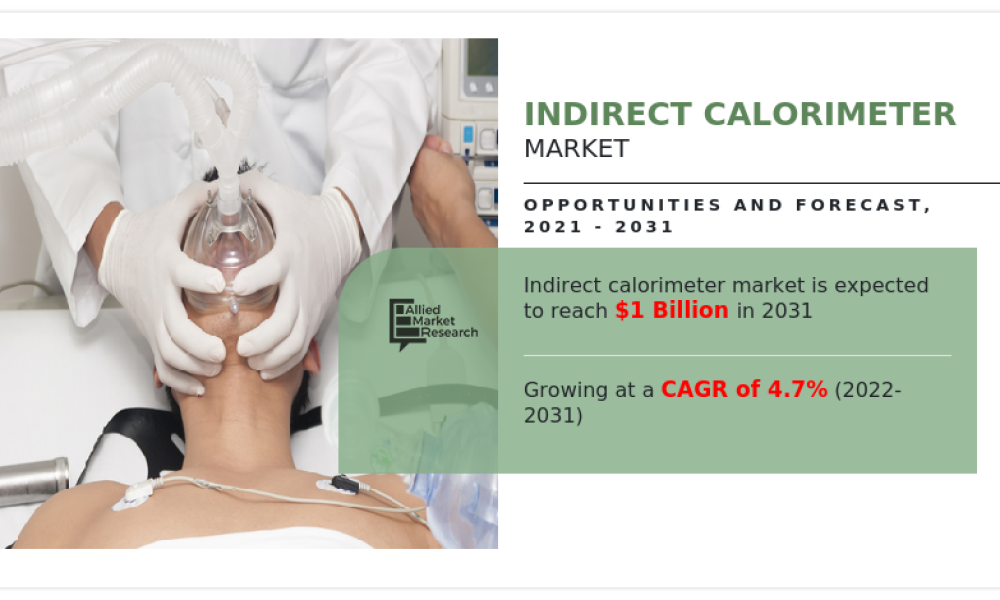
The global indirect calorimeter market is experiencing significant growth, driven by rising obesity rates, advancements in metabolic monitoring technology, and increasing healthcare awareness. Valued at $641.7 million in 2021, the market is projected to reach $1,016.33 million by 2031, growing at a CAGR of 4.7% during the forecast period.
Indirect calorimeters measure metabolic rates by analyzing respiratory gases (oxygen consumption and carbon dioxide production), helping healthcare professionals optimize nutrition plans and treatment strategies. With obesity and metabolic disorders on the rise, the demand for precise metabolic assessment tools is surging.
Key Market Drivers
1. Rising Global Obesity Epidemic
According to the World Obesity Atlas 2022, 1 billion people (1 in 5 women and 1 in 7 men) will be obese by 2030.
Obesity-related conditions (diabetes, cardiovascular diseases) necessitate metabolic monitoring, boosting demand for indirect calorimeters.
2. Technological Advancements
Modern calorimeters use AI-driven analytics and cloud-based data tracking for real-time metabolic insights.
Portable and wireless devices enhance usability in hospitals, sports medicine, and home healthcare.
3. Expanding Applications in Healthcare & Fitness
Clinical Nutrition: Helps tailor personalized diet plans for patients with metabolic disorders.
Critical Care: Monitors energy expenditure in ICU patients on mechanical ventilation.
Sports Science: Optimizes athletic performance by measuring caloric burn and metabolic efficiency.
4. Government & Corporate Wellness Initiatives
The WHO and national health agencies promote obesity prevention programs, increasing adoption of metabolic monitoring tools.
Employers integrate corporate wellness programs, including metabolic assessments for employees.
COVID-19 Impact: A Surprising Boost
The pandemic accelerated the adoption of indirect calorimeters due to:
✔ Increased demand in ICUs for monitoring COVID-19 patients’ metabolic needs.
✔ Rise in telehealth and remote patient monitoring, driving portable calorimeter sales.
✔ Research institutions investing in metabolic studies to understand long-term COVID effects.
Market Segmentation
By Type
Standalone Calorimeters (Dominant in 2021) – Used in hospitals and critical care units.
Portable Calorimeters (Fastest-growing) – Includes wearable devices & smartphone-integrated models.
By Application
Medical (Largest segment) – Used in nutritional assessment, critical care, and chronic disease management.
Sports & Fitness – Gaining traction among athletes and fitness enthusiasts.
By End-User
Hospitals (Leading segment) – High demand for metabolic monitoring in ICUs and post-surgical care.
Diagnostic Centers – Increasing preventive health check-ups.
Others (Research labs, universities, sports academies).
By Region
North America (Market leader) – Advanced healthcare infrastructure and high obesity rates.
Europe – Strong government health initiatives.
Asia-Pacific (Fastest-growing) – Rising healthcare investments and obesity prevalence.
LAMEA – Gradual adoption due to improving healthcare access.
Competitive Landscape
Key players innovating in the indirect calorimeter market include:
Breezing (Wireless metabolic trackers)
Cosmed (Portable & clinical calorimeters)
GE Healthcare (Advanced ICU monitoring solutions)
Korr Medical Technologies (Precision metabolic analyzers)
Vyaire Medical (Respiratory & metabolic diagnostics)
Future Trends & Opportunities
🔹 AI & Machine Learning Integration – Predictive analytics for metabolic disorders.
🔹 Expansion in Home Healthcare – User-friendly devices for personal metabolic tracking.
🔹 Emerging Markets Growth – Increasing healthcare investments in Asia & Africa.
Conclusion
The indirect calorimeter market is set for steady growth, fueled by rising obesity, technological advancements, and expanding healthcare applications. With portable devices and AI-driven solutions gaining momentum, the future of metabolic monitoring looks promising. Stakeholders should focus on innovation, affordability, and global expansion to capitalize on emerging opportunities.
Key Takeaways
✅ Market Size: $641.7M (2021) → $1,016.33M (2031) | CAGR 4.7%
✅ Top Driver: Rising global obesity & metabolic disorders.
✅ Fastest-Growing Segment: Portable calorimeters.
✅ Leading Region: North America | High-Growth Region: Asia-Pacific.
✅ Post-COVID Demand: Increased ICU and remote monitoring needs.
With precision medicine and preventive healthcare gaining importance, indirect calorimeters will play a pivotal role in shaping the future of metabolic health management.




