
The India malaria diagnostics market is experiencing steady growth as the country intensifies its efforts to detect, monitor, and eliminate malaria infections. The market is projected to expand from US$ 61.6 Mn in 2025 to US$ 81.6 Mn by 2032, registering a compound annual growth rate (CAGR) of approximately 4.1% during the forecast period. Increasing awareness of malaria prevention, strengthening public health infrastructure, and rising government investments in disease surveillance programs are driving demand for efficient diagnostic technologies. India’s malaria elimination initiatives, particularly the National Strategic Plan for Malaria Elimination, are playing a significant role in expanding the accessibility of diagnostic tools across both urban and rural regions. In addition, collaborations between government agencies, international organizations, and private diagnostic providers are facilitating the deployment of advanced malaria testing solutions, thereby improving early detection and timely treatment.
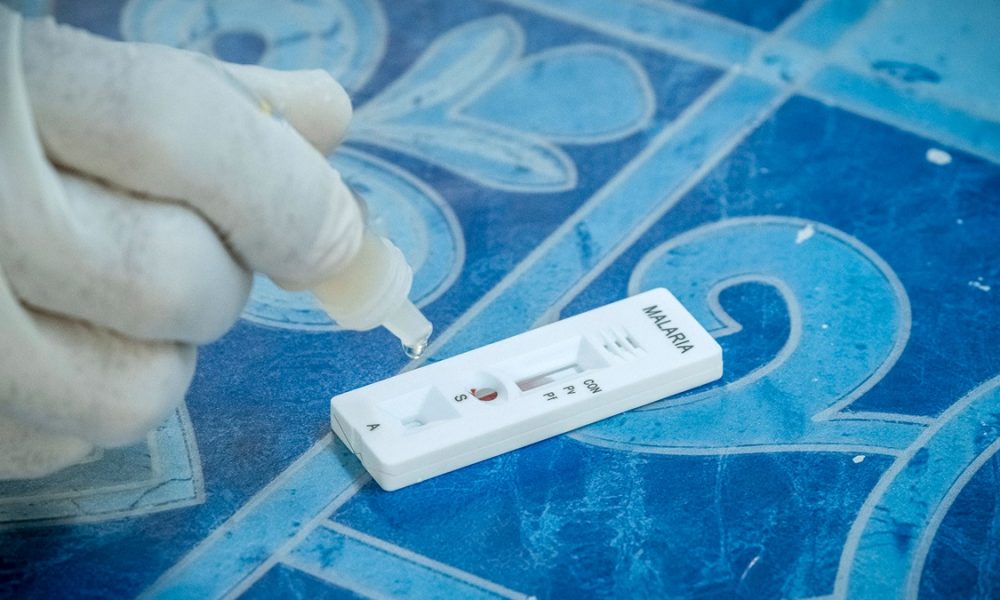
One of the key growth drivers of the India malaria diagnostics market is the increasing need for rapid and accurate detection in malaria-endemic regions, where a large share of the population remains vulnerable to infection. Nearly 95% of the Indian population lives in malaria-endemic zones, and a significant proportion of cases occur in tribal and forest areas where healthcare infrastructure is limited. As a result, Rapid Diagnostic Tests (RDTs) have emerged as the leading segment due to their ability to provide results within 15 to 30 minutes without requiring sophisticated laboratory equipment. These tests are particularly useful in remote areas with limited resources. From a geographical perspective, East India is the leading regional market due to the high prevalence of malaria in states such as Odisha, Jharkhand, Assam, and Meghalaya, where climatic conditions favor mosquito breeding and disease transmission. Government initiatives, mass screening campaigns, and enhanced surveillance systems in these states are contributing to strong demand for diagnostic solutions.
Download Your Free Sample & Explore Key Insights: https://www.persistencemarketresearch.com/samples/35426
Key Highlights from the Report
• The India malaria diagnostics market is projected to reach US$ 81.6 Mn by 2032, expanding at a CAGR of 4.1% between 2025 and 2032.
• Rapid Diagnostic Tests (RDTs) are expected to dominate the market with a share of about 54.2% in 2025 due to their speed and ease of use.
• Increasing adoption of molecular diagnostic technologies such as PCR and RT-qPCR is emerging as a major market trend.
• Government programs aimed at malaria elimination are significantly expanding diagnostic coverage across rural and tribal regions.
• Hospitals and clinics are projected to remain the largest end-use segment due to their role in managing severe malaria cases and disease reporting.
• East India remains the leading regional market due to persistent malaria transmission in tribal and forest-based areas.
Market Segmentation
The India malaria diagnostics market can be segmented based on technology and end-use sectors, each playing a crucial role in the overall diagnostic ecosystem. By technology, the market primarily includes microscopy, Rapid Diagnostic Tests (RDTs), and molecular diagnostic tests. Among these, Rapid Diagnostic Tests represent the most widely used method for malaria detection in India. Their ability to deliver results within a short time frame without requiring specialized laboratory equipment makes them ideal for deployment in rural and resource-constrained settings. Public health programs frequently distribute RDT kits to community health workers and primary healthcare centers, enabling rapid diagnosis and immediate treatment.
Microscopy has traditionally been regarded as the gold standard for malaria diagnosis due to its ability to identify parasite species and estimate parasite density. However, the technique requires trained personnel and laboratory infrastructure, which may not always be available in remote regions. Despite these challenges, microscopy continues to play a critical role in hospitals and diagnostic laboratories where accurate parasite identification is essential for treatment decisions. Molecular diagnostic techniques such as polymerase chain reaction (PCR) are gaining increasing attention due to their high sensitivity and specificity, especially in detecting low-density parasitemia and asymptomatic infections that are often missed by conventional methods. These technologies are particularly useful in surveillance and research programs aimed at malaria elimination.
Based on end-use, the market is divided into hospitals and clinics, diagnostic centers, and academic and research institutions. Hospitals and clinics account for the largest share of the market because they handle the majority of malaria cases, including severe and complicated infections that require immediate medical intervention. The integration of rapid testing methods in these facilities allows healthcare professionals to quickly confirm malaria cases and initiate treatment, thereby reducing complications and mortality rates. Diagnostic centers are also gaining prominence as they offer specialized laboratory services and advanced testing capabilities. These centers often serve as referral facilities for complex cases and support large-scale screening programs in high-prevalence areas.
Academic and research institutions represent another important segment of the malaria diagnostics ecosystem in India. These institutions are involved in studying parasite biology, evaluating diagnostic technologies, and monitoring drug resistance patterns. Their research contributes to the development of innovative diagnostic tools and strategies that support national malaria elimination goals.
Regional Insights
The malaria diagnostics landscape in India varies significantly across different regions due to variations in climate, population density, healthcare infrastructure, and malaria prevalence. East India is considered the most prominent regional market for malaria diagnostics due to the high incidence of malaria in states such as Odisha, Assam, Jharkhand, and Meghalaya. The warm and humid climate in these regions creates favorable conditions for mosquito breeding, leading to persistent transmission. Government programs aimed at malaria elimination have significantly increased the distribution of diagnostic tools in these areas. Large-scale screening initiatives and surveillance activities have also improved early detection rates and strengthened disease control efforts.
In North India, the malaria burden has declined significantly in recent years due to improved healthcare infrastructure and effective vector control programs. States such as Punjab and Haryana have reported a substantial reduction in malaria cases, reflecting the success of public health interventions. However, the region still faces challenges related to surveillance systems and underreporting of cases, particularly from private healthcare providers. Advanced molecular diagnostics are gradually being introduced in this region to improve detection of low-density infections that might be missed by traditional diagnostic methods.
The West India malaria diagnostics market, which includes states such as Maharashtra, Gujarat, Rajasthan, and Goa, is characterized by a mix of urban healthcare facilities and rural outreach programs. Public health authorities in these states have implemented extensive surveillance programs that include blood smear examinations and rapid testing. Peripheral health centers often provide free diagnostic services to encourage early detection and treatment. Rapid Diagnostic Tests are increasingly being used to address delays associated with microscopy results, ensuring that patients receive timely treatment.
Other regions of India are also witnessing gradual improvements in malaria diagnostic capabilities as government programs continue to strengthen disease monitoring systems. Increasing awareness, improved diagnostic infrastructure, and wider availability of testing kits are collectively enhancing malaria detection across the country.
Get Custom Insights Designed for Your Business: https://www.persistencemarketresearch.com/request-customization/35426
Market Drivers
The growth of the India malaria diagnostics market is primarily driven by strong government initiatives aimed at eliminating malaria and improving disease surveillance. The government has implemented several programs designed to expand diagnostic coverage in rural and tribal regions where malaria prevalence remains high. These programs focus on increasing the availability of diagnostic kits, training healthcare workers, and establishing robust disease reporting systems. The widespread adoption of Rapid Diagnostic Tests has significantly improved access to malaria testing in remote areas where laboratory facilities are limited.
Technological advancements in diagnostic methods are also contributing to market expansion. Innovations such as portable microscopes with integrated artificial intelligence capabilities are improving diagnostic accuracy in field conditions. These devices can automate parasite detection and reduce dependence on highly skilled technicians. Additionally, the integration of digital reporting systems is enabling faster data collection and improved monitoring of malaria outbreaks. Partnerships between government agencies, private healthcare providers, and international organizations are further accelerating the adoption of advanced diagnostic technologies.
Another important factor driving market growth is the increasing focus on early detection and treatment to prevent disease transmission. Accurate and timely diagnosis is essential for controlling malaria outbreaks and reducing mortality rates. Healthcare authorities are therefore emphasizing the deployment of reliable diagnostic tools across primary health centers and community healthcare programs.
Market Restraints
Despite positive growth prospects, the India malaria diagnostics market faces several challenges that could hinder its expansion. One of the primary limitations is the diagnostic gap associated with conventional microscopy methods. While microscopy remains widely used, its sensitivity is limited when detecting low parasite densities or mixed infections. Studies have shown that microscopy may fail to detect a significant proportion of malaria cases, particularly in regions where transmission rates are low. This limitation can delay treatment and allow infections to persist within communities.
Another major challenge is the lack of adequate healthcare infrastructure in remote and tribal regions. Many malaria-affected areas have limited access to diagnostic laboratories, trained personnel, and reliable internet connectivity for disease reporting. These constraints can delay case detection and reduce the effectiveness of surveillance systems. Furthermore, inconsistencies in data reporting between public and private healthcare providers can lead to underestimation of the actual malaria burden.
Financial constraints also pose challenges in adopting advanced molecular diagnostic technologies, which are often more expensive than traditional testing methods. Although these technologies offer superior sensitivity and accuracy, their widespread implementation may require significant investments in laboratory infrastructure and skilled personnel.
Market Opportunities
The India malaria diagnostics market presents several promising opportunities for innovation and expansion. One of the most significant opportunities lies in the adoption of Next-Generation Sequencing (NGS) technologies for genomic surveillance of malaria parasites. These advanced techniques enable researchers to analyze genetic variations in parasite populations and monitor the emergence of drug-resistant strains. Such insights can help healthcare authorities develop targeted treatment strategies and improve malaria control programs.
Another opportunity is the integration of digital health technologies and artificial intelligence in malaria diagnostics. AI-powered diagnostic tools can analyze blood smear images and detect malaria parasites with high accuracy, reducing the need for specialized expertise. These technologies can be particularly beneficial in remote areas where trained laboratory technicians are scarce. Mobile health platforms and digital reporting systems can also enhance real-time disease monitoring and improve the efficiency of surveillance programs.
Expanding public-private partnerships is another key opportunity for market growth. Collaboration between diagnostic manufacturers, healthcare providers, and government agencies can help accelerate the development and distribution of affordable diagnostic kits. These partnerships can also support research initiatives aimed at improving diagnostic accuracy and reducing costs.
Checkout Now & Download Complete Market Report: https://www.persistencemarketresearch.com/checkout/35426
Company Insights
The India malaria diagnostics market features a mix of multinational corporations, domestic manufacturers, and specialized diagnostic companies. These organizations focus on developing innovative diagnostic technologies and expanding their distribution networks to reach underserved regions.
Key Players Operating in the Market
• Bio-Rad Laboratories Inc.
• Access Bio Inc.
• Abbott India Limited
• Hologic, Inc.
• Roche Diagnostics India Pvt. Ltd.
• Sysmex India Private Limited
• Becton Dickinson India Private Limited
• Siemens Healthineers AG
• Meridian Bioscience, Inc.
• Olympus Corporation
• Nikon India Pvt Ltd
• Beckman Coulter, Inc.
• MicroGene Diagnostic Systems (P) Ltd
• Premier Medical
• BIOMÉRIEUX
Recent Developments
In April 2025, officials from the National Vector Borne Disease Control Program (NVBDCP) under the National Health Mission highlighted the importance of intensified source reduction drives in villages in Mizoram, which continues to report the highest malaria prevalence in the country. These initiatives aim to reduce mosquito breeding and support the broader malaria elimination strategy.
In May 2024, the Serum Institute of India achieved a major milestone by shipping its first batch of the R21/Matrix-M malaria vaccine to African countries, including the Central African Republic, the Democratic Republic of Congo, and South Sudan. This development reflects India’s growing role in global malaria prevention and control efforts.
Conclusion
The India malaria diagnostics market is steadily evolving as the country intensifies its efforts to eliminate malaria through improved detection, surveillance, and treatment strategies. With a projected market value of US$ 81.6 Mn by 2032, the sector is expected to witness moderate yet consistent growth driven by government initiatives, technological innovations, and expanding diagnostic coverage in high-risk regions. Rapid Diagnostic Tests continue to dominate the market due to their affordability and ease of use, while molecular diagnostics are gradually gaining importance for detecting low-density infections and supporting advanced research. Regional disparities in malaria prevalence ensure sustained demand for diagnostic tools, particularly in eastern states where transmission remains high. Although challenges such as infrastructure limitations and diagnostic gaps persist, the integration of advanced technologies, genomic surveillance, and public-private collaborations presents significant opportunities for market expansion. As India moves closer to its malaria elimination goals, the role of accurate, accessible, and innovative diagnostic solutions will remain central to the success of national public health initiatives.




