Setting the Stage: Why Exhaust Architecture Drives Power
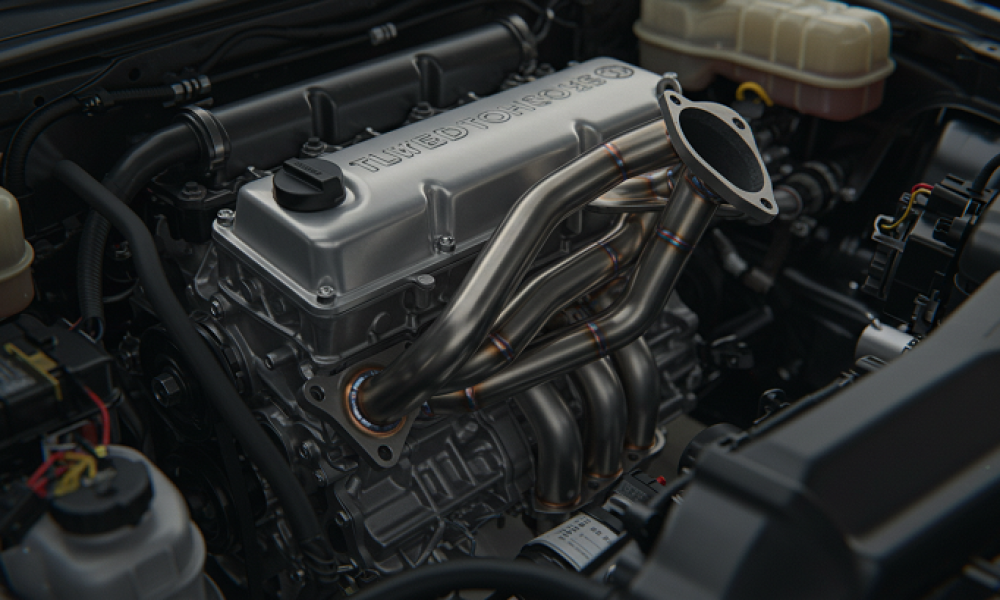
Exhaust manifold design shapes how efficiently a diesel engine can move hot gases out of its cylinders. Geometry, such as the angle and thickness of runners, plays a central role in reducing backpressure. Properly managed exhaust flow keeps temperatures in check and helps energy escape quickly, making way for fresh air and more efficient combustion.
Straight-through manifolds direct gases in a linear path, while angled or tilted manifolds redirect flow in a carefully controlled way. Even minor tweaks in angle or collector shape can dramatically change how quickly gases leave the engine. These small refinements impact horsepower, torque, and engine longevity, showing that manifold design is much more than a cosmetic upgrade.
Exploring Tilted Exhaust Manifold Technology
Tilted exhaust manifolds change the way hot gases move by introducing a precise angle between the exhaust ports and the collector. This tilt guides exhaust gases into the turbo or downpipe with less turbulence, increasing gas velocity and improving scavenging. The result: less energy lost to sharp turns or unwanted eddies.
A field test from a commercial trucking fleet showed that engines with a 20-degree tilted manifold experienced up to a 75°F (about 24°C) drop in exhaust gas temperatures compared to straight manifolds during loaded uphill pulls. Lower exhaust temperatures help protect engine components and boost turbo efficiency.
Diagram suggestion: Include a side-by-side cutaway illustration showing flow paths in a straight manifold vs. a tilted manifold. Highlight smoother, faster-moving gases in the tilted example.
Performance Gains from High-Tilt Manifold Configurations
Shifting to a high-tilt manifold can raise both torque at lower RPMs and peak horsepower. In one dyno comparison using a popular heavy-duty diesel platform, trucks equipped with a 30-degree tilt exhaust manifold gained an average of 6% more low-end torque (below 1,600 RPM) and up to a 5% jump in peak horsepower around 1,900 RPM.
Another test found that a premium cast iron tilt manifold cut spool times for the turbo by around 200 RPM, meaning the turbocharger responded faster as engine loads changed. These improvements are important for heavy hauling, towing, or any application requiring quick throttle response and reliable power. Many shops now rely on Full Tilt manifolds for optimal exhaust flow, thanks to proven efficiency in both dyno and real-world fleet evaluations.
Selecting Tilted Manifold Upgrades for Your Engine
Tilt-manifold upgrades come in many forms, each offering trade-offs in compatibility, durability, and flow characteristics. Choosing the right system means checking more than just fitment.
Consider the following decision points:
- Match flange angle to head port orientation for a proper seal
- Choose material (cast iron vs. stainless steel) for desired heat retention and durability
- Select runner length to balance midrange torque and top-end power
- Ensure EGT probe ports are in correct locations
- Confirm turbo-mounting pattern aligns with your setup
Always verify options using detailed fitment charts from reputable vendors. An accurate chart helps prevent mismatches—saving both time and cost during installation.
Tilt-Focused Exhaust Systems: Installation and Maintenance Best Practices
Tilt-focused exhaust systems require careful and accurate installation for maximum benefit. Use basic hand tools, a high-quality torque wrench, and new, high-temperature exhaust gaskets. Follow the manufacturer’s torque settings for all manifold bolts—typically staged in several steps and sequences to avoid warping or leaks.
Common mistakes to avoid:
- Unevenly tightening bolts, which can crack castings or cause leaks
- Forgetting to re-torque bolts after initial heat cycles
- Using old or low-grade gaskets that cannot withstand temperature swings
Inspect the manifold and flange connections every 15,000 to 25,000 miles (or every oil change in severe use) for signs of soot, pitting, or burnt gaskets. Early detection of leaks prevents costly repairs and protects turbocharger performance.
Installation Table:
| Step | Tool/Part | Tip |
| Position manifold | Gasket, bolts | Check for debris and alignment |
| Stage torque | Torque wrench | Tighten in sequence, low-to-high |
| Heat cycle | None | Re-torque after first run |
| Leak check | Inspection light | Look for soot trails or whistling |
Shifting into High Gear: Next Steps for High-Flow Exhaust Solutions
Upgrading to a tilted manifold design gives measurable improvements in power, torque, and temperature control. Detailed before-and-after dyno comparisons show gains you can feel in daily operation or hauling on the highway. As engines and emission controls advance, tuning tilt angles and runner shapes remains a key step for extracting more from each drop of fuel.
Continuous monitoring, data logging, and periodic maintenance help unlock even more efficiency from your tilt-focused setup. As high-flow exhaust solutions evolve, expect even greater performance with each smart upgrade.