
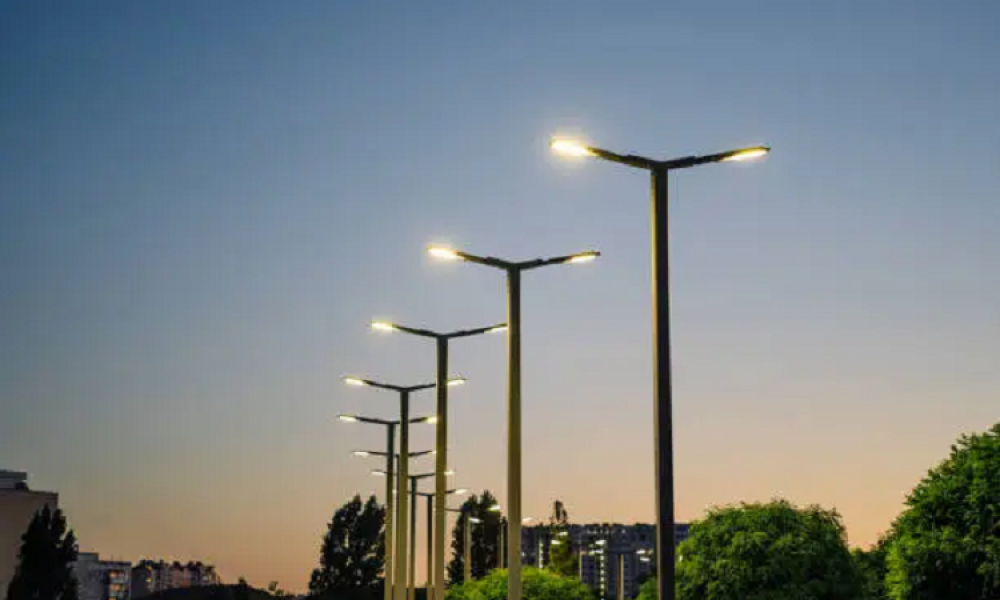
One of the largest global shifts, the emergence of smart cities, is transforming urban living and its accompanying facilities. Cities make use of data, technology, and automation for efficiency, safety, and sustainability. Intelligent lighting turns on and off by itself at pre-programmed times, and can even dim and brighten in response to the presence of vehicles, making it one of the essential components in this transition. Street light manufacturers now have to invest in innovation, like better approaches for solar powered street lights for sale, to keep up with these demands.
This article focuses on how the leading manufacturers in the business are optimizing their products and strategies for the sustainable infrastructures of future-ready cities.
Improving Connectivity: Smart Lighting Systems Take Charge
One of the most notable changes in street light manufacturing is the adoption of smart technologies in products. A major shift from just adding WiFi to their products remotely managing traditional street lights, new street light systems seamlessly integrate with centralized control systems, data collection, and even real-time manipulation.
Smart lighting systems enable cities to:
- Adjust to brightness levels based on pedestrian or vehicle activity.
- Performance Monitoring and Outage Detection are Automatic.
- Optimize energy use based upon time of day or weather.
- Integrate with IoT infrastructure including traffic and environmental sensors.
To meet these demands, manufacturers incorporate features like Motion Sensors, Remote Management, and Wireless Connectivity (LoRa, Zigbee, or NB-IoT) into their fixtures. This change enables municipalities to manage autonomous lighting grids with lower maintenance costs and enhanced public safety.
Shifting Toward Sustainability: Solar as a Primary Solution
The current procurement focus on solar-powered street lights for sale comes from global governments pursuing carbon neutrality and energy independence. Manufacturers, in turn, are improving the solar lighting solutions by making them more efficient, durable, and affordable.
Features found on the most up to date models of solar street lights include:
- Solar panels with monocrystalline cells.
- LiFePO4 batteries or lithium ion batteries.
- Charge controllers with Maximum Power Point Tracking (MPPT).
- Adaptive dimming features with automatic on/off scheduling.
- Strong weatherproof and vandal-proof enclosures.
Installation in remote and underserved areas becomes easier because these lights do not rely heavily on the electrical grid. In disaster prone areas, these lights enable emergency lighting during power outages which is a notable advantage.
Street light manufacturers along with visionary developers are rapidly joining forces to incorporate solar powered street lights for sale in their blueprints for smart city neighborhoods, parks, and public spaces.
Redefining Design: Aesthetic and Functional Flexibility
While planning smart cities and urban renewal, aesthetics are equally considered along with functionality. Urban lighting solutions need to be integrated into the architecture of the city, and planners and architects have begun to demand an elegant, intricate silhouette. Manufacturers have responded by designing myriad stylish modular customizable more compact form factors.
Some trends include:
- Solar panels integrated into poles with a slim profile
- Architectural fixtures compliant with local design standards
- Modular optical zoomable cabe sorettes
- Combined functionality (e.g., light pole with integrated EV charging station or security camera)
Customization is most critical for large scale use, like in commercial areas or areas with historical significance, where uniformity and visual footprint are paramount. This shift indicates a developing synergy between technology and urban design owing to smart city stakeholders.
Focus on Effectiveness: More Intelligent Parts, More Efficient Energy Use
Both cities and businesses are focusing on boosting operational effectiveness. In response, modern lighting system manufacturers have always focused on achieving core technology breakthroughs. These include diodes, thermal management systems, and smart proprietary control systems.
Manufacturers now concentrate on:
- LED modules with increased lumens per watt.
- Passive and active cooling features to improve lifespan.
- Optics that minimize light pollution while maximizing illumination focus.
- Intelligent dimming systems that use occupancy data to adjust brightness.
Together, these innovations not only save energy, but also reduce operational costs, increase maintenance intervals, and prolong the life of the fixtures. This is especially important for large municipal projects where funding and return on investment dominate the considerations.
As more municipalities look for street lights powered by solar energy available for purchase that interface with building management systems or smart grids, interoperability is increasingly becoming a design principle that manufacturers work with. This allows system components to be added or removed with ease, making adaptation to new smart city infrastructure effortless.
Attending to Market Needs: Agile Manufacturing and Custom Solutions
The evolving sophistication of urban lighting systems has also transformed how manufacturers design and manage production and supply chains. Investment in agile manufacturing that supports rapid prototyping, low-volume high-mix production, and custom orders is becoming standard practice among street light manufacturers.
In order to maintain their position in the smart city market, they are:
- Collaborating with software developers to provide cloud-based dashboards for managing lighting systems.
- Delivering bespoke solutions based on geo-climatic features.
- Providing consulting services for smart lighting initiatives planning and implementation.
- Enhancing after-sales service to include remote diagnostics and firmware enhancements.
Transitioning from being a supplier of products to a provider of strategic solutions is one of the key shifts. Street light system producers along with smart infrastructure system developers are establishing sales with advancing their long-term partnerships where these lighting systems are integrated into metropolitan development systems.
For illustration: Street light manufacturers are partnering with local authorities to deploy new district-wide lighting systems that incorporate solar street lights for sale installations and wireless control hubs for better energy reporting, maintenance tracking, as well as streamlined servicing.
Conclusion: The Future of Lighting is Intelligent, Ecological, and Well-Planned
Street smart cities are not a project for the future—they are sprouting in regions all over the world. For street light system producers, this is a dilemma and an advantage at the same time. There is an unprecedented demand for intelligent, energy efficient, and aesthetic configurable lighting.
Manufacturers seeking to stay relevant in today’s market must allocate resources to innovation in all aspects of the business, including product design, materials used, system integration, and even post-sale services. In this new age of urban development, providing scalable, smart, and solar compatible solutions will be key to their relevance in the market.
The successful manufacturers will be those that have solar powered street lights for sale and can not only keep up with the technological advancements, but anticipate the changing demands of cities and businesses while integrating it into their sustainable infrastructure planning.




