
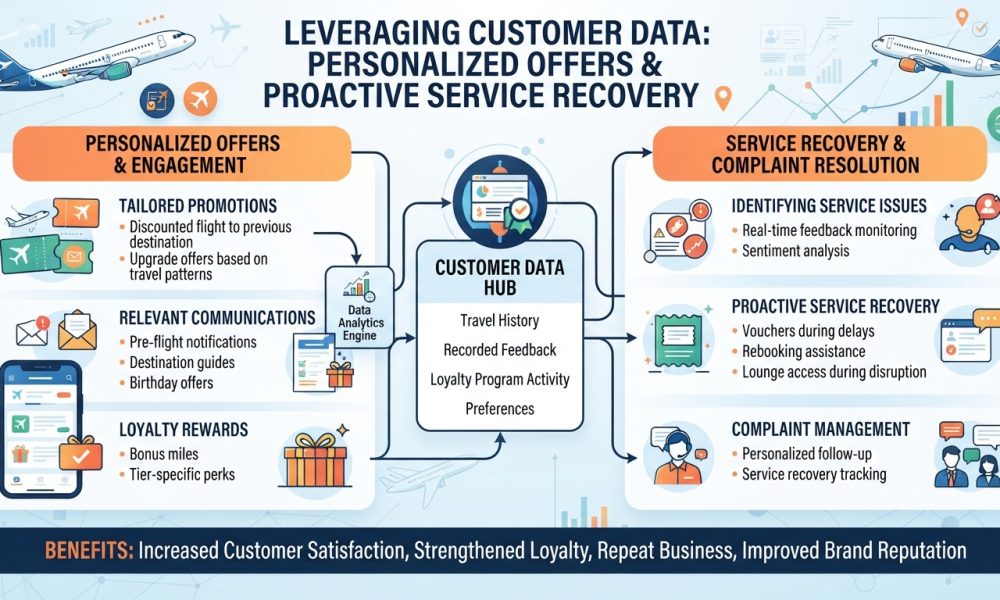
Travel history and recorded feedback can help carriers tailor communications, address complaints and manage loyalty relationships, while raising important questions about passenger privacy, automated decision-making and the growing commercial value of personal Information collected throughout the travel experience.
WASHINGTON, DC, October 8, 2026
Airlines increasingly rely on sophisticated customer Information systems to understand passenger preferences, recognize frequent travelers, respond to service complaints, and develop personalized commercial offers, turning routine booking records into valuable resources that shape customer relationships long after flights land.
From the moment passengers search for tickets to the moment they complete their journeys and submit feedback, airlines can collect Information on purchasing decisions, travel patterns, loyalty participation, and service experiences, creating detailed records that support operational planning and customer engagement.
These Information systems can help carriers identify passengers affected by disruptions, recognize unresolved complaints, recommend relevant services and provide appropriate assistance. However, the availability and accuracy of individual records depend on each airline’s technology, privacy practices and internal procedures.
The growing use of customer Information also raises questions about transparency, data Protection, automated profiling, and commercial fairness, especially when travelers cannot easily tell which details shape personalized communications, loyalty benefits, or discretionary service decisions.
Airlines Are Building More Comprehensive Customer Profiles
Modern airline customer relationship management systems can combine Information from reservation platforms, loyalty programs, mobile applications, customer service departments, and operational records, enabling authorized employees to understand different aspects of a passenger’s relationship with the airline.
A traveler who regularly buys business-class tickets, chooses specific seating arrangements, and participates in a frequent flyer program may generate Information that helps an airline recognize recurring preferences and identify relevant products during later booking interactions.
These records may include flight histories, booking channels, fare categories, loyalty balances, previously purchased services, and documented customer interactions. However, airlines generally maintain different access permissions depending on employee responsibilities and applicable data Protection requirements.
Customer profiles can also include Information about service disruptions, baggage complaints, accessibility arrangements, and previous compensation decisions, making responsible access controls especially important when airlines combine commercial Information with operational records that may contain sensitive personal details.
Rather than keeping every detail in one universally accessible database, airlines may connect specialized systems that exchange selected Information when needed, allowing reservation agents, customer service representatives, and operational personnel to retrieve records appropriate to their authorized duties.
Travel History Helps Airlines Understand Passenger Preferences
An airline’s historical booking Information can reveal patterns in travel frequency, preferred destinations, seasonal demand, and purchasing behavior, providing opportunities to develop communications that reflect passenger interests rather than relying exclusively on generic promotional campaigns.
For example, a customer who repeatedly books flights between Vancouver and London may receive Information about new schedules, available connections, or loyalty promotions relevant to that route, provided the airline’s marketing practices comply with applicable requirements.
Similarly, passengers who frequently purchase additional baggage allowances, premium seating, or priority boarding might see offers for those services during future booking sessions, potentially reducing the effort required to find products they regularly buy.
However, past purchasing decisions do not necessarily establish permanent preferences, because travelers may book flights for employers, family members, or exceptional circumstances that have little connection to their personal interests or future travel intentions.
Responsible personalization therefore requires airlines to consider the limitations of historical records, avoid making unsupported assumptions about individual passengers and provide practical opportunities to update preferences or decline unnecessary promotional communications.
Personalized Offers Are Becoming Part of Airline Retailing
The aviation industry has increasingly explored modern retailing systems that let carriers present combinations of fares, seating options, baggage allowances, and additional services based on shopping circumstances and the products available at a given moment.
The International Air Transport Association’s New Distribution Capability provides a technical framework for communicating airline offers through distribution channels, supporting more detailed product descriptions and giving participating carriers additional flexibility in presenting services to prospective customers.
Instead of displaying only conventional fare categories, modern airline retailing platforms can present different combinations of transportation and associated services, allowing travelers to compare products according to their immediate requirements and available purchasing options.
A passenger planning a short business journey may value flexible ticket conditions and priority airport services, while a family traveling internationally may prioritize adjacent seating, checked baggage allowances, and convenient connections.
Airlines can use shopping context, declared preferences, and other appropriately collected Information to make offers more relevant. Still, the technologies used for product personalization should not automatically be interpreted as proof that carriers assign individualized ticket prices based on personal identity.
Indeed, the United States Department of Transportation concluded an industry-wide airline privacy review in September 2026 without identifying violations, while reminding carriers that they must protect passenger Information, honor published privacy policies, and avoid unlawful discrimination involving dynamic pricing practices.
Customer Feedback Can Influence Future Service Decisions
Beyond travel history and purchasing activity, airlines collect Information through complaint forms, postflight surveys, customer service conversations, and digital feedback channels, allowing service departments to identify recurring problems and evaluate how passengers experience different aspects of their journeys.
A traveler who reports repeated problems with seat assignments or delayed baggage deliveries may create a service history that authorized representatives can review during subsequent interactions, helping them understand the circumstances surrounding a new complaint.
Such records provide valuable context when a customer contacts an airline several times about an unresolved issue, especially when previous representatives documented relevant flight Information, promised follow-up action, or recorded proposed remedies.
Airlines can also examine aggregated feedback to identify recurring complaints about particular routes, aircraft configurations, airport procedures, or service processes, allowing management teams to investigate operational weaknesses without necessarily reviewing every individual passenger record.
Nevertheless, customer feedback systems can produce misleading conclusions when records contain errors, duplicate complaints, or incomplete descriptions, so accurate documentation and appropriate human review are essential to a reliable service management process.
Service Recovery Begins With Recognizing What Went Wrong
Service recovery describes the actions airlines take to address disruptions, mistakes, or other negative customer experiences, including rebooking assistance, baggage follow-up, explanations, refunds, and additional remedies where required or permitted by applicable policies.
When airlines connect disruption Information with customer service records, representatives can better understand whether a passenger missed a connection, had an involuntary itinerary change, or previously tried to resolve the same problem.
This Information can help employees avoid repeatedly requesting details passengers have already provided, potentially improving resolution times and reducing frustration when travelers manage unexpected expenses or significant scheduling difficulties.
For example, a customer whose previous flight cancellation led to an overnight hotel stay may contact the airline for reimbursement, so accurate records of the disruption and the carrier’s applicable commitments are important to resolving the request.
The U.S. Department of Transportation’s Airline Customer Service Dashboard identifies commitments participating carriers make regarding certain controllable cancellations and delays, helping travelers understand which services airlines have promised under specified circumstances.
However, airlines must distinguish legally required refunds and other enforceable passenger protections from discretionary gestures such as bonus loyalty miles, promotional credits, or goodwill vouchers, because customer profiles cannot legitimately eliminate obligations established by applicable law.
Loyalty Status Can Shape Customer Recognition
Frequent flyer programs let airlines recognize customers who accumulate qualifying travel activity or meet other membership requirements, creating structured loyalty relationships that can affect access to published benefits and selected customer service arrangements.
Depending on program rules, eligible members may receive priority check-in, additional baggage allowances, lounge access, preferred seating opportunities, or enhanced assistance. However, benefits vary considerably by airline, membership tier, and individual travel circumstances.
Loyalty account Information can also help customer service personnel recognize a passenger’s membership level during disruption handling, potentially identifying relevant benefits or authorized assistance options that might otherwise require additional verification.
Some airlines may offer discretionary gestures to longstanding customers after significant service failures. Still, travelers should not assume loyalty status automatically determines compensation eligibility or overrides statutory protections available to other passengers.
The challenge for carriers is recognizing valuable customer relationships without creating confusing service practices where passengers cannot distinguish published membership entitlements from discretionary decisions made by individual representatives.
Artificial Intelligence Can Assist Customer Service Teams
Artificial intelligence and automated analytical tools give airlines additional ways to process customer correspondence, categorize complaints, identify common service problems, and suggest relevant Information for representatives handling large volumes of passenger inquiries.
A customer service platform might identify references to delayed baggage, missed connections, or refund disputes in written messages, route those complaints to the appropriate departments, and preserve relevant booking Information for later investigation.
Automated systems can also summarize earlier customer interactions, letting representatives review key details without manually sifting through extensive correspondence. However, inaccurate summaries can introduce errors if employees rely on them without verification.
More advanced analytical models can identify patterns across large collections of complaints, potentially helping airlines recognize emerging operational issues or determine whether particular service policies consistently generate customer dissatisfaction.
However, automated recommendations should not replace appropriate human Judgment when decisions involve passenger rights, sensitive personal circumstances, disputed facts, or financial remedies, especially when incorrect classifications could delay legitimate requests for assistance.
Operational Data and Marketing Data Serve Different Purposes
Although airlines may use some customer Information across several systems, operational records and marketing databases serve different purposes, making clear distinctions important for understanding why particular Information is collected, retained, and accessed.
Operational Information can include passenger names, itinerary details, travel document Information, check-in status and baggage records needed to provide transportation, satisfy regulatory requirements and coordinate services across participating organizations.
Marketing records may instead contain promotional preferences, campaign responses, loyalty engagement Information, and purchasing interests, supporting commercial communications rather than directly determining whether a passenger meets the requirements for international transportation.
A passenger who declines promotional emails does not thereby eliminate the airline’s need to process Information required for an existing booking, operational safety obligations, or legally mandated passenger Information submissions to government authorities.
Similarly, customer service representatives investigating a complaint may legitimately require access to certain reservation records without needing unrestricted visibility into unrelated marketing activity or detailed profiles assembled for commercial analysis.
Effective Information governance therefore depends on limiting access according to legitimate responsibilities, documenting authorized uses, and preventing unnecessary movement of sensitive records between systems that perform fundamentally different functions.
Privacy Regulations Place Limits on Personalization
Airline personalization operates within a complicated international privacy environment because carriers routinely transport passengers across jurisdictions with different requirements for collecting, processing, sharing, and retaining personal Information.
The European Union’s General Data Protection Regulation establishes important protections for individuals whose Information falls within its scope, including rights concerning transparency, access, correction, and objections to processing for direct marketing purposes.
Under applicable European rules, individuals can object to the processing of their personal Information for direct marketing, requiring organizations to stop using that Information for such purposes even when certain other lawful processing activities may continue.
Airlines must also distinguish ordinary customer segmentation from automated decision-making that produces legal or similarly significant effects, because the relevant privacy obligations depend on the nature, purpose and consequences of particular processing activities.
International carriers face added complexity when using technology vendors, global distribution systems, loyalty partners, and customer service contractors, since sharing passenger Information across organizational boundaries can create contractual, security, and regulatory responsibilities.
These challenges make accurate privacy notices, appropriate retention periods, secure Information transfers, and meaningful internal oversight essential to maintaining customer trust while developing increasingly sophisticated commercial and service management capabilities.
Inaccurate Passenger Records Can Create Unnecessary Problems
Customer Information becomes far less useful when records contain outdated contact details, incorrect loyalty associations, duplicate complaints, or misleading summaries that don’t reflect the passenger’s actual travel experiences.
An incorrectly merged customer profile could link one traveler to another person’s purchase history or service interactions, creating confusing recommendations and potentially exposing Information to someone who should never have received it.
Likewise, incomplete complaint records may lead employees to believe a problem is resolved, even when the passenger remains dissatisfied or has not received a promised response.
Airlines therefore need reliable procedures to correct records, confirm customer identities, and escalate disputed Information, especially when customer service decisions could affect refunds, loyalty benefits, or access to sensitive account Information.
Travelers also benefit from reviewing their loyalty accounts, keeping contact Information accurate, and reporting suspicious activity, which helps reduce the likelihood that outdated or unauthorized records interfere with future interactions.
Travel Documents and Customer Profiles Must Remain Distinct
Although airline customer systems can contain extensive Information about passenger behavior, these commercial records should not be confused with the official processes used to establish identity, authenticate passports, or determine international travel eligibility.
During international travel, airlines may examine passports, visas, and other required documents and share relevant passenger Information with government authorities. Still, these verification functions operate under different requirements than ordinary marketing and loyalty management.
Modern electronic passports incorporate physical safeguards and cryptographic mechanisms to support document Authenticity checks, as Amicus International Consulting explains in its examination of modern passport security and identity Protection.
A frequent flyer account showing years of legitimate travel does not, by itself, establish that a passport remains valid, and a successfully authenticated electronic passport does not automatically establish eligibility for every destination or airline service.
Maintaining these distinctions helps prevent misconceptions about how commercial customer Information interacts with travel document verification, government screening requirements, and the separate decisions airlines and border authorities make.
Passengers Should Understand How Their Information Is Used
Travelers increasingly benefit from reviewing airline privacy notices and loyalty program terms, especially when those documents explain whether personal Information supports marketing campaigns, customer analytics, operational communication, or sharing with commercial partners.
Passengers can also review available account controls to update communication preferences, correct inaccurate details, limit certain promotional activities, or request Information about records the airline holds.
Where applicable privacy laws provide access or correction rights, travelers may formally request Information about personal records and seek amendments when inaccurate data could affect customer service, account security or future communications.
Customers reporting significant service problems should preserve relevant documentation, including booking confirmations, receipts and correspondence, because those materials can help establish facts independently of whatever summary appears within the airline’s internal customer management system.
The goal is not to eliminate useful personalization, but to ensure passengers understand the difference between Information necessary to provide transportation and additional processing intended to improve commercial relationships or predict future purchasing behavior.
The Future of Airline Customer Relationships Depends on Trust
As airlines modernize their distribution platforms and customer service technologies, the commercial importance of passenger Information will likely keep growing, especially as integrated systems connect booking activity, loyalty participation, and documented service experiences.
More sophisticated technology could let airlines spot unresolved problems earlier, communicate relevant travel alternatives, and present offers that reflect genuine passenger preferences rather than relying solely on broad demographic assumptions.
However, greater technical capability does not automatically produce better customer service, because passengers ultimately evaluate carriers by practical outcomes, including transparent pricing, reliable transportation, timely assistance, and fair treatment during disruptions.
Airlines that use customer Information responsibly can strengthen relationships by responding consistently to legitimate concerns, protecting sensitive records and ensuring personalization remains useful rather than intrusive or difficult to understand.
For international travelers, the most meaningful improvement may come not from increasingly detailed customer profiles, but from knowing that airlines maintain accurate Information, respect reasonable privacy expectations and respond effectively when something goes wrong.
The continued development of airline customer management technology therefore presents both an opportunity and a responsibility, requiring carriers to balance commercial innovation with operational accountability, strong Information security, and respect for the rights of the passengers whose data makes personalized service possible.




