
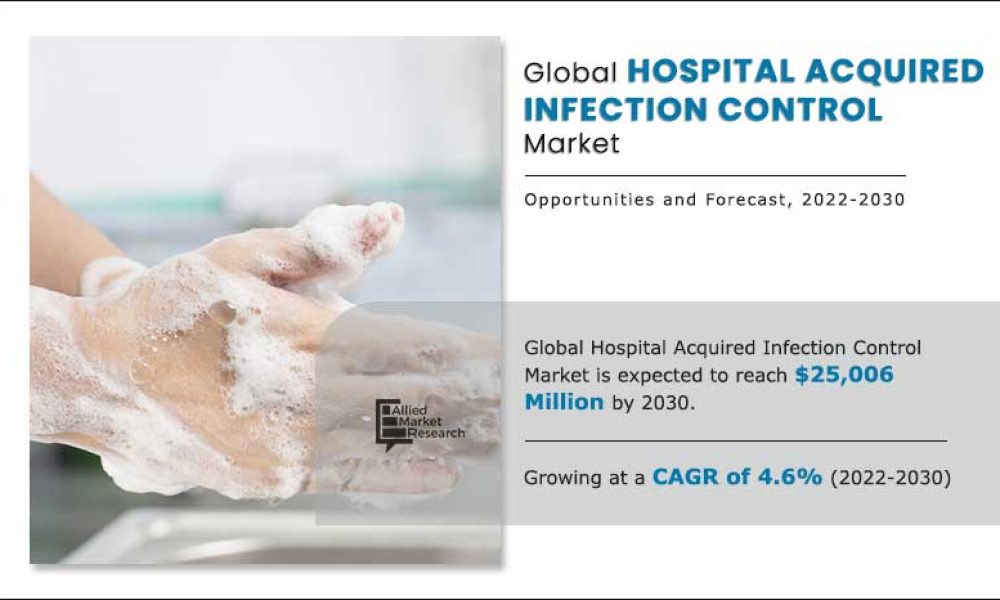
The hospital-acquired infection (HAI) control market is witnessing significant growth due to rising healthcare concerns, increasing surgical procedures, and heightened awareness of infection prevention. Valued at $19,958 million in 2020, the market is projected to reach $25,006 million by 2030, growing at a CAGR of 4.6% from 2022 to 2030.
Hospital-acquired infections, caused by bacteria, viruses, fungi, or parasites, pose serious risks to patients, leading to prolonged hospital stays, increased healthcare costs, and higher mortality rates. Common HAIs include:
Surgical site infections (SSIs)
Hospital-acquired pneumonia (HAP)
Urinary tract infections (UTIs)
Bloodstream infections
Gastrointestinal infections
To combat these infections, healthcare facilities rely on sterilization, disinfection, protective barriers, and endoscope reprocessing products. The COVID-19 pandemic further accelerated demand for infection control measures, particularly medical nonwovens, gloves, and disposable protective equipment.
Key Drivers of the Hospital-Acquired Infection Control Market
1. Rising Incidence of HAIs
Increasing surgical procedures and hospital admissions contribute to higher infection risks.
5-10% of hospitalized patients in developed nations acquire infections during treatment.
2. Government Initiatives & Awareness Programs
Regulatory bodies like the WHO and CDC enforce strict infection control protocols.
Campaigns promoting hand hygiene, sterilization, and antimicrobial stewardship are gaining traction.
3. Technological Advancements in Sterilization & Disinfection
UV-C disinfection robots and plasma sterilization enhance efficiency.
Single-use medical devices reduce cross-contamination risks.
4. Impact of COVID-19
The pandemic boosted demand for PPE, masks, and disinfectants.
Hospitals increased infection control budgets to prevent outbreaks.
Market Segmentation & Growth Trends
By Product & Service
Protective barriers (largest revenue share due to high PPE demand)
Sterilization equipment (heat, low-temperature, and radiation-based)
Cleaning & disinfection products (chemical disinfectants, automated disinfectors)
Endoscope reprocessing products (critical for preventing biofilm-related infections)
By Infection Type
Surgical site infections (SSIs) – Most common post-operative complication.
Hospital-acquired pneumonia (HAP) – High mortality rate in ICU patients.
Urinary tract infections (UTIs) – Often linked to catheter use.
By End User
Hospitals & clinics (dominant segment due to high patient volume)
Ambulatory surgical centers (ASCs) (growing demand for outpatient infection control)
By Region
North America leads due to strict regulations and advanced healthcare infrastructure.
Asia-Pacific is the fastest-growing market (CAGR of 5.4%) due to rising healthcare investments and increasing HAI cases.
Challenges & Restraints
Chemical disinfectants’ side effects (skin irritation, respiratory issues).
Safety concerns over reprocessed medical instruments.
High costs of advanced sterilization technologies.
Future Opportunities
✅ Expansion of single-use medical devices to minimize infection risks.
✅ AI and IoT in infection monitoring (smart sensors for real-time disinfection tracking).
✅ Growth in emerging markets (India, China, Brazil) due to improving healthcare systems.
Key Players in the Market
3M Company
Ecolab Inc.
Getinge AB
Steris Plc.
Advanced Sterilization Products (Fortive)
Conclusion
The hospital-acquired infection control market is set for steady growth, driven by rising surgical volumes, stricter regulations, and technological innovations. While challenges like chemical safety concerns persist, opportunities in emerging markets and AI-driven infection control offer promising avenues for expansion.
Key Takeaways
🔹 Market to reach $25 billion by 2030 (CAGR 4.6%).
🔹 Protective barriers & sterilization products dominate demand.
🔹 Asia-Pacific is the fastest-growing region (5.4% CAGR).
🔹 COVID-19 accelerated PPE and disinfection product sales.
🔹 Single-use devices and smart disinfection tech are future trends.




