
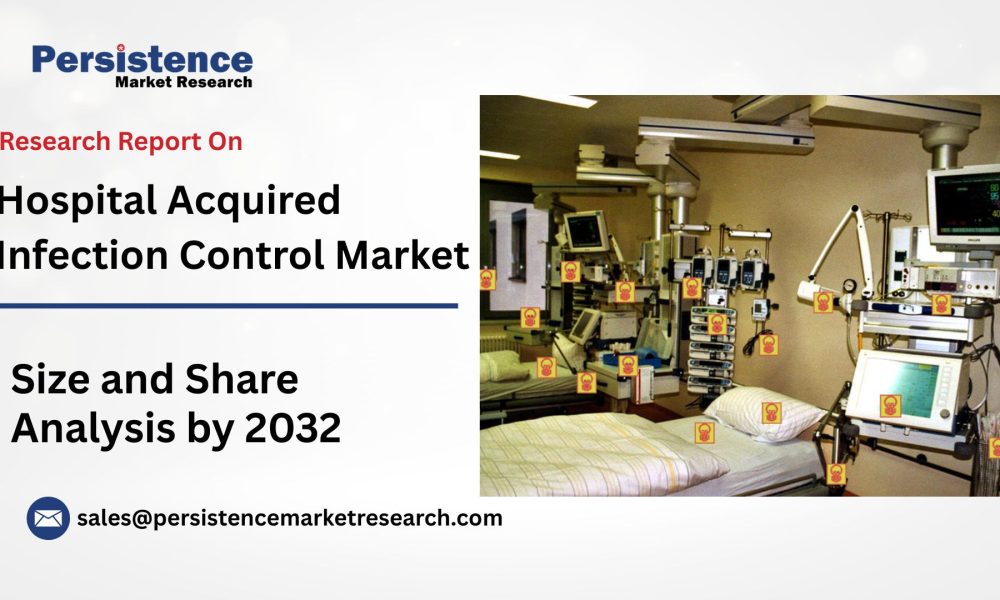
The global hospital-acquired infection (HAI) control market is projected to grow from USD 20.6 billion in 2025 to USD 32.9 billion by 2032, reflecting a compound annual growth rate (CAGR) of 6.9% during the forecast period.
Market Overview
Hospital-acquired infections (HAIs), also known as healthcare-associated infections, are infections patients acquire while receiving treatment for medical or surgical conditions. These infections are a significant concern in healthcare settings worldwide, leading to increased morbidity, mortality, and healthcare costs. The growing prevalence of HAIs has spurred the demand for effective infection control measures, driving the market for HAI control products and services.
Market Drivers
- Rising Incidence of HAIs
The increasing number of patients undergoing complex surgeries and treatments has led to a higher incidence of HAIs. Infections such as hospital-acquired pneumonia, bloodstream infections, and surgical site infections are prevalent in intensive care units and surgical wards, necessitating stringent infection control protocols.
- Advancements in Sterilization Technologies
Technological innovations in sterilization methods, including low-temperature sterilization systems and automated disinfection technologies, have enhanced the efficacy of infection control measures. Hospitals are increasingly adopting these advanced technologies to ensure patient safety and comply with regulatory standards.
- Government Initiatives and Regulations
Governments and health organizations worldwide are implementing stringent regulations and guidelines to prevent HAIs. For instance, the U.S. Department of Health and Human Services has released updated targets for the National Action Plan to Prevent Healthcare-associated Infections, covering the period from 2024 to 2028.
- Increased Healthcare Expenditure
Rising healthcare expenditures globally have enabled healthcare facilities to invest in advanced infection control products and services. This financial capability supports the adoption of state-of-the-art technologies and training programs aimed at reducing the incidence of HAIs.
Request a Sample: https://www.persistencemarketresearch.com/samples/2814
Market Segmentation
By Infection Type
- Hospital-Acquired Pneumonia (HAP): Expected to hold a significant market share due to its high prevalence in ICU patients and frequent use of ventilators.
- Bloodstream Infections (BSIs): Common in patients with central venous catheters, leading to increased demand for infection control measures.
- Surgical Site Infections (SSIs): Resulting from surgical procedures, these infections drive the need for sterilization and disinfection products.
By Products and Services
- Sterilization Products and Services: Dominating the market share, with hospitals upgrading to new autoclaves and low-temperature sterilization systems to ensure effective infection control.
- Disinfection Products: Including surface disinfectants and hand hygiene products, essential in maintaining hygiene standards in healthcare settings.
- Protective Barriers: Such as gloves, gowns, and masks, crucial in preventing the transmission of infections.
By End-User
- Hospitals and Clinics: Projected to record about 59.4% share in 2025, due to diverse medical procedures and intensive care requirements.
- Long-Term Care Facilities: Increasing adoption of infection control measures to protect vulnerable populations.
- Ambulatory Surgical Centers: Growing demand for infection control solutions as outpatient surgeries become more prevalent.
Regional Insights
- North America: Expected to dominate the market with approximately 49.5% share in 2025, owing to advanced healthcare infrastructure and stringent infection control regulations.
- Europe: Anticipated to be the fastest-growing region, driven by the implementation of preventive measures and the gradual adoption of automated sterilization systems.
- Asia-Pacific: Rapidly expanding healthcare sector and increasing awareness about infection control are propelling market growth in this region.
Challenges
- High Cost of Advanced Technologies: The adoption of advanced infection control technologies involves significant investment, which may be a barrier for healthcare facilities with limited budgets.
- Training and Compliance: Ensuring healthcare staff are adequately trained and adhere to infection control protocols is essential but can be challenging.
- Antimicrobial Resistance: The rise of multidrug-resistant organisms complicates infection control efforts, necessitating continuous innovation and adaptation of strategies.
Future Outlook
The hospital-acquired infection control market is poised for substantial growth, driven by the increasing incidence of HAIs, advancements in sterilization technologies, and supportive government initiatives. Healthcare facilities are expected to continue investing in infection control measures to enhance patient safety and comply with regulatory standards. The development of cost-effective and efficient infection control solutions will be pivotal in addressing existing challenges and meeting the growing demand in the healthcare sector.
Conclusion
The hospital-acquired infection control market is experiencing significant growth, with a projected increase from USD 20.6 billion in 2025 to USD 32.9 billion by 2032. This growth is attributed to various factors, including the rising incidence of HAIs, advancements in sterilization technologies, and supportive government initiatives. As healthcare facilities continue to prioritize infection control, the market is expected to evolve, presenting opportunities for innovation and improvement in patient safety standards.
Explore the Latest Trending Research Reports:




