
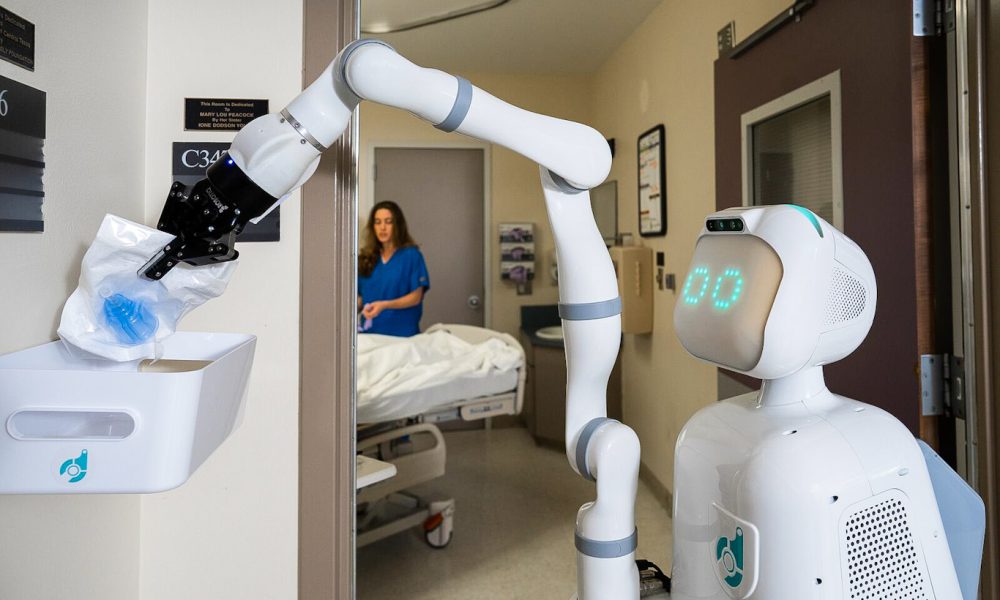
The global healthcare companion robots market is poised for significant growth over the coming decade. According to recent industry projections, the market size is expected to rise from US$ 2.50 billion in 2025 to an impressive US$ 6.86 billion by 2032, reflecting a robust compound annual growth rate (CAGR) of 15.5% between 2025 and 2032. This surge highlights the increasing adoption of advanced robotics and artificial intelligence (AI) technologies in healthcare, especially in patient assistance and care management.
Healthcare facilities today are undergoing a technological transformation, with AI-powered solutions redefining patient care. One of the most prominent innovations is the use of healthcare companion robots. These intelligent machines are designed to assist patients with medication management, daily routines, mobility support, and even recommending personalized exercises. By combining automation, AI, and machine learning capabilities, these robots not only enhance operational efficiency in healthcare institutions but also improve patient quality of life.
Download Your Free Sample & Explore Key Insights: https://www.persistencemarketresearch.com/samples/35172
Rising Demand for Personalized Patient Care
The modern healthcare system faces a growing demand for personalized patient care, driven by an aging global population and the increasing prevalence of chronic diseases. Healthcare companion robots address these needs by offering tailored assistance to individuals, particularly elderly patients and those with limited mobility.
These robots can monitor vital signs, remind patients to take medications at the prescribed times, and provide companionship to reduce feelings of loneliness and isolation. This level of personalized care is especially important in elderly care facilities and home healthcare settings, where human resources may be limited, and the risk of oversight can impact patient outcomes.
Moreover, healthcare companion robots can integrate with wearable devices and telehealth platforms to gather real-time health data, offering valuable insights to caregivers and healthcare providers. This enables more proactive interventions, timely responses to health complications, and improved chronic disease management.
Technological Advancements Driving Market Growth
One of the key drivers of the healthcare companion robots market is rapid technological innovation. Companies are increasingly investing in AI, machine learning, natural language processing (NLP), and advanced sensor technologies to enhance robot capabilities. These advancements allow robots to understand human speech, recognize emotions, and navigate complex environments safely and efficiently.
For example, AI-powered robots can detect changes in a patient’s mood or behavior, prompting interventions to prevent mental health deterioration or physical health risks. Similarly, motion sensors and adaptive navigation systems enable robots to move autonomously in hospitals, nursing homes, and private residences without causing disruptions.
Robots are also being equipped with interactive interfaces, such as touchscreens and voice assistants, enabling patients to communicate easily and access health-related guidance. As these technologies continue to evolve, healthcare companion robots are expected to provide more sophisticated support, ultimately bridging gaps between patients and healthcare providers.
Market Segmentation by Application
The healthcare companion robots market can be broadly segmented based on application into elderly care, rehabilitation, patient monitoring, and assistance in mental health support. Among these, elderly care remains the largest segment due to the rapidly growing senior population worldwide. According to the World Health Organization (WHO), the number of people aged 60 and above is projected to reach 2.1 billion by 2050, highlighting the urgent need for scalable, efficient eldercare solutions.
In rehabilitation, companion robots assist patients recovering from surgery, injuries, or neurological disorders by guiding them through physical exercises, tracking progress, and providing motivational support. These robots not only help patients maintain consistency in their rehabilitation routines but also reduce the workload on physiotherapists and caregivers.
Mental health support is another emerging application. With rising concerns about depression, anxiety, and social isolation, healthcare companion robots can act as interactive companions, providing conversation, entertainment, and cognitive exercises. This application is particularly relevant in homecare scenarios, where patients may lack regular human interaction.
Get Custom Insights Designed for Your Businecss: https://www.persistencemarketresearch.com/request-customization/35172
Regional Market Insights
The healthcare companion robots market is witnessing strong growth across North America, Europe, Asia-Pacific, and other regions, each driven by unique factors. North America currently holds a significant share of the market due to the presence of advanced healthcare infrastructure, early adoption of robotic technologies, and high investment in AI-based medical solutions. The United States and Canada are key contributors, with hospitals increasingly integrating robots into patient care workflows.
Europe is also experiencing substantial growth, driven by an aging population and government initiatives promoting smart healthcare solutions. Countries such as Germany, the United Kingdom, and France are investing in research and development to enhance robot-assisted patient care. The focus on elderly care facilities and rehabilitation centers is a major factor supporting market expansion.
The Asia-Pacific region is emerging as a high-growth market, fueled by technological adoption in countries like Japan, South Korea, and China. Japan, in particular, has been a pioneer in companion robotics, given its rapidly aging population and limited caregiving workforce. Governments in the region are also providing incentives for robotics innovations in healthcare, creating favorable conditions for market expansion.
Key Market Players and Competitive Landscape
The healthcare companion robots market is highly competitive, with key players focusing on innovation, strategic partnerships, and product diversification. Prominent companies are investing in AI and robotics research to introduce intelligent, human-like companion robots capable of multi-functional support.
Some notable market players include SoftBank Robotics, known for its humanoid robot Pepper, which interacts with patients and provides assistance in hospitals and nursing homes. Intuition Robotics has developed ElliQ, an AI-driven social companion robot designed for elderly users, emphasizing mental engagement and personalized health guidance. Other leading companies include Fujisoft, Toyota, and Cyberdyne, each contributing to the development of service-oriented and interactive healthcare robots.
Strategic partnerships between robotics firms and healthcare providers are also common, enabling large-scale deployments and continuous improvement of robotic functionalities. As the market grows, competition is expected to intensify, pushing innovation and reducing costs, thereby making healthcare companion robots more accessible to a wider range of users.
Benefits Driving Adoption in Healthcare Facilities
Healthcare companion robots offer several advantages that drive their adoption in hospitals, clinics, and homecare settings. These benefits include enhanced patient engagement, improved adherence to treatment plans, reduced caregiver burden, and increased operational efficiency.
By automating routine tasks, such as medication reminders, mobility assistance, and health monitoring, these robots free up healthcare professionals to focus on complex medical procedures and personalized care. Additionally, the emotional support provided by companion robots helps reduce patient stress, anxiety, and depression, leading to better overall health outcomes.
For elderly patients, especially those living alone, companion robots serve as both assistants and social companions, providing reminders, entertainment, and conversation. This dual role not only improves mental health but also reduces the likelihood of hospital readmissions caused by neglect or accidental injuries.
Checkout Now & Download Complete Market Report: https://www.persistencemarketresearch.com/checkout/35172
Challenges and Future Outlook
Despite significant opportunities, the healthcare companion robots market faces certain challenges. High costs of advanced robotic systems, concerns over data privacy, and the need for technical expertise to operate these devices can limit widespread adoption. Furthermore, regulatory approvals and compliance with healthcare standards remain critical hurdles for manufacturers.
However, ongoing advancements in AI, machine learning, and affordable sensor technologies are expected to mitigate these challenges over time. With increasing awareness of the benefits of companion robots and growing demand for personalized patient care, the market is poised for sustained growth.
The future of healthcare companion robots will likely involve more integrated solutions, combining robotics, telemedicine, wearable health devices, and cloud-based analytics. These innovations will enable continuous remote monitoring, predictive healthcare interventions, and enhanced patient engagement, ultimately transforming the healthcare landscape.
Conclusion
The healthcare companion robots market is on a strong growth trajectory, driven by the rising need for personalized patient care, technological advancements, and increasing investments in healthcare robotics. From aiding elderly patients to supporting rehabilitation and mental health, these robots are redefining the patient experience and improving healthcare outcomes.
With a projected CAGR of 15.5% and market size expected to reach US$ 6.86 billion by 2032, healthcare companion robots represent a critical innovation in modern medicine. As the market continues to expand globally, the integration of AI-driven robots into healthcare workflows promises to enhance operational efficiency, reduce caregiver strain, and provide patients with the personalized support they need to lead healthier, more independent lives.
The coming years will likely witness broader adoption of healthcare companion robots across hospitals, eldercare facilities, and homecare settings, signaling a transformative era where human-robot collaboration becomes a cornerstone of modern healthcare.




