
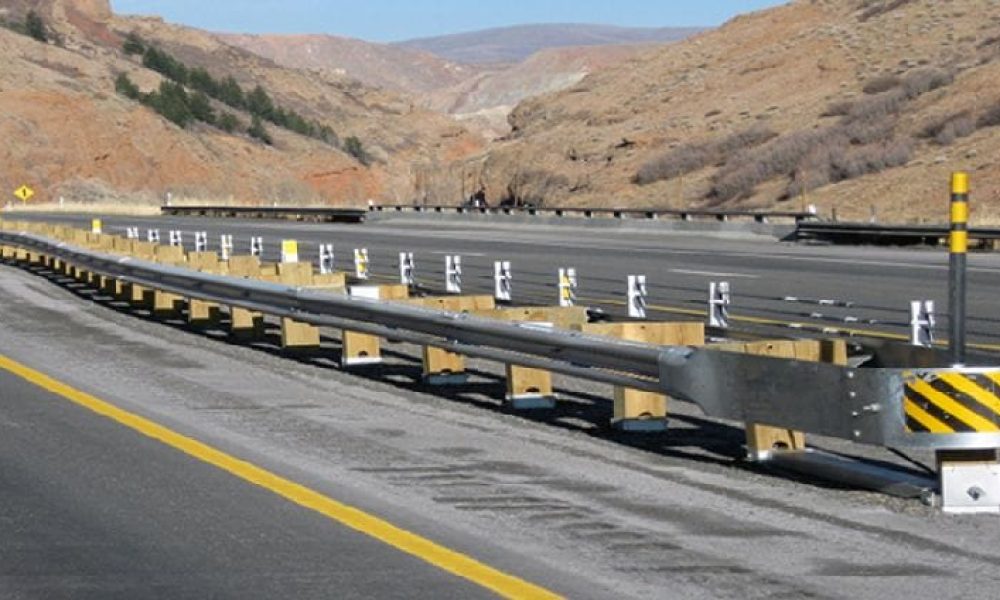
Crash barrier systems, also known as guardrails or safety barriers, are essential safety features installed along roads, highways, bridges, and other transportation infrastructure to protect motorists, pedestrians, and property from vehicular collisions. These systems are designed to absorb impact energy, redirect errant vehicles, and prevent vehicles from crossing into opposing traffic lanes or adjacent areas. The global crash barrier systems market is driven by factors such as increasing road traffic, government initiatives to improve road safety, infrastructure development projects, and rising awareness of the importance of crash mitigation measures.
The Crash Barrier Systems Market is estimated to achieve a value of USD 9.0 billion by 2030, with a compound annual growth rate (CAGR) of 3.1%. The primary drivers for the crash barrier systems market are the expanding construction and automotive industries worldwide. The crash barrier systems market is witnessing significant growth as governments and transportation authorities worldwide prioritize road safety and infrastructure improvement initiatives. One key trend shaping this market is the increasing focus on reducing road fatalities and injuries through the installation of crash barrier systems, also known as guardrails or road safety barriers, along highways, bridges, and other high-risk areas.
Download a sample copy of Report:
https://www.marketdigits.com/request/sample/810
Crash barrier systems are designed to redirect or absorb the impact of vehicles in the event of collisions, thereby minimizing damage to vehicles, protecting occupants, and preventing vehicles from crossing over into opposing lanes or off the road. These systems play a crucial role in enhancing road safety and reducing the severity of accidents, making them essential components of modern transportation infrastructure.
Key Points:
- Types of Crash Barrier Systems: Crash barrier systems come in various types and configurations, each designed for specific road conditions, traffic volumes, and safety requirements. Common types of crash barrier systems include:
- W-beam guardrails: Traditional metal guardrails consisting of W-shaped steel beams installed along road edges and medians.
- Cable barriers: Flexible wire rope barriers tensioned between posts to absorb impact energy and prevent vehicle intrusion.
- Concrete barriers: Rigid barriers made of precast or cast-in-place concrete used for high-speed highways and bridge approaches.
- Steel barriers: Heavy-duty steel barriers designed to withstand high-impact forces and provide enhanced protection in crash-prone areas.
- Bollards and barriers: Short vertical posts or barriers installed to protect pedestrians, buildings, and infrastructure from vehicle intrusions.
- Functions of Crash Barrier Systems: Crash barrier systems serve several important functions in roadway safety, including:
- Vehicle containment: Preventing vehicles from leaving the roadway or crossing into opposing traffic lanes during collisions or accidents.
- Energy absorption: Absorbing and dissipating kinetic energy to reduce the severity of impacts and minimize damage to vehicles and occupants.
- Vehicle redirection: Redirecting errant vehicles along safe trajectories to prevent secondary collisions and mitigate the risk of rollovers or head-on collisions.
- Roadside protection: Protecting pedestrians, cyclists, roadside structures, and adjacent properties from vehicle encroachment and impacts.
- Market Segmentation: The crash barrier systems market can be segmented based on material type, end-use application, installation method, and geographic region. Material types include steel, concrete, wood, plastic, and composite materials. End-use applications encompass highways, bridges, urban roads, toll plazas, airports, and industrial facilities. Installation methods range from post-and-rail systems and anchored barriers to modular barriers and temporary barriers for work zones.
- Market Drivers: Several factors are driving the growth of the crash barrier systems market, including:
- Increasing road traffic volume and urbanization, leading to higher demand for road safety infrastructure and crash mitigation measures.
- Government initiatives and regulations mandating the installation of crash barrier systems to improve road safety, reduce traffic fatalities, and minimize property damage.
- Infrastructure development projects, including highway expansion, road widening, and bridge rehabilitation projects, driving demand for crash barrier systems as part of road construction and upgrade projects.
- Rising awareness of the importance of road safety among governments, transportation agencies, and motorists, leading to increased investment in safety infrastructure and crash prevention measures.
Enquiry before buying:
https://www.marketdigits.com/request/enquiry-before-buying/810
Key Trends:
- Innovations in Barrier Design: The crash barrier systems market is witnessing ongoing innovation in barrier design, materials, and technologies to improve performance, durability, and cost-effectiveness. Innovations include the development of lightweight composite barriers, energy-absorbing systems, and modular barrier solutions for quick deployment and installation.
- Integration of Road Safety Technologies: Crash barrier systems are increasingly integrated with advanced road safety technologies such as intelligent transportation systems (ITS), vehicle-to-infrastructure (V2I) communication, and automated driving systems. Integrated safety solutions enable real-time monitoring, incident detection, and adaptive control of barrier systems to enhance safety and traffic management.
- Focus on Sustainable Materials: There is a growing emphasis on the use of sustainable materials and environmentally friendly manufacturing processes in the production of crash barrier systems. Manufacturers are exploring alternative materials such as recycled steel, bio-based plastics, and composite materials with lower carbon footprints and reduced environmental impact.
- Modular and Movable Barrier Systems: Modular and movable barrier systems are gaining popularity in the crash barrier systems market due to their versatility, flexibility, and ease of installation. These systems allow for quick deployment and reconfiguration of barriers to accommodate changing traffic patterns, work zone requirements, and temporary road closures.
- Data-Driven Safety Solutions: Data analytics and predictive modeling techniques are being used to analyze crash data, identify high-risk locations, and optimize the design and placement of crash barrier systems. Data-driven safety solutions enable transportation agencies to prioritize investments, target interventions, and reduce the incidence and severity of crashes on roadways.
Market Segmentation
by Type
- Portable
- Fixed
Technology
- Rigid,
- Semi-Rigid
- Flexible
Device
- Crash Cushions,
- End Treatments,
- GEAT
Application
- Roadside,
- Median,
- Work-zone, and
- Bridge
Recent Developments
Valmont Industries, Inc. introduced the HighwayGuard LDS in December 2019, which is a steel safety barrier compliant with MASH 16 TL-3 standards. It features a T-connector that enables faster installation, removal, and separation of barrier sections. This design also allows for the removal of sections within a run to create access gaps, replace damaged sections, or modify barrier configurations.
In March 2019, Nucor Corporation announced its plans to construct a state-of-the-art steel plate mill in Brandenburg, Kentucky. The mill will be situated along the Ohio River, southwest of Louisville, and will require an investment of approximately USD 1.35 billion. With a production capacity of 1.2 million tons per year, the new mill will significantly enhance Nucor’s plate product portfolio.
Lindsay Corporation launched ABSORB-M in August 2019, which is a non-redirective, water-filled crash cushion system. This system has been tested to meet the safety standards outlined in the American Association of State Highway and Transportation Officials (AASHTO) Manual for Assessing Safety Hardware (MASH) for Test Level TL-2 and TL-3. ABSORB-M is particularly suitable for narrow areas where there are limitations in road space and workspace.
Recent Industry News:
- Product Launches and Upgrades: Leading manufacturers in the crash barrier systems market are introducing new products and upgrading existing barrier systems to meet evolving safety standards and customer requirements. Recent developments include the launch of next-generation barrier designs, crash-tested barriers, and innovative barrier materials with enhanced performance characteristics.
- Collaborations and Partnerships: Companies in the crash barrier systems market are forming strategic collaborations and partnerships with government agencies, research institutions, and industry stakeholders to drive innovation, promote best practices, and enhance road safety. Collaborative initiatives focus on barrier design, crash testing, standards development, and technology integration.
- Expansion into Emerging Markets: Crash barrier system manufacturers are expanding their presence in emerging markets such as Asia-Pacific, Latin America, and Africa, where rapid urbanization, infrastructure development, and road safety initiatives are driving demand for safety barriers. Expansion strategies may involve establishing local manufacturing facilities, distribution networks, and partnerships with regional stakeholders.
- Focus on Smart Infrastructure: Smart infrastructure initiatives are driving the adoption of connected and intelligent crash barrier systems equipped with sensors, communication modules, and data analytics capabilities. Smart barriers enable real-time monitoring, remote control, and predictive maintenance, enhancing safety, efficiency, and resilience in transportation networks.
- Investments in Research and Development: Companies are investing in research and development initiatives to develop innovative barrier technologies, improve crash performance, and address emerging safety challenges. R&D efforts focus on barrier materials, crash dynamics, barrier design optimization, and integration with emerging transportation technologies.
Get this report at a discount:
https://www.marketdigits.com/request/discount/810
In conclusion, the crash barrier systems market plays a critical role in road safety and transportation infrastructure, protecting lives, property, and the environment from the impact of vehicular collisions. As road traffic continues to grow, and safety regulations become more stringent, the demand for advanced crash barrier solutions is expected to increase, driving innovation and investment in the global market.
Contact Us:
1248 CarMia Way Richmond,
VA 23235, United States.
Phone: +1 510-730-3200
Email: [email protected]
Website: https://www.marketdigits.com