
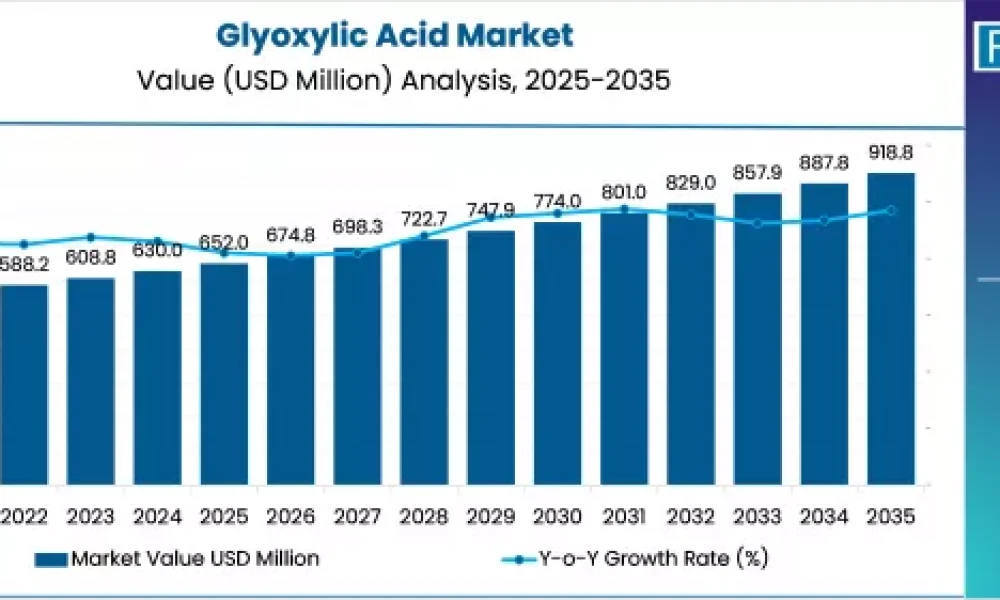
According to a newly published study by Fact.MR, the global glyoxylic acid market is poised to grow from USD 652 million in 2025 to USD 919 million by 2035, registering a compound annual growth rate (CAGR) of 3.5% during the forecast period. The rising consumption of glyoxylic acid in personal care formulations, agrochemicals, aroma intermediates, and pharmaceutical applications is fueling market expansion worldwide.
As sustainability imperatives reshape the global chemicals industry, glyoxylic acid producers are embracing cleaner synthesis methods and bio-based production routes to meet regulatory and environmental standards while maintaining purity and performance.
Market Value Outlook
| Metric | Value |
|---|---|
| Market Size (2025E) | USD 652.0 million |
| Market Size (2035F) | USD 918.8 million |
| CAGR (2025–2035) | 3.5% |
To access the complete data tables and in-depth insights, request a Discount On The Report here: https://www.factmr.com/connectus/sample?flag=S&rep_id=4111
Versatile Organic Compound with Expanding End-Use Spectrum
Glyoxylic acid, a colorless, highly reactive organic compound with both carboxylic and aldehyde functional groups, serves as a key intermediate in numerous fine chemical and industrial processes. Owing to its bifunctional nature, it is employed across applications such as:
Electroless copper plating
Biogenic amine detection
Oomycete fungicide synthesis
Allantoin and vanillin production for cosmetics and personal care
Fact.MR’s research highlights the growing integration of glyoxylic acid derivatives in pharmaceutical and agrochemical formulations to enhance efficiency, stability, and performance.
Personal Care and Pharmaceutical Sectors Lead Global Demand
The personal care and cosmetics industry remains a principal consumer of glyoxylic acid derivatives such as allantoin, prized for its skin-soothing and cell-regeneration properties. Increasing global emphasis on skincare, grooming, and wellness is propelling demand across both emerging and mature markets.
In parallel, the pharmaceutical sector represents another critical growth pillar. Rising healthcare expenditure, lifestyle-related health concerns, and advances in active ingredient manufacturing are reinforcing glyoxylic acid’s position as a vital intermediate in drug synthesis.
“The compound’s versatility and compatibility with multiple reaction pathways make it indispensable in specialty chemical and pharmaceutical manufacturing,” notes a lead chemical analyst at Fact.MR.
Purchase Full Report for Detailed Insights For access to full forecasts, regional breakouts, company share analysis, and emerging trend assessments, you can purchase the complete report here: https://www.factmr.com/checkout/4111
Growing Role in Agrochemicals and Aroma Chemistry
The agrochemical industry is a key end-use segment, utilizing glyoxylic acid as a precursor for fungicides and herbicides that protect crops and improve yield. Expanding global food demand and pest management requirements are expected to maintain stable consumption across developing economies, especially in India, China, and Latin America.
Meanwhile, in the aroma and fragrance industry, glyoxylic acid derivatives—particularly vanillin—continue to see rising demand as natural and synthetic flavor markets grow.
Regional Insights: Asia Pacific Maintains Market Leadership
The Asia Pacific region is forecast to remain the dominant producer and consumer of glyoxylic acid through 2035. Rapid expansion in agrochemical, pharmaceutical, and cosmetics manufacturing—particularly in China, India, and Southeast Asia—positions the region as the engine of global growth.
| Country | CAGR (2025–2035) |
|---|---|
| India | 7.0% |
| France | 6.4% |
| United States | 5.7% |
| Japan | 3.6% |
In North America and Western Europe, strong pharmaceutical and personal care industries underpin steady growth, with France emerging as one of Europe’s fastest-growing markets due to innovation in bio-based derivatives.
Latin America is witnessing increased uptake driven by agricultural productivity initiatives, while the Middle East and Africa show gradual progress as new R&D facilities expand chemical capabilities.
Market Dynamics
Key Growth Drivers
Rising demand for allantoin and vanillin in personal care and cosmetics.
Expanding agrochemical applications to improve crop protection.
Increasing global pharmaceutical consumption and R&D spending.
Growing transition toward cleaner, sustainable chemical synthesis methods.
Key Challenges
Limited production scalability in some regions.
Market consolidation and price volatility among raw materials.
Environmental compliance and waste management in older production setups.
Fact.MR emphasizes that continued investment in green chemistry and bio-based pathways will help address these constraints while improving environmental performance.
Market Segmentation
By Form
Solid
Liquid
By Product Type
Glyoxylic Acid 50%
Glyoxylic Acid 40%
By Derivative
Vanillin
Allantoin
2-Hydroxyphosphine Acetic Acid
p-Hydroxyphenylglycine
Others
By End-Use Industry
Cosmetics and Personal Care
Pharmaceuticals
Agrochemicals
Aromas
Others
Among these, personal care and cosmetics represent the largest revenue contributor, while agrochemicals are projected to register the fastest growth over the next decade.
Competitive Landscape
The global glyoxylic acid market is moderately consolidated with participation from multinational and regional producers. Prominent companies include:
Arkema S.A.
Haihang Industry Co., Ltd.
WeylChem International GmbH
STAN Chemical Co., Ltd.
Zhonglan Industry Co., Ltd.
Ottokemi
TNJ Chemical Industry Co., Ltd.
Labeyond Chemicals Co., Ltd.
Hubei Hongyuan Pharmaceutical Technology Co., Ltd.
Amzole India Pvt. Ltd.
Merck KGaA
Manufacturers are focusing on process optimization, capacity expansion, and sustainable production technologies to gain a competitive edge. Strategic partnerships with pharmaceutical and agrochemical companies are also accelerating innovation in derivative development.
Outlook: Sustainable Chemistry to Shape the Future
Fact.MR analysts project that by 2035, over 30% of glyoxylic acid production will come from bio-based or low-emission manufacturing routes. Companies that successfully transition toward eco-efficient processes and value-added derivatives are expected to strengthen their market positions.
“Green chemistry innovations will determine the future competitiveness of glyoxylic acid manufacturers,” adds the analyst. “Balancing cost-efficiency with sustainability will be the defining trend of the next decade.”
To View Related Report :
Acid Anhydrides Market
About Fact.MR
Fact.MR is a leading market research and consulting agency recognized for delivering actionable intelligence across 1,500+ markets globally. Headquartered in Dublin, Ireland, with offices in the U.S. and India, Fact.MR supports clients in chemicals, materials, and industrial sectors through data-driven insights, forecasts, and strategic advisory services.



