
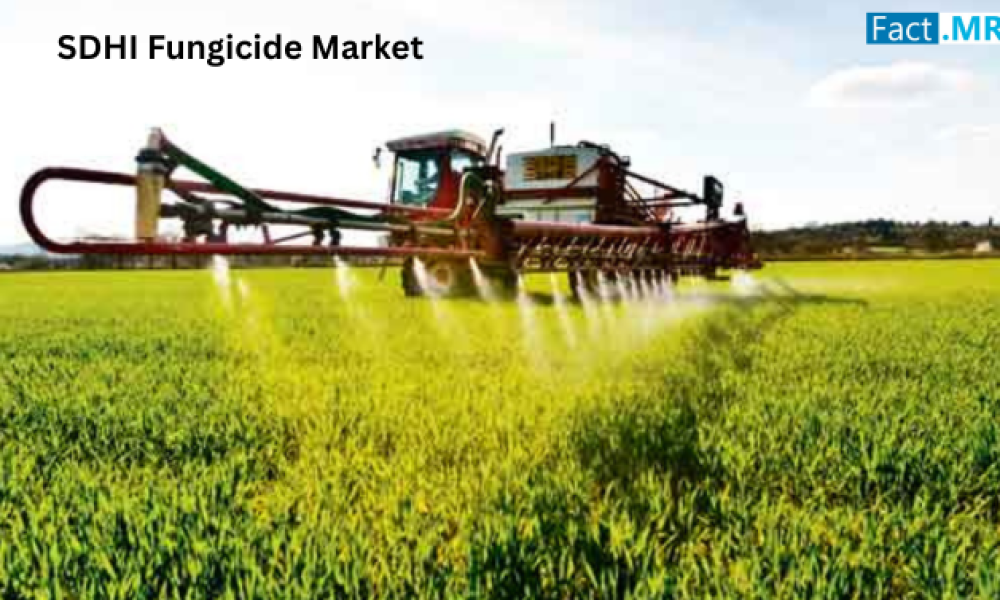
The global Succinate Dehydrogenase Inhibitor (SDHI) fungicide market is entering a phase of rapid expansion, with recent industry data projecting the sector to reach a valuation of $4.5 billion in 2026. This growth reflects a compound annual growth rate (CAGR) of approximately 8.9%, as agricultural producers worldwide transition toward more sophisticated crop protection chemistries to combat evolving fungal pathogens.
Driven by the necessity to maintain food security for a growing global population—projected to reach 9.7 billion by 2050—and the loss of efficacy in older azole and strobilurin-based products, SDHI fungicides have emerged as a critical pillar in Integrated Pest Management (IPM) strategies.
Request for Sample Report | Customize Report |purchase Full Report – https://www.factmr.com/connectus/sample?flag=S&rep_id=7977
Key Market Dynamics: Driving the 2026 Momentum
The surge in market demand is attributed to a combination of climate-driven disease pressure and technological breakthroughs in formulation:
- Climate-Driven Pathogen Outbreaks: Shifting weather patterns have extended the infection windows for devastating diseases such as Septoria in wheat, rusts, and early blight in potatoes.
- Resistance Management: As fungi develop tolerance to legacy treatments, SDHIs offer a unique mode of action that inhibits mitochondrial respiration, providing a high-efficacy alternative for rotational spray programs.
- Expansion in Grains and Cereals: The cereals segment remains the largest consumer of SDHI technology, accounting for nearly 39% of global usage. New regulatory approvals in 2025, such as the introduction of fluindapyr in South America, have further solidified this dominance.
Strategic Shifts in Application and Geography
While Europe maintains the largest regional market share at approximately 43.8%, due to its stringent quality standards and high-value cereal production, the Asia-Pacific region is identified as the fastest-growing market. Rapid industrialization of agriculture in India and China is fueling the adoption of advanced seed treatments and foliar sprays.
Foliar application continues to lead the market with a 59.3% share, favored for its rapid absorption and comprehensive leaf coverage. However, seed treatments are emerging as a high-growth niche, projected to expand at a 10.1% CAGR through 2030, as growers seek to protect crops from soil-borne diseases during early emergence.
The Digital Integration: Precision Farming and Variable-Rate Application
A defining trend for 2026 is the convergence of chemical protection with digital intelligence. Leading manufacturers have achieved up to a 30% reduction in chemical waste by integrating SDHI formulations into precision agriculture ecosystems. Through the use of AI-driven disease heatmaps and satellite imagery, incident-specific spraying now ensures that active ingredients like isoflucypram are applied only where pathogens are detected. This “Smart Stewardship” approach not only aligns with tightening global Maximum Residue Limit (MRL) regulations but also enhances the economic return for growers by optimizing dosage timing and reducing overall input frequency.
Innovation and Competitive Landscape
Leading agrochemical players—including Syngenta, BASF, Bayer CropScience, FMC Corporation, and Corteva Agriscience—are intensifying R&D efforts. Recent developments highlight a shift toward:
- Third-Generation Molecules: Development of novel actives like isoflucypram and pydiflumetofen which offer broader-spectrum control.
- Sustainable Formulations: Integration of precision agriculture and drone-based application technologies to reduce chemical footprints and meet evolving Maximum Residue Limit (MRL) regulations.
- Active Ingredient Leadership: Boscalid remains the dominant active ingredient, currently holding over 31% of the market share due to its versatility across fruits, vegetables, and row crops.
About the SDHI Fungicide Market Report The global SDHI fungicide market provides essential crop protection solutions targeting the mitochondrial respiratory chain of fungi. As a vital tool for modern agriculture, these compounds are central to ensuring crop health, yield sustainability, and global food supply resilience in an era of environmental volatility.
About Fact.MR
Fact.MR is a global market research and consulting firm, trusted by Fortune 500 companies and emerging businesses for reliable insights and strategic intelligence. With a presence across the U.S., UK, India, and Dubai, we deliver data-driven research and tailored consulting solutions across 30+ industries and 1,000+ markets. Backed by deep expertise and advanced analytics, Fact.MR helps organizations uncover opportunities, reduce risks, and make informed decisions for sustainable growth.



