
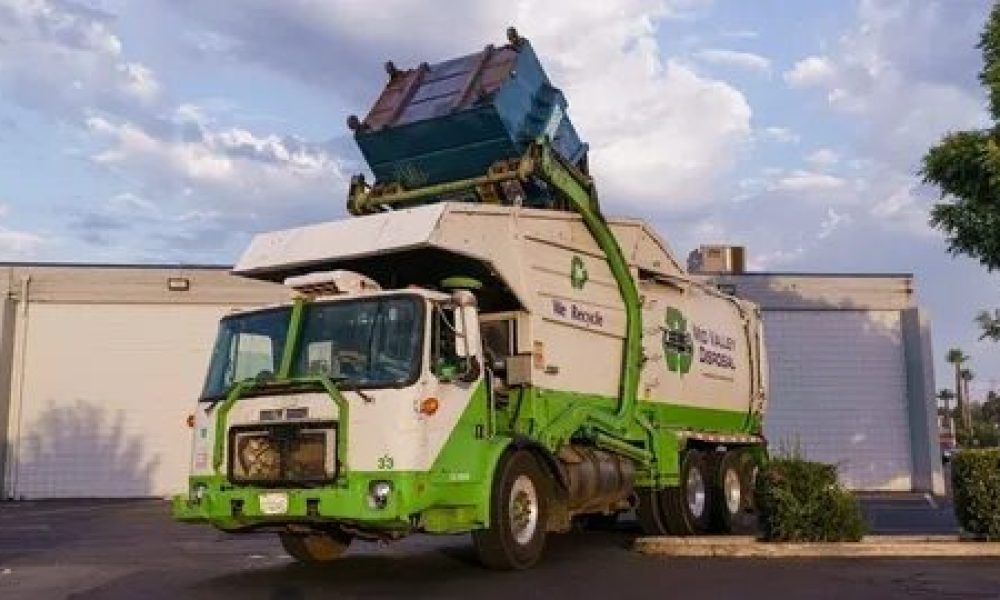
The global recycling trucks market is witnessing a decisive growth phase as municipalities and private waste management operators intensify efforts to improve recycling efficiency, comply with tightening environmental regulations, and modernize aging collection fleets. Valued at USD 8.5 billion in 2025, the market is forecast to reach USD 15.3 billion by 2035, registering a compound annual growth rate (CAGR) of 6.0% over the forecast period.
Recycling trucks form the operational backbone of municipal and industrial recycling systems, enabling the collection, segregation, and transportation of recyclable materials such as plastics, paper, metals, and organics. Rising urban populations, higher per-capita waste generation, and stricter recycling targets are significantly increasing demand for technologically advanced and operationally efficient recycling vehicles worldwide.
Sustainability Regulations and Urbanization Drive Market Momentum
A key growth driver for the recycling trucks market is the global shift toward circular economy practices and landfill diversion. Governments across North America, Europe, and Asia-Pacific are enforcing stricter recycling mandates, extended producer responsibility programs, and emission-reduction policies. These regulatory frameworks are compelling municipalities to upgrade conventional waste collection fleets with recycling-specific trucks that improve material recovery rates and reduce environmental impact.
Rapid urbanization has further intensified waste collection requirements, particularly in densely populated cities where operational efficiency and space constraints are critical. Recycling trucks designed for maneuverability, automation, and reduced noise emissions are increasingly preferred in urban environments, reinforcing steady procurement activity across both developed and emerging economies.
Get access to comprehensive data tables and detailed market insights — request your sample report today!
Fleet Modernization and Automation Reshape Collection Efficiency
Investments in fleet modernization are accelerating as waste management authorities seek to optimize routing, reduce labor dependency, and improve worker safety. Automated and semi-automated recycling trucks, including side-loading and rear-loading configurations, are gaining traction due to their ability to lower operating costs while maintaining consistent service levels.
The integration of smart technologies, such as telematics, GPS-based route optimization, and real-time fleet monitoring, is further enhancing productivity. These digital tools enable operators to reduce fuel consumption, minimize idle time, and improve asset utilization, strengthening the economic case for advanced recycling truck adoption.
Rear Loaders Maintain Leading Position by Truck Type
Within the truck category, rear loaders are projected to account for 28.7% of total market revenue in 2025, making them the leading segment. Their dominance is driven by versatility and suitability for residential and mixed-use collection routes, particularly in areas with narrow streets and limited maneuvering space.
Rear loaders support manual, semi-automated, and automated operations, allowing municipalities to deploy them across diverse collection scenarios. Their adaptability to different bin sizes and compatibility with urban infrastructure programs have ensured continued relevance, especially in city-level recycling initiatives.
Compactor Trucks Emerge as the Preferred Body Type
By body type, compactor trucks are expected to represent 47.3% of market revenue in 2025, positioning them as the most widely adopted configuration. These trucks enable effective waste compression, increasing payload capacity and reducing the frequency of trips to recycling centers.
Compactor trucks deliver significant operational advantages, including fuel efficiency, time savings, and lower emissions per ton of collected material. Their compatibility with automated loading systems and ability to handle multiple recyclable streams have expanded their deployment across municipal, commercial, and industrial applications.
Smaller Capacity Trucks Gain Importance in Urban Collection
From a capacity standpoint, the up to 10 tons segment is projected to capture 35.9% of market revenue by 2025, emerging as the leading size class. Growth in this segment reflects the increasing need for compact, maneuverable vehicles capable of operating efficiently in congested urban areas.
These smaller-capacity recycling trucks offer lower operating costs, reduced emissions, and compliance with city-level vehicle weight restrictions. Their cost-effectiveness and ease of maintenance make them attractive to both public sector fleets and private contractors managing decentralized recycling networks.
Electrification and Alternative Propulsion Gain Traction
Propulsion trends indicate a gradual but steady shift toward electric and hybrid recycling trucks, particularly in Europe and North America. Stringent emission standards, government subsidies, and the need to lower lifecycle costs are encouraging adoption of battery-electric models for urban collection routes.
While internal combustion engine (ICE) trucks continue to dominate in cost-sensitive markets, pilot deployments of electric recycling trucks are expanding in major metropolitan areas. As charging infrastructure improves and battery costs decline, electrification is expected to become a major growth catalyst over the long term.
Regional Outlook Highlights Asia-Pacific Growth
North America remains a leading market, supported by strong municipal spending, advanced recycling infrastructure, and early adoption of automated and electric trucks. Replacement demand for older fleets and compliance with emission regulations continue to sustain market expansion.
Asia-Pacific is emerging as the fastest-growing region, driven by rising urban waste volumes and government-led investments in recycling infrastructure. China is projected to grow at a 7.1% CAGR, supported by waste classification policies, electric truck adoption, and large-scale fleet upgrades in major cities. India follows with a 6.8% CAGR, fueled by public-private partnerships, urban modernization programs, and growing focus on recycling and waste segregation.
In Europe, markets such as Germany, France, and the United Kingdom demonstrate steady growth, supported by strict recycling laws and circular economy targets. Germany’s emphasis on automation and electric fleets positions it as a technology leader, while France and the UK continue to invest in compact, low-noise, and environmentally compliant recycling trucks.
Drive Your Business Growth Strategy: Checkout the Report for Key Insights
Competitive Landscape Focuses on Technology and Compliance
The recycling trucks market is characterized by the presence of established global and regional manufacturers, including Amrep Inc., Daimler Truck AG, Dennis Eagle, Faun Umwelttechnik, Heil, Labrie Trucks, McNeilus, Schwarze Industries, Volvo Trucks, and WM Intellectual Property Holdings. Competition is increasingly centered on technological innovation, emission compliance, and customization for specific waste streams.
Manufacturers are investing in electric drivetrains, automation, and modular truck designs to meet evolving customer requirements. Strategic partnerships with municipalities and private operators are also shaping procurement patterns and long-term service contracts.
Market Outlook
Looking ahead, the global recycling trucks market is positioned for sustained and resilient growth through 2035. The convergence of stricter recycling regulations, urban infrastructure expansion, fleet automation, and electrification is transforming recycling trucks into high-value, technology-driven assets within modern waste management systems.
As cities prioritize sustainability, efficiency, and compliance, recycling trucks will continue to play a critical role in enabling effective material recovery and supporting the transition toward a circular economy.
Why Choose FMI: Empowering Decisions that Drive Real-World Outcomes: https://www.futuremarketinsights.com/why-fmi
About Future Market Insights (FMI)
Future Market Insights, Inc. (FMI) is an ESOMAR-certified, ISO 9001:2015 market research and consulting organization, trusted by Fortune 500 clients and global enterprises. With operations in the U.S., UK, India, and Dubai, FMI provides data-backed insights and strategic intelligence across 30+ industries and 1200 markets worldwide.



