
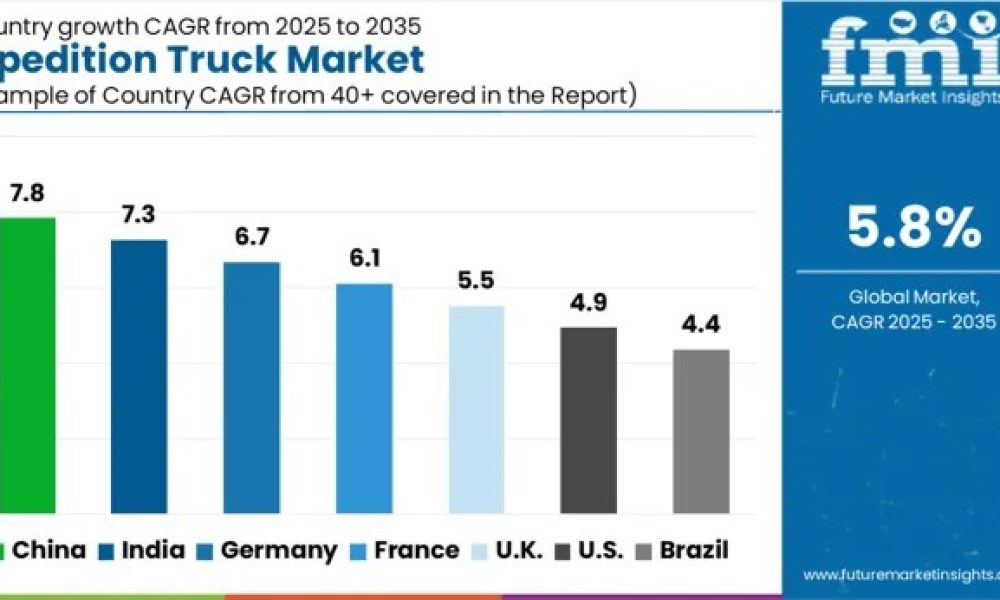
The global expedition truck market is demonstrating steady and resilient growth, supported by rising interest in off-grid travel, adventure tourism, and self-sufficient mobility solutions. Valued at USD 260.0 million in 2025, the market is projected to reach USD 456.8 million by 2035, expanding at a compound annual growth rate (CAGR) of 5.8% over the forecast period. This upward trajectory reflects a structural shift in travel preferences toward durable, long-range vehicles capable of navigating remote environments while offering integrated living and power systems.
Expedition trucks—purpose-built vehicles designed for extreme terrain and extended journeys—are increasingly being adopted by private users, commercial expedition operators, and defense organizations. Their ability to combine transportation, accommodation, and autonomous operation is positioning them as a compelling alternative to conventional recreational vehicles and modified off-road platforms.
Off-Grid Travel and Overlanding Fuel Market Expansion
The market’s growth is closely linked to the expanding popularity of overland tourism and outdoor recreational activities, particularly in North America and Europe, where consumers are seeking immersive travel experiences beyond traditional infrastructure. Expedition trucks enable long-duration travel across deserts, mountains, and undeveloped road networks, offering travelers mobility without compromising comfort or safety.
In parallel, Asia-Pacific markets are emerging as high-growth regions, driven by rising disposable incomes, expanding adventure tourism ecosystems, and increased cross-border expedition activity. The growing visibility of digital nomads and expedition content creators has further amplified consumer awareness and aspirational demand for fully self-contained exploration vehicles.
Manufacturers are responding by diversifying their portfolios with modular interiors, advanced navigation systems, integrated solar power, water filtration units, and fuel-efficient drivetrains, allowing users to tailor vehicles to specific journey profiles and climatic conditions.
Get access to comprehensive data tables and detailed market insights — request your sample report today!
3.5–7.5 Tonne Vehicles Dominate Market Structure
By weight category, the 3.5–7.5 tonne segment is expected to account for 46.2% of total market revenue in 2025, making it the leading segment globally. This dominance is driven by the segment’s optimal balance between payload capacity and maneuverability, enabling extended expeditions without requiring special driving licenses in many regions.
Vehicles in this class are widely favored for their adaptability to custom living quarters, onboard energy systems, and storage solutions, while still maintaining access to narrow trails and remote routes. Lower operational costs compared to heavier platforms and growing availability from specialist manufacturers have further strengthened adoption across both recreational and commercial use cases.
4WD Drivetrains Set the Performance Benchmark
From a drivetrain perspective, four-wheel drive (4WD) systems continue to define the market, capturing an estimated 57.8% revenue share in 2025. Expedition travel frequently involves unpredictable terrain such as sand, snow, gravel, and steep inclines, making traction reliability a critical purchasing criterion.
Advancements in suspension design, torque distribution, and drivetrain durability have enhanced the performance and usability of 4WD expedition trucks. These systems offer a balance between extreme off-road capability and everyday drivability, supporting both short-range excursions and long-haul international expeditions.
Overland Vehicles Lead by Class
Among vehicle classes, overland vehicles are projected to hold 38.6% of market revenue in 2025, emerging as the most prominent category. Demand is being driven by travelers seeking long-term, self-reliant mobility that allows them to operate independently of campsites, hotels, or fixed infrastructure.
These vehicles are increasingly designed as integrated mobile living environments, equipped with sleeping quarters, kitchens, sanitation facilities, and renewable power systems. The ability to customize layouts and onboard systems has made overland vehicles particularly attractive to adventure travelers, retirees, and professional explorers prioritizing autonomy and durability.
Defense, Customization, and Luxury Drive Differentiation
Beyond recreational use, military and defense applications remain a significant contributor to market demand. Expedition trucks are widely deployed for logistics, troop transport, and mobile command operations in challenging environments. Rising global defense spending and the need for reliable off-road mobility continue to support procurement activity in this segment.
Customization has also emerged as a defining trend. Buyers increasingly seek vehicles that combine rugged performance with premium interiors, driving demand for bespoke builds featuring high-end materials, advanced electronics, and enhanced comfort. This convergence of functionality and luxury is reshaping competitive positioning across the market.
Drive Your Business Growth Strategy: Checkout the Report for Key Insights
Asia-Pacific Leads Growth Outlook
Country-level analysis highlights China as the fastest-growing market, with a forecast CAGR of 7.8% between 2025 and 2035, supported by overland tourism growth, infrastructure expansion, and rising demand for luxury expedition vehicles. India follows with a 7.3% CAGR, driven by adventure tourism, rural connectivity projects, and military requirements.
In Europe, France is projected to grow at 6.1% CAGR, benefiting from eco-tourism initiatives and demand for premium overland travel solutions, while the UK is expected to expand at 5.5% CAGR. The United States, with a projected 4.9% CAGR, continues to see steady demand from adventure tourism and defense sectors.
Competitive Landscape and Strategic Focus
The expedition truck market features a mix of global OEMs and specialized manufacturers, including EarthRoamer, Action Mobil, Bimobil, Bliss Mobil, EarthCruiser, Global Expedition Vehicles (GXV), Krug Expedition, Suncamper 4×4, Unicat, and Ziegler Adventure. Competition centers on customization capabilities, vehicle durability, off-road performance, and integrated living technologies.
As consumer expectations evolve, future market leadership will depend on the ability to balance luxury, sustainability, and extreme-terrain performance. Ongoing innovation in lightweight materials, energy efficiency, and modular design is expected to shape the next phase of growth in the global expedition truck market.
Why Choose FMI: Empowering Decisions that Drive Real-World Outcomes: https://www.futuremarketinsights.com/why-fmi
About Future Market Insights (FMI)
Future Market Insights, Inc. (FMI) is an ESOMAR-certified, ISO 9001:2015 market research and consulting organization, trusted by Fortune 500 clients and global enterprises. With operations in the U.S., UK, India, and Dubai, FMI provides data-backed insights and strategic intelligence across 30+ industries and 1200 markets worldwide.



