
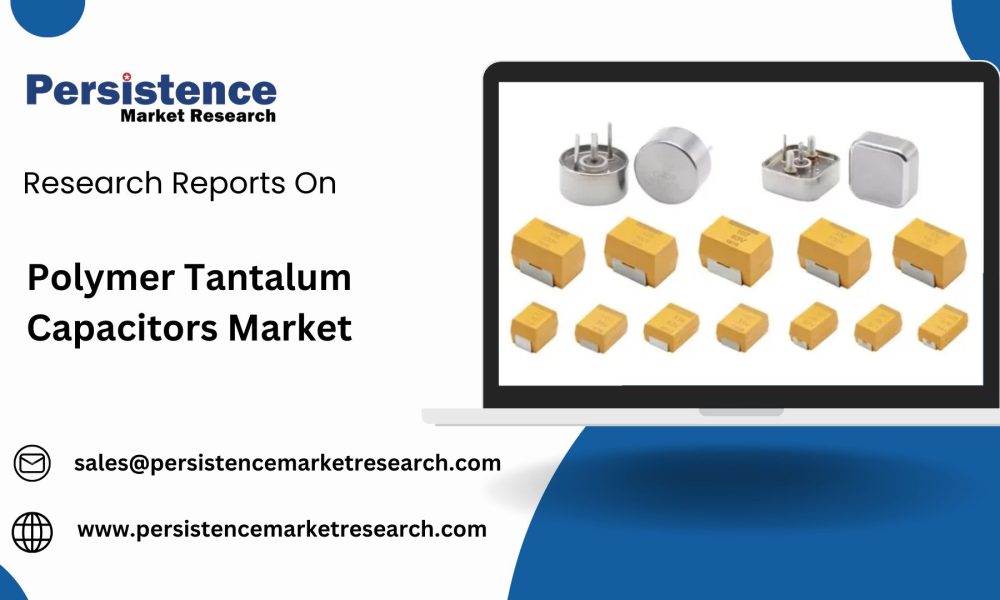
The global polymer tantalum capacitors market is poised for significant growth in the coming years, driven by technological innovation, miniaturization of electronic devices, and the rising demand for high-performance components in automotive and consumer electronics. Estimated at US$739.8 million in 2024, the market is projected to reach US$1,203.0 million by 2031, reflecting a robust CAGR of 7.2% from 2024 to 2031. This growth underscores the strategic importance of polymer tantalum capacitors in modern electronics, particularly in applications where reliability, efficiency, and compact size are paramount.
Key Market Drivers
Technological Innovation and Miniaturization
The continuous advancement in capacitor technology has been a crucial driver for the polymer tantalum capacitors market. Modern electronic devices increasingly demand components that can deliver high capacitance in smaller form factors. This push towards miniaturization, coupled with the need for higher performance, has made polymer tantalum capacitors a preferred choice over conventional solid capacitors.
Unlike traditional capacitors, polymer tantalum capacitors offer improved stability, lower equivalent series resistance (ESR), and superior performance at high frequencies. These attributes make them particularly suitable for high-end consumer electronics, including smartphones, tablets, laptops, and wearable devices. Manufacturers are focusing on designing capacitors that are not only compact but also energy-efficient, addressing the growing need for sustainable and high-performance electronics.
Surge in Electric Vehicle Adoption
A major factor contributing to market growth is the rising adoption of electric vehicles (EVs) globally. EVs rely heavily on sophisticated electronic systems for battery management, power conversion, and energy storage. Polymer tantalum capacitors are highly favored in these systems due to their high reliability, compact size, and long-term stability.
The Chinese EV market, in particular, has become a significant driver for polymer tantalum capacitors. With China being the largest EV market globally, automakers demand high-performance components capable of handling increased power requirements and complex electronic systems. The integration of polymer tantalum capacitors in EVs not only enhances efficiency but also contributes to the overall reduction of vehicle size and weight, factors that are critical in optimizing battery life and vehicle performance.
Growing Demand in Mobile Devices and Consumer Electronics
Mobile devices such as smartphones, tablets, and laptops require compact yet efficient capacitors for power management and signal processing. Polymer tantalum capacitors provide an ideal solution due to their ability to offer high capacitance in smaller packages, allowing manufacturers to design sleeker, more reliable products without compromising on performance.
Additionally, the rise of IoT devices and wearable electronics further fuels the demand for high-performance capacitors. As these devices become more compact and multifunctional, the need for reliable power storage and management solutions intensifies, creating a favorable market environment for polymer tantalum capacitors.
Elevate your business strategy with comprehensive market data. Request a sample report now: https://www.persistencemarketresearch.com/samples/34653
Market Trends
Preference for Smaller Capacitors
One notable trend in the polymer tantalum capacitors market is the growing preference for smaller capacitors with higher capacitance. This trend aligns with the broader movement in electronics toward miniaturization. Smaller capacitors help manufacturers reduce the size of circuit boards, enhance device portability, and optimize overall energy efficiency.
The shift towards smaller form factors is particularly evident in automotive electronics and wearable devices, where every millimeter of space is critical. Polymer tantalum capacitors, with their superior capacitance-to-volume ratio, are increasingly favored over traditional solid capacitors, which often cannot meet the dual requirements of compact size and high performance.
Cost-Effectiveness and Reliability
Another driving trend is the recognition of polymer tantalum capacitors as a cost-effective and reliable alternative in various electronic applications. While initially more expensive than traditional capacitors, the long-term benefits—including lower failure rates, enhanced durability, and improved performance—make them an economically viable choice for manufacturers seeking to balance cost with quality.
Industries such as automotive, aerospace, and consumer electronics are leveraging polymer tantalum capacitors for critical applications where failure is not an option. The superior reliability of these capacitors under harsh operating conditions, such as high temperatures and voltage fluctuations, strengthens their position in these high-stakes sectors.
Integration with Power Management Systems
Polymer tantalum capacitors are increasingly integrated into power management systems for electronics and EVs. These capacitors play a crucial role in voltage regulation, energy storage, and noise suppression, contributing to the overall efficiency of electronic devices.
The trend toward energy-efficient and smart power management solutions has led manufacturers to adopt polymer tantalum capacitors more widely, especially in systems where consistent performance under dynamic conditions is essential. Their ability to maintain stability in high-frequency circuits and withstand thermal stress makes them indispensable in modern electronics.
Regional Insights
Asia-Pacific: A Key Growth Hub
The Asia-Pacific region, led by China, is a dominant force in the polymer tantalum capacitors market. China’s massive consumer electronics and EV industries create an ever-growing demand for high-quality electronic components. The rapid expansion of automotive electronics, in particular, has made polymer tantalum capacitors a critical component in meeting local manufacturing requirements.
Japan and South Korea also contribute significantly, driven by their advanced semiconductor and electronics industries. Both countries prioritize miniaturized, high-performance capacitors to support next-generation consumer devices, robotics, and industrial automation solutions.
North America and Europe
In North America, the market growth is fueled by innovations in EV technology, aerospace electronics, and high-performance computing systems. Companies in the region are focusing on developing capacitors with low ESR and high ripple current capabilities, ensuring better efficiency and longer component life.
Europe, meanwhile, benefits from stringent automotive and industrial standards, prompting the adoption of reliable polymer tantalum capacitors in electric mobility, renewable energy systems, and smart grid applications. The region’s emphasis on energy-efficient electronics and sustainability also aligns with the advantages offered by polymer tantalum capacitors.
Challenges and Restraints
Despite its promising outlook, the polymer tantalum capacitors market faces several challenges:
- Raw Material Costs: The high cost of tantalum and polymer materials can impact the overall production cost, potentially affecting market growth in cost-sensitive applications.
- Competition from Alternative Capacitors: Competing technologies, such as aluminum electrolytic and ceramic capacitors, may offer cost advantages in certain applications, posing a challenge for polymer tantalum capacitor adoption.
- Supply Chain Vulnerabilities: Tantalum is a rare and critical material, and supply chain disruptions could affect the consistent availability of raw materials, impacting production schedules and market expansion.
Manufacturers are addressing these challenges by investing in research and development, improving production efficiency, and exploring alternative sources of tantalum to ensure steady supply and cost optimization.
Competitive Landscape
The polymer tantalum capacitors market is characterized by intense competition, with several key players focusing on innovation, quality, and reliability. Companies are investing in next-generation capacitor technologies, enhancing capacitance, reducing ESR, and developing miniaturized components to meet evolving market needs.
Major market players include KEMET Corporation, AVX Corporation, Vishay Intertechnology, Taiyo Yuden Co., Ltd., and Murata Manufacturing Co., Ltd. These companies emphasize partnerships with automotive OEMs, consumer electronics manufacturers, and industrial equipment providers to expand their market presence. Strategic acquisitions, collaborations, and investments in R&D are commonly employed to maintain a competitive edge.
Future Outlook
The polymer tantalum capacitors market is poised for sustained growth through 2031. Several factors contribute to this optimistic outlook:
- Rising EV Penetration: As electric vehicle adoption continues to surge globally, the demand for high-performance capacitors in battery management and power electronics systems will grow.
- Miniaturization of Electronics: The ongoing trend of designing smaller, more powerful devices will drive the preference for polymer tantalum capacitors due to their compact form and high efficiency.
- Expansion of Industrial Electronics: Automation, robotics, and IoT applications will continue to require capacitors capable of handling complex circuits, further boosting market demand.
- Innovation in Capacitor Technology: Advancements in polymer formulations, reliability improvements, and manufacturing processes will enhance capacitor performance and appeal across industries.
By 2031, the market is expected to reach US$1,203.0 million, signaling robust growth from the 2024 base of US$739.8 million. The projected CAGR of 7.2% from 2024 to 2031 underscores the strategic relevance of polymer tantalum capacitors in modern electronics, power management, and automotive applications.
Conclusion
The global polymer tantalum capacitors market is experiencing a period of dynamic growth, fueled by technological innovation, the proliferation of electric vehicles, and the miniaturization of electronic devices. These capacitors provide a unique combination of high performance, reliability, and compact size, making them indispensable in today’s fast-evolving electronics landscape.
With continued investment in R&D, strategic partnerships, and supply chain optimization, manufacturers are well-positioned to capitalize on emerging opportunities. As the market moves toward 2031, polymer tantalum capacitors are expected to remain a critical component in automotive, consumer electronics, industrial, and IoT applications, cementing their role in shaping the future of high-performance electronics.
Related Reports:




