
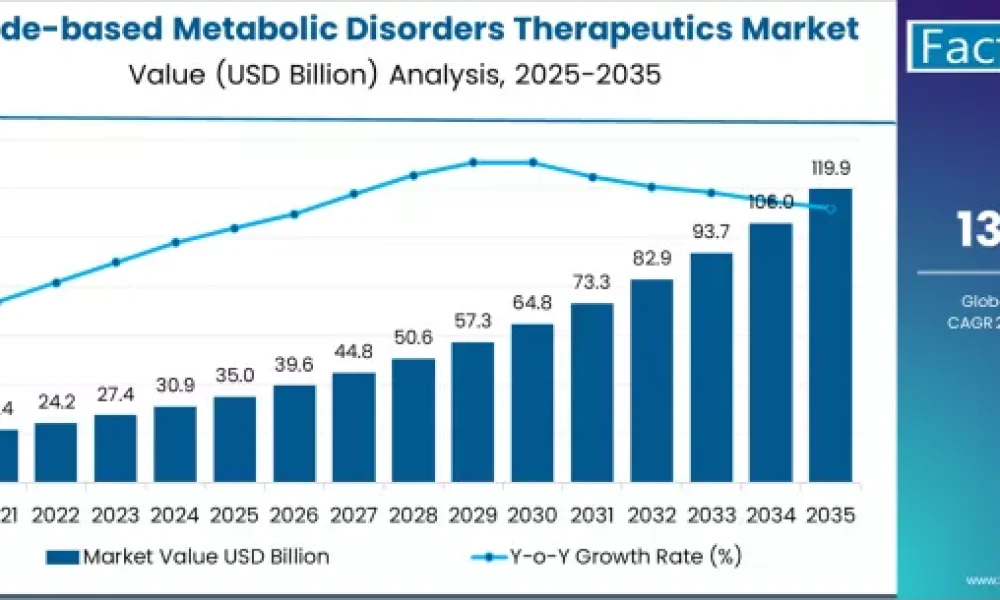
The global peptide-based metabolic disorders therapeutics market is entering a decade of significant growth, projected to expand from USD 35.0 billion in 2025 to USD 119.9 billion by 2035, representing a robust CAGR of 13.1%. This surge is driven by rising prevalence of metabolic disorders, including obesity and type 2 diabetes, alongside the rapid adoption of advanced peptide therapies and innovative treatment protocols.
Market Overview
Peptide-based therapeutics, particularly GLP-1/GIP agonists, dominate the market with a 66% share, reflecting their clinical efficacy in weight management and metabolic control. Obesity is the leading indication segment, accounting for 57% of demand, fueled by the global obesity epidemic and increasing awareness of metabolic health. Emerging combination therapies and next-generation peptide formulations are expected to enhance patient outcomes, reduce side effects, and improve adherence, further bolstering market expansion.
Stakeholder Imperatives in Peptide-based Metabolic Disorder Therapeutics
Focus on patient outcomes: Beyond glucose control, prioritize holistic health improvements.
Comprehensive care packages: Combine peptide therapies with weight management, glucose monitoring, lifestyle support, and provider training.
Optimized treatment protocols: Include dosing, side effect management, patient education, and long-term monitoring.
Oral formulation readiness: Support injectable-to-oral transitions for better compliance and convenience.
Access optimization: Facilitate insurance navigation, patient assistance, specialty pharmacy partnerships, and provider education.
Value-based pricing: Ensure transparent cost-effectiveness, clear efficacy data, and accessible patient programs.
To access the complete data tables and in-depth insights, request a Discount On The Report here: https://www.factmr.com/connectus/sample?flag=S&rep_id=187
Growth Drivers
Key factors propelling the market include:
- Rising metabolic disorder prevalence:Increasing cases of diabetes, obesity, and non-alcoholic steatohepatitis (NASH) are driving demand for innovative therapeutics.
- Technological innovation:Oral peptide formulations, dual-action GLP-1/GIP therapies, and precision medicine approaches are reshaping treatment landscapes.
- Healthcare infrastructure expansion:Enhanced availability of metabolic disorder management programs in developed and emerging markets is improving patient access.
- Regulatory support and reimbursement policies:Favorable policies for innovative therapies facilitate market adoption.
Regional Insights
North America, Western Europe, and East Asia represent the leading markets, with strong healthcare infrastructure and early adoption of peptide-based therapeutics. Emerging economies, particularly in Asia-Pacific and Latin America, are witnessing rapid growth due to rising metabolic disorder prevalence, healthcare modernization initiatives, and increasing investment in therapeutic innovation.
Competitive Landscape
Major players in the market include Novo Nordisk, Eli Lilly, Amgen, Pfizer, and AstraZeneca. These companies focus on research and development, strategic collaborations, and product differentiation to capture market share. Innovation in dual-hormone therapies, oral peptide formulations, and integration with digital health platforms are key competitive strategies.
Technology and Therapeutic Trends
The market is witnessing significant advancements, including:
- Next-generation combination therapies:Triple agonists and multi-target peptides offer superior metabolic control.
- Oral delivery systems:Injectable-to-oral transitions improve patient compliance and convenience.
- Integrated care platforms:Combining peptide therapies with lifestyle management and glucose monitoring enhances therapeutic effectiveness.
Challenges and Opportunities
Despite the positive outlook, the market faces challenges such as high treatment costs, access disparities in developing regions, and regulatory complexities. However, opportunities lie in expanding oral peptide options, personalized therapies, and strategic partnerships with specialty pharmacies and healthcare providers.
Strategic Implications for Stakeholders
- Manufacturers:Focus on R&D, oral formulation development, and multi-indication therapies.
- Healthcare providers:Incorporate comprehensive metabolic disorder management programs to optimize patient outcomes.
- Investors:Capitalize on high-growth segments such as GLP-1/GIP agonists and obesity management therapies for long-term returns.
Outlook Summary
From 2026 to 2036, the peptide-based metabolic disorders therapeutics market is poised for sustained growth, driven by technological innovation, increasing metabolic disorder prevalence, and expanding healthcare infrastructure. With opportunities across multiple regions and therapeutic classes, stakeholders are well-positioned to benefit from this evolving market, improving patient outcomes and advancing global metabolic health management.
Have a specific Requirements and Need Assistant on Report Pricing or Limited Budget please contact us – [email protected]
About Fact.MR
Fact.MR is a global market research and consulting firm, trusted by Fortune 500 companies and emerging businesses for reliable insights and strategic intelligence. With a presence across the U.S., UK, India, and Dubai, we deliver data-driven research and tailored consulting solutions across 30+ industries and 1,000+ markets. Backed by deep expertise and advanced analytics, Fact.MR helps organizations uncover opportunities, reduce risks, and make informed decisions for sustainable growth.



