
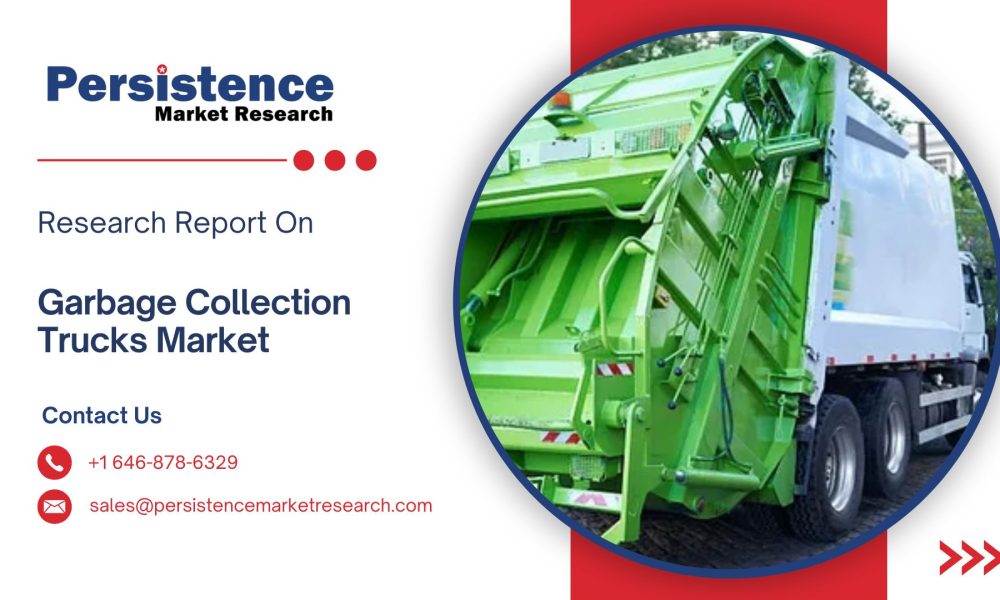
The global garbage collection trucks market is poised for steady expansion, rising from US$ 15,032.7 Mn in 2025 to US$ 20,049.9 Mn by 2032, reflecting a compound annual growth rate (CAGR) of 4.2% during the forecast period (2025–2032). This growth underscores the increasing global emphasis on urban cleanliness, waste management efficiency, and sustainable urban infrastructure. Garbage collection vehicles are indispensable for maintaining hygiene in urban and rural areas by collecting, transporting, and disposing of municipal waste efficiently. They are widely utilized in residential complexes, municipal bodies, industrial zones, and commercial areas to handle ever-growing waste volumes driven by urbanization and population growth.
A significant driver for this market is the rising implementation of smart city projects and the integration of automated waste collection systems. Municipal authorities are increasingly adopting advanced garbage trucks equipped with hydraulic systems and compactors to streamline waste collection operations. The rear-loading segment currently dominates the market, owing to its efficiency in densely populated urban regions. Meanwhile, North America leads the market geographically, supported by advanced waste management infrastructure, stringent environmental regulations, and rapid adoption of electric and automated waste collection vehicles.
Get | Download Sample Copy with TOC, Graphs & List of Figures @ https://www.persistencemarketresearch.com/samples/22030
Market Statistics and Key Growth Drivers
The market’s growth trajectory is strongly influenced by a combination of technological advancements, government initiatives for clean cities, and the rising generation of municipal solid waste. Rapid urbanization, coupled with industrial and commercial expansion, has increased waste output globally, thereby creating demand for efficient collection solutions. Smart waste management solutions and automation in garbage trucks are gaining traction due to their cost efficiency and operational safety. In addition, electric garbage trucks are emerging as an eco-friendly alternative to traditional diesel-powered models, aligning with global sustainability goals.
Leading manufacturers are investing in electric and hybrid truck development to meet emission regulations and reduce operational costs. Moreover, public-private partnerships in waste management and growing awareness of recycling programs further fuel market demand. The Asia-Pacific region is projected to be the fastest-growing market over the forecast period due to rising infrastructure investments, rapid urban expansion, and government-led cleanliness initiatives such as India’s “Swachh Bharat Mission” and China’s urban sanitation programs.
Key Highlights from the Report
➤ The global garbage collection trucks market is projected to expand at a CAGR of 4.2% between 2025 and 2032.
➤ Market valuation is expected to increase from US$ 15,032.7 Mn in 2025 to US$ 20,049.9 Mn by 2032.
➤ North America remains the leading regional market due to high adoption of automated and electric garbage collection systems.
➤ Rear-loading garbage trucks hold a dominant market share owing to their operational flexibility in congested urban environments.
➤ Rising environmental regulations and government-led waste management initiatives are driving technological innovation.
➤ The Asia-Pacific region is witnessing rapid growth due to infrastructure modernization and urban sanitation projects.
Market Segmentation
The garbage collection trucks market is segmented based on product type, end-user, and loading mechanism. By product type, the market includes front loaders, rear loaders, and side loaders. Rear loaders hold the largest share due to their cost-effectiveness and convenience in collecting waste from narrow city streets. Front loaders are primarily used for commercial waste collection, particularly from large waste bins in industrial and commercial zones. Side loaders, often automated, are increasingly adopted in municipalities focused on reducing labor costs and improving operational efficiency.
In terms of end-users, the market is segmented into municipal, industrial, and commercial sectors. The municipal segment dominates due to rising investments in city sanitation and recycling programs. Municipalities are increasingly relying on automated garbage trucks to handle large waste volumes efficiently. The industrial segment is also gaining traction as manufacturing and construction activities produce significant non-hazardous waste. Moreover, the commercial sector, including malls, offices, and institutions, contributes notably to market demand with the rise of organized waste management systems.
Regional Insights
North America remains the largest regional market, supported by advanced waste management systems, early adoption of automation technologies, and stringent environmental regulations. The region’s well-established municipal infrastructure and growing shift toward electric trucks further contribute to its dominance. Key countries such as the United States and Canada are leading adopters of waste collection automation, with strong collaboration between local governments and private waste management firms.
In contrast, the Asia-Pacific region is emerging as the fastest-growing market for garbage collection trucks. The region’s expanding urban population and ongoing smart city projects are driving rapid adoption. Governments in China, India, and Japan are introducing policies to modernize waste collection fleets and improve recycling efficiency. Europe follows closely, emphasizing eco-friendly vehicle adoption through strict emission regulations and circular economy initiatives.
For customization options before purchasing: https://www.persistencemarketresearch.com/request-customization/22030
Market Drivers
The market is primarily driven by urbanization and increasing municipal waste generation. As global populations rise, the volume of household and industrial waste continues to surge, prompting municipalities to modernize waste collection fleets. Technological innovation—such as automation, GPS tracking, and AI-enabled waste segregation—has enhanced efficiency and reduced operational costs. Additionally, the growing adoption of electric and hybrid garbage trucks aligns with sustainability goals and lowers emissions, offering long-term cost benefits. Government initiatives promoting smart cities and public health awareness campaigns are further propelling market growth.
Another critical factor is the expansion of public-private partnerships (PPP) in waste management. These collaborations ensure improved funding, efficient operations, and rapid infrastructure upgrades. Advanced compactor technology and ergonomic truck designs are improving driver safety and efficiency, reinforcing market demand. The overall market landscape is shifting toward digitalization, smart monitoring systems, and sustainable waste collection vehicles.
Market Restraints
Despite positive trends, several challenges restrain market growth. High initial costs associated with electric and automated garbage trucks remain a major barrier, particularly in developing economies. The maintenance and operational costs of specialized vehicles can also be substantial due to complex hydraulic systems and electronic components. Furthermore, the absence of standardized waste collection practices across regions limits uniform adoption.
Environmental regulations, while promoting sustainability, also increase compliance costs for manufacturers. In rural or underdeveloped areas, limited infrastructure and budget constraints hinder modernization efforts. Additionally, the lack of skilled operators for advanced waste management systems continues to pose operational challenges. Fluctuating raw material prices and dependency on global supply chains can also affect production costs, impacting overall market profitability.
Market Opportunities
The transition toward eco-friendly and automated waste collection solutions presents immense growth opportunities. Electric garbage trucks are becoming increasingly attractive due to lower fuel costs, reduced emissions, and government incentives. Integration of IoT and telematics for route optimization and real-time tracking provides operational efficiency and data-driven decision-making capabilities. Moreover, the rise of smart waste management systems in urban centers creates demand for vehicles compatible with automated waste bins and robotic loaders.
Emerging markets in Asia-Pacific, Latin America, and Africa present lucrative opportunities due to rapid industrialization and urban expansion. Manufacturers focusing on lightweight materials, modular designs, and cost-effective solutions can capture a larger market share. Innovations such as AI-powered sorting systems, autonomous driving technologies, and digital fleet management tools are expected to redefine future waste collection operations. Governments’ increasing focus on circular economy models and sustainability will continue to generate new avenues for growth through 2032.
The key players studied in the report include:
Prominent players operating in the global garbage collection trucks market include:
- McNeilus Truck & Manufacturing, Inc.
- Heil Environmental Industries Ltd.
- Dennis Eagle Ltd.
- FAUN Umwelttechnik GmbH & Co. KG
- Dongfeng Motor Corporation
- Labrie Enviroquip Group
- Zoomlion Heavy Industry Science & Technology Co., Ltd.
- Curbtender, Inc.
- Foton Motor Inc.
- EZ Pack Refuse Hauling Solutions, LLC
For In-Depth Competitive Analysis, Buy Now: https://www.persistencemarketresearch.com/checkout/22030
Reasons to Buy the Report
➤ What are the main factors influencing the Garbage Collection Trucks Market 2025–2032?
➤ Which companies are the major sources in this industry?
➤ What are the market’s opportunities, risks, and general structure?
➤ Which of the top Garbage Collection Trucks Market 2025–2032 companies compare in terms of sales, revenue, and prices?
➤ How are market types and applications and deals, revenue, and value explored?
Future Opportunities and Growth Prospects
The future of the garbage collection trucks market is anchored in sustainability, automation, and digital transformation. The shift toward electric and hybrid models will redefine operational efficiency, while IoT-enabled smart trucks will enhance data-driven management. Governments’ increasing focus on green urbanization and circular economy principles will continue to shape market dynamics. Innovations in autonomous waste collection and real-time monitoring systems are expected to revolutionize municipal waste management by 2032. As urban populations swell and environmental consciousness deepens, the demand for advanced, efficient, and sustainable garbage collection solutions will remain strong across all major regions.




