
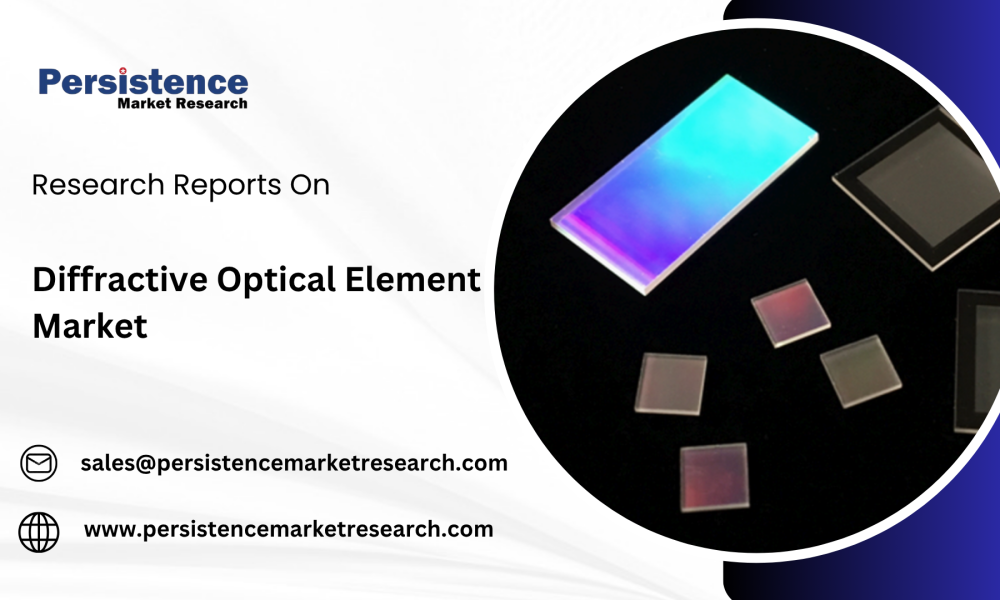
The global diffractive optical element (DOE) market is poised for robust expansion over the next decade, driven by technological advancements, increasing adoption across emerging applications, and the rising need for compact, energy-efficient optical solutions. Valued at US$817.3 million in 2025, the market is projected to reach US$1,430.2 million by 2032, registering a healthy CAGR of 8.3% from 2025 to 2032. This growth trajectory reflects the transformative impact of DOEs in industries such as electronics, biomedical devices, automotive, and photonics, where precision optics and miniaturization are increasingly essential.
Understanding Diffractive Optical Elements
Diffractive optical elements are microstructured optical components that manipulate light through diffraction rather than conventional refraction or reflection. Unlike traditional lenses or mirrors, DOEs can split, shape, or modulate light beams with remarkable precision and minimal bulk, making them ideal for modern optical systems where size, efficiency, and accuracy are critical.
The adoption of DOEs has been accelerating due to several technological factors:
- Miniaturization of Optical Systems: As devices shrink, from smartphones to portable medical equipment, the demand for compact optical solutions grows. DOEs enable complex light manipulation in a small form factor.
- Nanofabrication Advancements: Precision manufacturing techniques such as electron-beam lithography and nanoimprint lithography have enhanced DOE quality, reducing errors and improving beam control.
- Versatility Across Applications: DOEs can function as beam splitters, beam shapers, gratings, or optical encoders, offering multifunctional capabilities that cater to diverse industry needs.
Key Industry Highlights
The DOE market exhibits distinct trends in product type, application, and industrial adoption, each contributing to the overall growth narrative.
Leading Product Type: Beam Splitters
Beam splitters are the dominant product type in the DOE market, capturing over 52% of market share in 2025. Their ability to divide light into multiple paths with high precision makes them indispensable in applications like imaging, spectroscopy, telecommunications, and laser systems.
However, beam shapers are experiencing the fastest growth due to increasing demand for uniform beam intensity and high-precision beam profiling. Applications such as laser machining, lithography, and optical measurement benefit significantly from beam shapers, highlighting the sector’s dynamic evolution.
Key Trend: The demand for multifunctional DOEs capable of integrating beam splitting and shaping in a single compact component is rising, driven by miniaturization and efficiency requirements.
Leading Application: Biomedical Devices
Biomedical applications are a significant driver of DOE adoption, accounting for over 27% of market share in 2025. The precision optics enabled by DOEs are critical in:
- Imaging Systems: High-resolution microscopy and optical coherence tomography rely on precise beam shaping for improved image clarity.
- Diagnostics: DOEs enhance laser-based diagnostic tools, enabling accurate detection of biological markers.
- Minimally Invasive Surgery: Compact, energy-efficient optical systems allow for precise surgical interventions, reducing patient recovery time and improving procedural outcomes.
Market Insight: The biomedical sector continues to fuel innovation in DOE technology, as hospitals and research centers demand increasingly sophisticated, reliable, and miniaturized optical solutions.
Leading Industry: Electronics and Semiconductors
The electronics and semiconductor sector holds a 23% market share in 2025, supported by the growing complexity of microchips and high-precision manufacturing processes. Key drivers include:
- Photolithography: DOEs enable precise patterning of wafers, essential for advanced semiconductor nodes.
- High-Precision Beam Shaping: Laser micromachining and testing of semiconductor components rely on DOE-driven beam uniformity and control.
- Miniaturization: Compact DOE components help maintain optical performance while reducing system footprint, aligning with industry trends toward smaller, more integrated devices.
Observation: As semiconductor manufacturing evolves toward smaller nodes and higher complexity, DOE adoption is expected to grow in tandem, supporting the next generation of electronic devices.
Elevate your business strategy with comprehensive market data. Request a sample report now: https://www.persistencemarketresearch.com/samples/14389
Regional Insights
The DOE market exhibits significant regional variation in adoption and growth rates.
Europe: Market Leader
Europe accounts for more than 32% of the DOE market share in 2025, driven by robust medical device, automotive, and semiconductor industries. Key factors include:
- Medical Devices: European hospitals and research institutions invest heavily in advanced imaging and diagnostic tools, increasing DOE demand.
- Automotive and ADAS: Vehicle automation and driver-assistance systems rely on high-performance optical sensors, with European OEMs leading in adoption.
- Renewable Energy: Solar concentrators and optical sensors for green technologies further expand DOE utilization.
Asia-Pacific: Fastest Growing Region
Asia-Pacific is the fastest-growing market, fueled by:
- High-Volume Electronics Manufacturing: China, Japan, and South Korea dominate global electronics production, creating a substantial market for DOE components.
- 5G Expansion: By May 2025, over 4.5 million 5G base stations are expected to be deployed, increasing demand for precise optical components in communication systems.
- Cost-Effective Production: Lower manufacturing costs combined with technological advancements have made DOE adoption more accessible in the region.
Market Implication: Asia-Pacific’s growth reflects both production scale and technological adoption, positioning the region as a critical engine for global DOE market expansion.
Opportunities in Emerging Applications
The DOE market is not limited to traditional optics or biomedical applications. Emerging technologies such as autonomous vehicles, augmented reality (AR), and virtual reality (VR) are creating new avenues for growth.
LiDAR and ADAS
Light Detection and Ranging (LiDAR) systems and Advanced Driver-Assistance Systems (ADAS) rely on high-resolution, precise beam shaping to detect obstacles and ensure safety. DOEs enhance performance by:
- Increasing LiDAR range and resolution.
- Improving ADAS functionality for autonomous and electric vehicles.
- Reducing system size and power consumption, enabling integration in smaller vehicles.
Government Support: Funding initiatives, such as the $25.7 million investment by the U.S. National Highway Traffic Safety Administration (NHTSA) in 2024, are accelerating DOE adoption in vehicle automation research, further boosting market growth.
AR/VR Devices
The AR/VR industry demands compact, high-precision optical solutions for immersive experiences. DOEs contribute to:
- High-quality light shaping for realistic displays.
- Gesture and facial recognition systems requiring precise optical performance.
- Compact optical modules that reduce device weight and improve energy efficiency.
Insight: As AR/VR adoption grows in gaming, healthcare, and industrial applications, DOE integration will become a standard requirement for high-performance devices.
Technological Advancements Driving Growth
Several technological trends are underpinning the DOE market’s expansion:
- Nanofabrication Techniques: Advanced lithography and nanoimprint methods have improved the resolution, precision, and reproducibility of DOE components.
- Hybrid Optical Systems: Integration of refractive and diffractive elements allows enhanced performance, creating new applications in sensors, imaging, and laser systems.
- Software-Driven Design: Computational design tools enable customized DOE solutions, optimizing light manipulation for specific industrial and biomedical needs.
Takeaway: Continuous innovation in materials, manufacturing, and design software ensures that DOEs remain versatile, efficient, and highly precise.
Market Challenges
Despite strong growth prospects, the DOE market faces certain challenges:
- High Initial Costs: Advanced DOEs require precision manufacturing, which can increase production costs.
- Material Limitations: Optical performance may be affected by environmental conditions, such as temperature fluctuations or mechanical stress.
- Complex Design Requirements: Highly customized applications demand sophisticated design and simulation expertise, limiting accessibility for smaller manufacturers.
Mitigation: Ongoing research, automation in fabrication, and cost-effective production in regions like Asia-Pacific are helping to overcome these barriers.
Investment and Strategic Outlook
The DOE market presents attractive opportunities for investors and technology developers:
- Strategic Collaborations: Partnerships between optical manufacturers, semiconductor companies, and automotive OEMs are essential to accelerate innovation and application-specific solutions.
- R&D Investments: Continued funding in biomedical imaging, autonomous vehicle systems, and AR/VR optics will drive new DOE applications and revenue streams.
- Regional Expansion: Targeting high-growth regions, particularly Asia-Pacific, allows companies to leverage low-cost production while tapping into massive electronics and automotive markets.
Insight: A combination of strategic investment, technological innovation, and regional market focus will define the competitive landscape in the coming years.
Conclusion
The global diffractive optical element market is entering a period of rapid growth, driven by technological innovation, miniaturization, and expanding applications across electronics, biomedical devices, and emerging AR/VR and automotive technologies. With a projected CAGR of 8.3% from 2025 to 2032, the market is expected to reach US$1,430.2 million, reflecting the increasing adoption of compact, high-precision optical solutions.
Key Takeaways:
- Beam splitters dominate the market, while beam shapers are growing rapidly due to precision demands.
- Biomedical devices and electronics/semiconductors are primary application and industry drivers, respectively.
- Europe leads in market share, but Asia-Pacific is the fastest-growing region due to manufacturing scale and technological adoption.
- Emerging opportunities in LiDAR, ADAS, and AR/VR devices offer significant growth potential.
- Technological advancements in nanofabrication, hybrid optical systems, and computational design continue to expand DOE capabilities.
As industries continue to demand smaller, faster, and more precise optical systems, the DOE market is set to play a pivotal role in shaping the future of optics, from healthcare innovation to autonomous driving and beyond. Companies that strategically align with these trends, invest in R&D, and leverage regional advantages are likely to gain a significant competitive edge in this evolving market.
Related Reports:




