
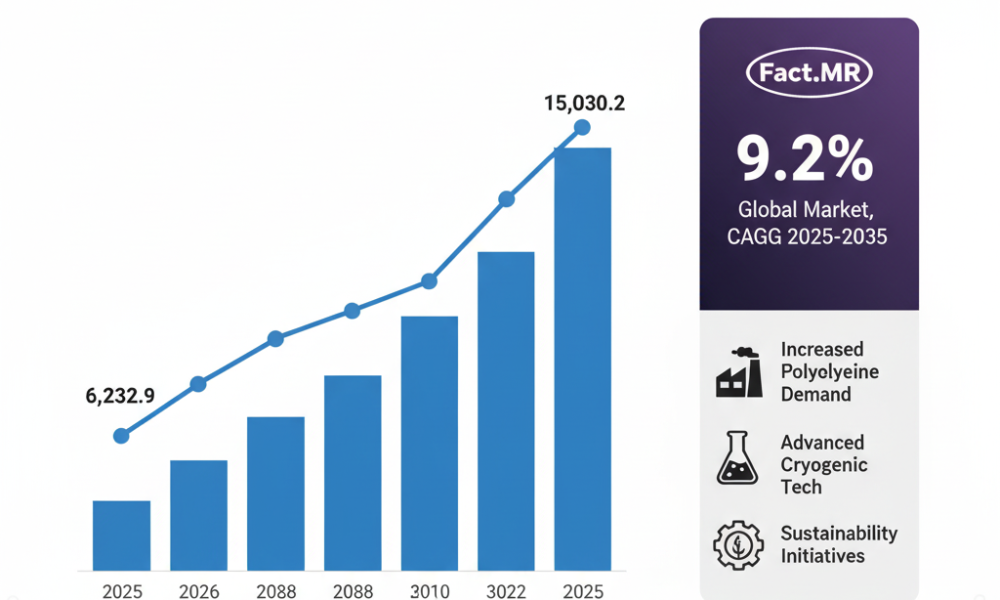
The global cryogenic ethylene market is projected to grow from USD 6,232.9 million in 2025 to USD 15,030.2 million by 2035, expanding at a robust CAGR of 9.2%, according to the latest research by Fact.MR. Market growth is driven by increasing demand for polyethylene and ethylene derivatives, technological advancements in cryogenic storage and transportation, and rising focus on sustainable, bio-based production processes.
Cryogenic Ethylene: Critical Role in Modern Industry
Cryogenic ethylene, an ultra-low temperature liquefied form of ethylene, is pivotal for polymer production, chemical synthesis, and specialty applications. Its use spans polyethylene manufacturing, automotive components, pharmaceuticals, food packaging, textiles, and industrial solvents. The demand surge in emerging economies and rising industrialization is driving growth, while technological innovations such as AI-based process optimization, predictive maintenance, and frost-protection systems for cryogenic pumps enhance operational efficiency and reduce costs.
To access the complete data tables and in-depth insights, request a Discount On The Report here: https://www.factmr.com/connectus/sample?flag=S&rep_id=7232
Market Drivers
Rising Demand for Polyethylene and Ethylene Derivatives:
Polyethylene remains the most consumed plastic globally, critical for packaging, construction, domestic goods, and agricultural films. Growth in industrial sectors, particularly in Asia-Pacific and North America, fuels the need for high-purity cryogenic ethylene.Technological Integration:
Artificial intelligence, machine learning, and smart sensors optimize cryogenic operations by enabling real-time monitoring, predictive maintenance, and precision temperature control. These technologies reduce product loss, improve safety, and support operational continuity in ultra-low temperature environments.Sustainability and Bio-Based Ethylene:
Increasing environmental awareness has accelerated the adoption of bio-based ethylene and cleaner production methods. Initiatives like New Energy Blue’s New Energy Chemicals in the U.S. highlight the industry’s shift toward renewable feedstocks, low-carbon infrastructure, and circular economy principles.
Market Challenges
High Infrastructure Costs:
Establishing cryogenic storage and transportation facilities requires sophisticated technology, protective systems, and significant capital expenditure, which can restrict market penetration for smaller enterprises.Raw Material Price Volatility:
Ethylene production relies on crude oil and natural gas, whose price fluctuations directly impact profitability and cost stability.Regulatory Complexities:
Differences in environmental, safety, and compliance standards across regions pose entry barriers for multinational companies and require continuous alignment with evolving regulatory frameworks.
Purchase Full Report for Detailed Insights
For access to full forecasts, regional breakouts, company share analysis, and emerging trend assessments, you can purchase the complete report here:https://www.factmr.com/checkout/7232
Industry Outlook and Investment Dynamics
The cryogenic ethylene market involves interdependent stakeholders across upstream, midstream, and downstream operations:
Producers: Ethylene producers, whether fossil-based or bio-based, influence purity, availability, and cost, while facing pressures to decarbonize and adopt clean technologies.
Infrastructure and Technology Providers: Vendors now offer integrated cryogenic solutions with predictive maintenance, digital twins, and AI-driven control to ensure operational reliability at ultra-low temperatures.
Investors and Financial Stakeholders: Strategic and private equity investors provide capital for infrastructure, greenfield expansion, and bio-based ethylene initiatives, aligning with ESG and decarbonization goals.
Regulators: Governments enforce emission targets, safety norms, and operational standards, shaping market innovation, investment, and sustainability adoption.
End-Users: Industries such as packaging, automotive, construction, and pharmaceuticals influence innovation and supply-chain decisions, increasingly prioritizing high-purity and environmentally responsible ethylene.
Joint collaboration among these stakeholders is critical to accelerate technology adoption, streamline compliance, and enhance sustainability, while mitigating operational and regulatory risks.
Market Segmentation
By Grade:
Polymer Grade: High-purity ethylene (>99%) used in high-performance polymers such as butyl rubber and polyisobutylene for automotive tires, inner tubes, and pharmaceutical closures. CAGR: 6.4% (2025–2035).
Chemical Grade: Used in chemical synthesis, specialty solvents, and industrial applications.
By Application:
Polymer Production: CAGR: 6.6%; polyethylene remains the key driver.
Chemical Production, Alkylation & Refining, Solvent & Specialty Chemicals
Automotive, Construction, Medical & Pharmaceuticals, Textile & Fiber Production
By Transport Mode:
ISO Containers: CAGR: 6.3%; multimodal transport (sea, rail, road) ensures product stability, safety, and cost efficiency.
Tank Cars, Cargo Tanks, High-Pressure Cylinders
By Region:
North America, Latin America, Western Europe, South Asia, East Asia, Eastern Europe, Middle East & Africa
Regional Highlights
United States: CAGR: 9.3%; robust manufacturing base, advanced AI-integrated cryogenic facilities, bio-based ethylene adoption, and LNG infrastructure expansion.
China: CAGR: 9.2%; industrialization, urbanization, and increased demand for polyethylene and derivatives. Strong government support for clean energy and production technologies.
Germany: CAGR: 9.0%; leadership in Industry 4.0, AI-based process control, and sustainable chemical production.
South Korea: CAGR: 9.1%; developed chemical industry, government incentives for low-carbon ethylene, and advanced infrastructure.
UK, France, Italy, Japan, Australia-New Zealand: Moderate-to-high growth driven by green production, bio-based initiatives, and industrial demand.
Competitive Landscape
The cryogenic ethylene market is dominated by multinational corporations leveraging technological expertise, global supply chains, and production capacity. Key players include:
Chevron Phillips Chemical: Market share 13–15%; strength in large-scale integrated petrochemical complexes and energy-efficient operations.
DOW: Strong R&D in cryogenic technology, bio-based ethylene, and sustainability initiatives.
Air Liquide: Market share ~15%; expertise in cryogenic storage, transportation, and clean energy integration.
Eastman: 8–10%; specialty chemicals and high-purity ethylene for industrial, automotive, and pharma applications.
Borealis: 15–17%; polymer production, circular economy initiatives, and bio-based feedstock investment.
Other notable players include ExxonMobil, Indorama, Lotte, LyondellBasell, BASF, Reliance Industries Limited, Shell Global, SABIC, and INEOS Group AG.
Key Success Factors
Technological Leadership: AI, IoT, and predictive maintenance in cryogenic operations.
Sustainability Alignment: Bio-based feedstocks, renewable energy integration, and circular economy principles.
Regulatory Compliance: Proactive alignment with environmental and safety standards.
Strategic Partnerships: Collaborative ventures for technology adoption, risk-sharing, and supply chain integration.
Outlook
The global cryogenic ethylene market is expected to maintain double-digit growth in key emerging economies while mature regions continue steady expansion driven by polyethylene demand and sustainable production technologies. With increasing R&D investment, adoption of clean and bio-based ethylene, and strategic collaboration across stakeholders, the market is set for a resilient and technologically innovative decade.
About Fact.MR
Fact.MR is a leading provider of syndicated and custom market research reports, delivering actionable insights and competitive intelligence across global industries. The company enables businesses to make data-driven decisions with forecasts, analysis, and industry trends.
To View Related Report :



