
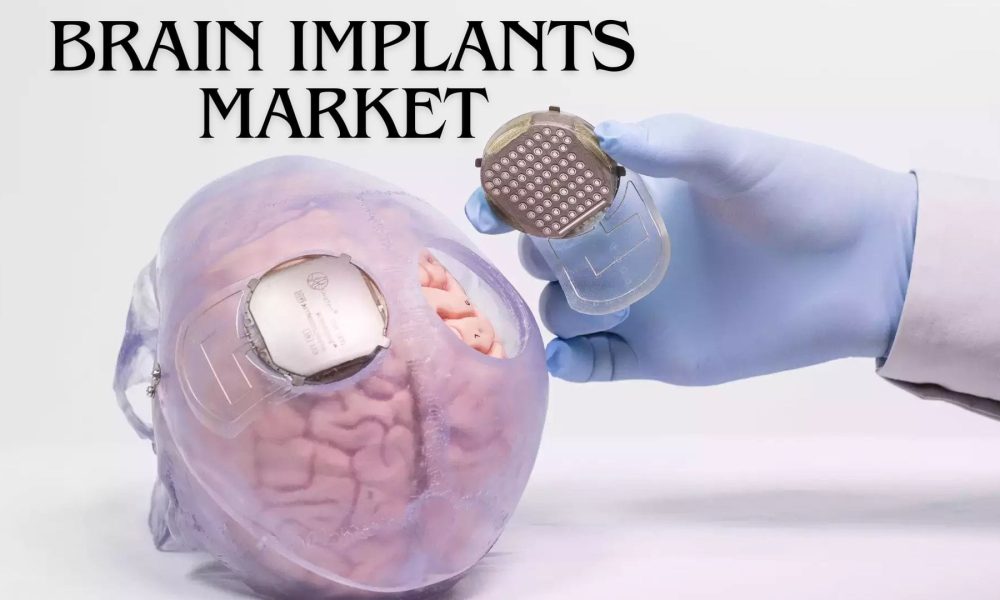
The Global Brain Implants Market reached USD 5.3 billion in 2022 and is projected to witness lucrative growth by reaching up to USD 10.8 billion by 2031. The global brain implants market is expected to exhibit a CAGR of 9.5% during the forecast period (2024-2031).
Brain implants, also known as neural implants, are medical devices surgically placed in the brain to restore, enhance, or monitor neural functions. These implants are used to treat neurological disorders such as Parkinson’s disease, epilepsy, depression, and even paralysis by stimulating specific brain regions or recording neural activity. Common types of brain implants include deep brain stimulation (DBS) devices, vagus nerve stimulators (VNS), and brain-computer interfaces (BCIs).
The global brain implants market is experiencing significant growth due to increasing cases of neurological disorders, advancements in neurotechnology, and growing demand for brain-computer interfaces (BCIs). The rising prevalence of conditions such as Parkinson’s disease, epilepsy, and depression has fueled the adoption of brain implants as effective treatment options. According to the World Health Organization (WHO), neurological disorders affect nearly 1 billion people worldwide, driving the need for innovative brain implant solutions.
Download Free Sample PDF: https://www.datamintelligence.com/download-sample/brain-implants-market
Market Growth Drivers:
Increasing Prevalence of Neurological Disorders
The rising incidence of neurological disorders is a significant factor driving market growth. Brain implants, such as Deep Brain Stimulation (DBS) devices, are commonly used to manage conditions like Parkinson’s disease by stimulating or recording signals from specific brain regions. Parkinson’s disease is a progressive neurodegenerative disorder characterized by the gradual loss of dopamine-producing brain cells. This depletion of dopamine leads to motor symptoms such as tremors, rigidity, bradykinesia (slowed movement), and postural instability. DBS helps regulate abnormal brain activity, alleviating these symptoms and improving patients’ quality of life.
According to the Parkinson’s Foundation, approximately one million people in the U.S. are affected by Parkinson’s disease, and this number is expected to rise to 1.2 million by 2030. Globally, more than 10 million individuals suffer from the condition, making it the second most common neurodegenerative disorder after Alzheimer’s disease. In the U.S. alone, nearly 90,000 new cases of Parkinson’s disease are diagnosed annually. As the prevalence of neurological disorders continues to grow, the demand for brain implants is expected to increase significantly.
Key Market Developments and Strategic Advancements
The growing demand for brain implants has led to increased product approvals, launches, collaborations, and acquisitions within the industry. Companies are continuously innovating to bring advanced neurotechnology to the market. For instance, in October 2022, Axoft, a neurotechnology company, received an FDA Breakthrough Device designation for its brain-machine interface (BMI), designed to treat neurological disorders more effectively. The company secured $8 million in funding to support pre-clinical FDA studies and scale up its “soft as the brain” neural implants.
Market Segments:
By Type: Deep Brain Stimulator, Spinal Cord Stimulator, Vagus Nerve Stimulator
By Material: Silicon, Tungsten, Platinum-iridium, Nanotubes, Others
By Application: Alzheimer’s Disease, Parkinson’s Disease, Epilepsy, Chronic Pain, Others
By End User: Hospitals, Neurology clinics, Others
Competitive Landscape
- Medtronic PLC
- Boston Scientific Corporation
- Renishaw PLC
- Synchron Inc
- Abbott Laboratories
- LivaNova PLC
- NeuroPace Inc
- Sapiens Neuro
- Neuralink
- Nexstim
Customize Your Scope: https://www.datamintelligence.com/customize/brain-implants-market
Regional Growth
North America Held 42.6% Market Share in 2022
North America dominates the brain implant market, driven by high-quality healthcare facilities and widespread accessibility. The rising prevalence of neurological disorders, such as Alzheimer’s disease, further fuels market growth. According to the Alzheimer’s Association, over 6 million Americans have Alzheimer’s, with projections reaching 12.7 million by 2050. This increasing burden of neurological diseases is boosting demand for brain implants, encouraging more companies to enter the market and drive regional expansion.
Key Development:
In December 2022, Abbott’s Eterna spinal cord stimulation (SCS) system, the smallest rechargeable spinal cord stimulator for chronic pain treatment, received FDA approval. Eterna SCS utilizes low-dose BurstDR stimulation, the only SCS waveform technology with 1A clinical evidence, proven to provide 23% greater pain relief than conventional waveform methods.
For Detailed Report: https://www.datamintelligence.com/enquiry/brain-implants-market




