
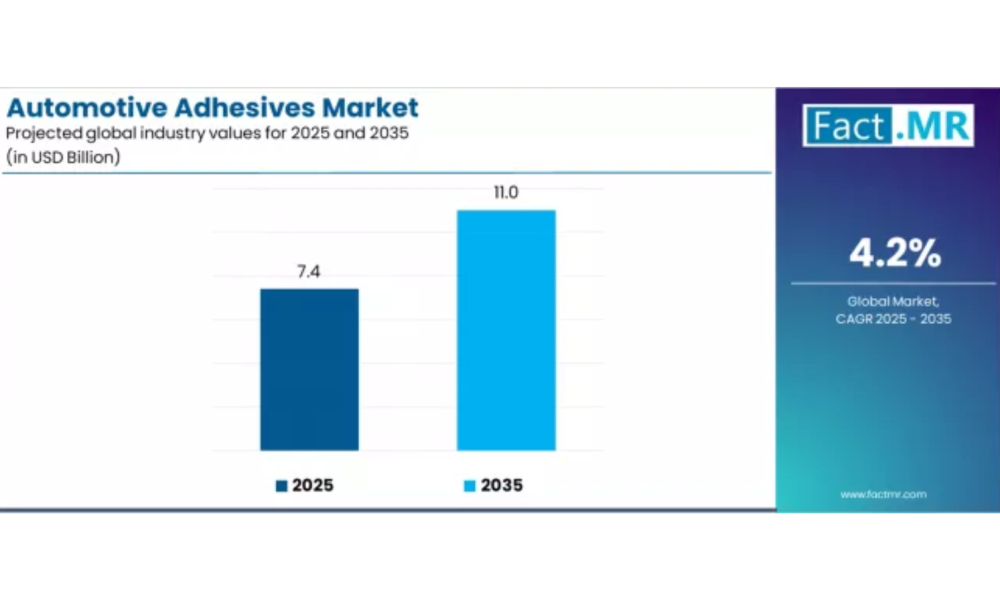
The global automotive adhesives market is set for steady and sustained growth as automakers increasingly adopt advanced bonding solutions to support lightweight vehicle design, enhanced safety, and efficient manufacturing. According to industry analysis, the market is projected to expand from USD 7.4 billion in 2025 to USD 11.0 billion by 2035, registering a CAGR of 4.2% over the forecast period.
Automotive adhesives are becoming indispensable across vehicle assembly applications, replacing traditional mechanical fasteners in body-in-white structures, interior and exterior components, powertrain systems, and electric vehicle (EV) architectures. Their ability to improve structural integrity, reduce weight, and enable multi-material bonding is driving widespread adoption across global automotive platforms.
To access the complete data tables and in-depth insights, request a Discount On The Report here: https://www.factmr.com/connectus/sample?flag=S&rep_id=3800
Key Market Drivers
Lightweighting and Fuel Efficiency Mandates Drive Adhesive Adoption
Automakers are under increasing regulatory pressure to reduce vehicle emissions and improve fuel efficiency. Automotive adhesives enable bonding of lightweight materials such as aluminum, composites, and advanced plastics—significantly reducing vehicle weight while maintaining strength and durability. This makes adhesives a core enabler of next-generation vehicle platforms.
Rising Electric Vehicle Production Fuels Demand
The rapid expansion of EV manufacturing is accelerating demand for specialized automotive adhesives. These solutions play a critical role in battery pack assembly, thermal management, vibration resistance, and electrical insulation, supporting safety and performance requirements unique to electric and hybrid vehicles.
Improved Safety, Durability, and NVH Performance
Automotive adhesives distribute stress more evenly than mechanical fasteners, enhancing crash performance and structural rigidity. They also reduce noise, vibration, and harshness (NVH), contributing to improved ride comfort and long-term vehicle durability—key priorities for OEMs and premium vehicle manufacturers.
Manufacturing Efficiency and Design Flexibility
Adhesive bonding allows streamlined assembly processes, fewer parts, and greater design freedom. Automakers benefit from faster production cycles, improved aesthetics, and reduced corrosion risks compared to welding and riveting methods.
Regional Growth Highlights
Asia-Pacific: Largest and Fastest-Growing Market
China, Japan, South Korea, and India dominate global vehicle production, making Asia-Pacific the leading consumer of automotive adhesives. Strong EV adoption, expanding manufacturing capacity, and government support for clean mobility are accelerating regional market growth.
North America: Strong Focus on EVs and Advanced Materials
The U.S. automotive sector’s shift toward electric, autonomous, and lightweight vehicles is driving increased use of high-performance adhesives in structural and battery applications.
Europe: Sustainability and Regulatory Compliance Drive Demand
European automakers emphasize low-emission vehicles and sustainable manufacturing. Strict environmental regulations and advanced engineering standards support strong demand for structural and specialty automotive adhesives.
Market Segmentation Insights
By Product Type
• Structural Adhesives – Widely used in body-in-white and load-bearing applications
• Epoxy Adhesives – Preferred for high strength and thermal resistance
• Polyurethane Adhesives – Popular for flexibility and impact resistance
• Acrylic Adhesives – Used for fast curing and strong bonding
• Silicone Adhesives – Applied in high-temperature and sealing applications
By Application
• Body-in-White
• Powertrain
• Interior Assembly
• Exterior Components
• Battery Systems (EVs)
Market Challenges
Despite favorable growth prospects, the automotive adhesives market faces several challenges:
• Raw Material Price Volatility impacting production costs
• Stringent Environmental Regulations on chemical formulations
• Complex Qualification Processes for new adhesive technologies
• OEM Dependence and Long Approval Cycles
Competitive Landscape
The automotive adhesives market is moderately consolidated, with leading players focusing on R&D, sustainable formulations, and EV-specific adhesive solutions. Strategic partnerships with OEMs and investments in lightweight bonding technologies are key competitive strategies.
Prominent Companies Include:
• Henkel AG & Co. KGaA
• Sika AG
• 3M Company
• H.B. Fuller
• Arkema Group (Bostik)
• Dow Inc.
• BASF SE
Future Outlook: Smart Bonding Solutions for Next-Generation Vehicles
Over the next decade, automotive adhesives will transition from supportive materials to mission-critical components in vehicle design and assembly. As the industry embraces electrification, autonomous technologies, and sustainable manufacturing, demand for high-performance, durable, and eco-friendly adhesive solutions will intensify.
Manufacturers that innovate in EV bonding systems, recyclable adhesive technologies, and advanced structural formulations will be best positioned to capitalize on the automotive industry’s evolving needs and long-term growth trajectory.
Have a specific Requirements and Need Assistant on Report Pricing or Limited Budget please contact us – [email protected]
About Fact.MR
Fact.MR is a global market research and consulting firm, trusted by Fortune 500 companies and emerging businesses for reliable insights and strategic intelligence. With a presence across the U.S., UK, India, and Dubai, we deliver data-driven research and tailored consulting solutions across 30+ industries and 1,000+ markets. Backed by deep expertise and advanced analytics, Fact.MR helps organizations uncover opportunities, reduce risks, and make informed decisions for sustainable growth.



