
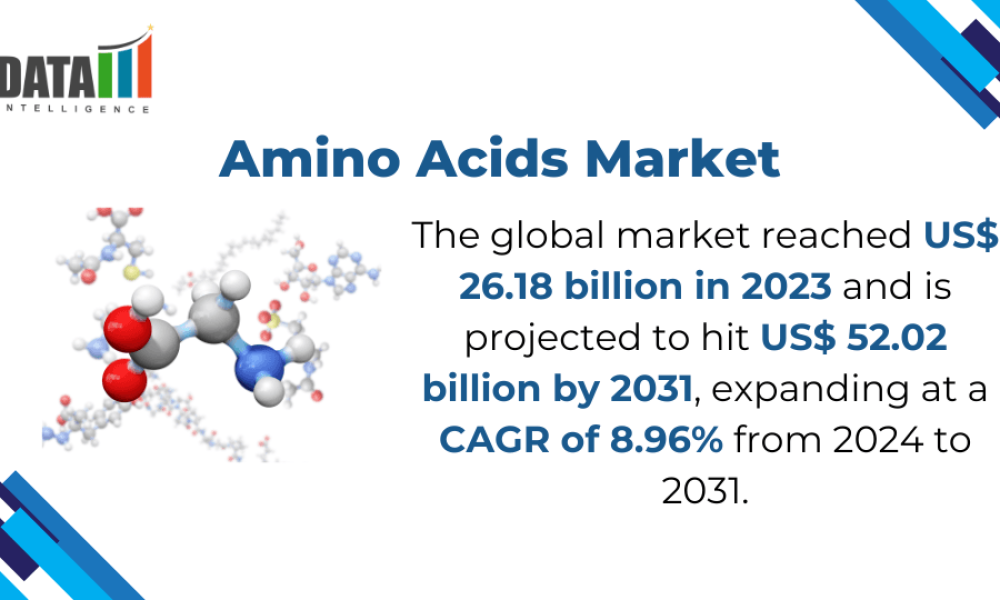
Global Amino Acids Market reached US$ 26.18 billion in 2023 and is projected to hit US$ 52.02 billion by 2031, expanding at a CAGR of 8.96% from 2024 to 2031.
Amino acids play a pivotal role in health supplements, aiding in muscle recovery, fatigue reduction, and cardiovascular health. Their incorporation in sports nutrition supplements available in powders, tablets, and beverages has surged among athletes. Nutraceutical products such as functional beverages, functional foods, and dietary supplements continue to drive demand.
Market Dynamics
Growing Demand for Nutraceutical & Pharmaceutical Products
Amino acids are witnessing strong demand from food and dietary supplement manufacturers, driven by rising consumer awareness and purchasing power. These compounds are integral to muscle recovery, fatigue reduction, and cardiovascular health, making them a staple in sports nutrition.
In October 2024, Evonik announced the strategic reorganization of its Health Care division, exploring divestiture or partnerships for its keto and pharmaceutical amino acid production units in Ham and Wuming. The move aligns with Evonik’s transition into a biosolutions leader focused on APIs, drug delivery, and precision biosolutions.
For more details, Request a Sample Report – https://www.datamintelligence.com/download-sample/amino-acids-market
Rising Demand in Animal Feed Industry
Lysine, methionine, and threonine are crucial amino acids for the animal feed sector. The growing meat consumption in emerging economies, particularly in China and India, has amplified demand for enhanced animal nutrition.
- Methionine boosts poultry production and egg quality.
- Lysine supports muscle development in swine.
Amino acids enhance protein intake and reduce reliance on expensive feed ingredients, boosting livestock productivity.
In May 2023, Evonik introduced a new generation of Biolys, an innovative lysine source for animal feed, reinforcing its position in the global market.
Price Volatility as a Market Constraint
Fluctuations in raw material prices, energy costs, and supply chains present challenges for amino acid producers. For instance, in Q2 2024, Asia-Pacific faced a price drop due to weak demand in animal feed and pharmaceuticals, leading to an oversupply. India experienced notable price volatility, impacting industry profitability.
Market Segmentation & Trends
- By Source: Plant-based amino acids are gaining traction due to growing veganism and ethical concerns regarding animal slaughter.
- By End-User: Key sectors include food & beverage, pharmaceuticals, animal feed, cosmetics, and agriculture.
- By Region:
- Asia-Pacific leads due to its agriculture, food, and pharmaceutical sectors.
- North America remains dominant in overall market size.
Key Developments in the Market
- April 2023: Ajinomoto partnered with Logomix Inc. for R&D on sustainable amino acid production to achieve carbon neutrality.
- March 2023: Corteva Inc. and Bunge advanced amino acid-enhanced soybean meals for animal feed applications.
Impact of Russia-Ukraine War
The conflict has disrupted amino acid supply chains, with Russia restricting exports of essential amino acids like L-lysine and DL-methionine to stabilize domestic supply. Sanctions and logistical challenges have further strained Russia’s agricultural economy, increasing production costs for livestock farmers.
Major Players in the Global Amino Acids Market
- Adisseo
- ADM
- Ajinomoto Co., Inc
- Blue Star Corp
- CJ CheilJedang Corp
- DAESANG
- DSM
- Evonik Industries AG
- Novus International.




