
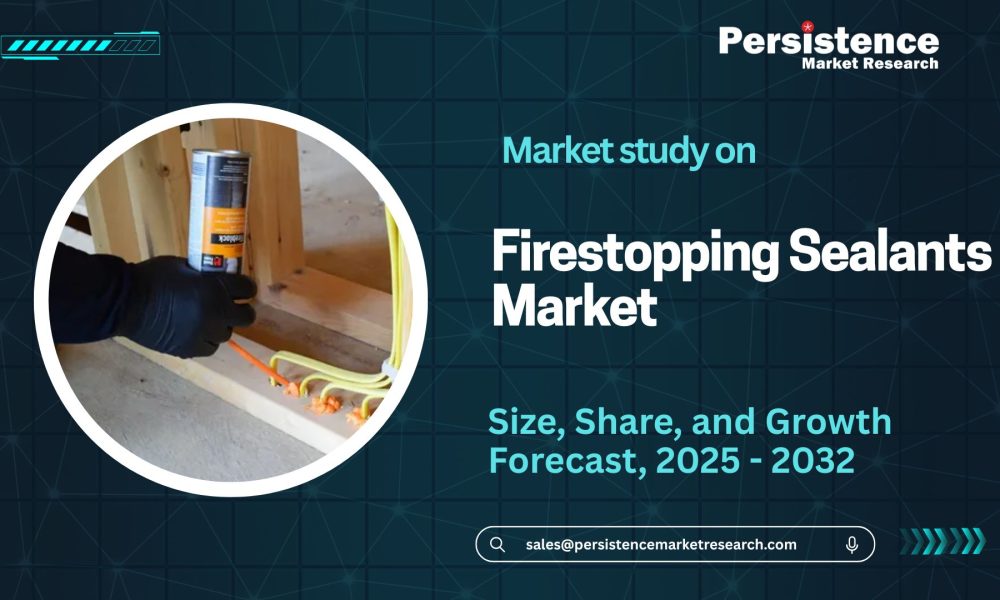
The global firestopping sealants market play a critical role in enhancing the safety and structural integrity of buildings by preventing the spread of fire and smoke through openings and joints. These sealants are essential components in passive fire protection systems, ensuring that fire-resistance-rated walls, floors, and ceilings maintain their integrity during a fire event.
Firestopping sealants are specialized materials designed to seal openings and joints in fire-resistance-rated walls, floors, and ceilings. They are formulated to expand when exposed to heat, effectively closing gaps and preventing the passage of fire and smoke. These sealants are commonly used around penetrations such as pipes, cables, and ducts, as well as in construction joints.
- Intumescent Properties: Many firestopping sealants are intumescent, meaning they expand when exposed to heat, filling gaps and preventing the spread of fire.
- Elastomeric Flexibility: Some sealants remain flexible after curing, accommodating movement in building structures without compromising their fire-resistance capabilities.
- Low Smoke Emission: High-quality sealants emit minimal smoke when exposed to fire, reducing the risk of smoke inhalation.
- Ease of Application: These sealants are designed for straightforward application, often requiring only basic tools and minimal training.
According to Persistence Market Research, the global firestopping sealants market size is projected to rise from US$ 510.6 million in 2025 to US$ 708.4 million by 2032, at a compound annual growth rate (CAGR) of 4.8% during the forecast period from 2025 to 2032.
Get a Sample Copy of Research Report (Use Corporate Mail id for Quick Response): https://www.persistencemarketresearch.com/samples/35560
This growth is driven by several factors, including:
- Stringent Fire Safety Regulations: Governments worldwide are implementing and enforcing stricter fire safety codes, necessitating the use of reliable firestopping solutions.
- Increased Construction Activities: The booming construction industry, particularly in emerging economies, is leading to a higher demand for firestopping materials.
- Technological Advancements: Innovations in sealant formulations are improving performance and ease of application.
Types of Firestopping Sealants
Firestopping sealants are available in various formulations, each suited to specific applications and environmental conditions.
Intumescent Sealants
- Description: These sealants expand when exposed to heat, forming a charred layer that seals gaps.
- Applications: Ideal for areas with high-temperature exposure, such as around pipes and ducts.
- Advantages: Provide excellent fire resistance and are suitable for dynamic joints.
Elastomeric Sealants
- Description: Remain flexible after curing, allowing them to accommodate movement in building structures.
- Applications: Suitable for areas subject to vibration or movement, like expansion joints.
- Advantages: Offer both fire resistance and flexibility, making them versatile for various applications.
Silicone-Based Sealants
- Description: Composed of silicone polymers, these sealants are known for their durability and resistance to environmental factors.
- Applications: Used in areas exposed to moisture or extreme temperatures.
- Advantages: Provide long-lasting performance and are resistant to aging and weathering.
Acrylic-Based Sealants
- Description: Water-based sealants that are easy to apply and clean.
- Applications: Suitable for interior applications where exposure to harsh conditions is minimal.
- Advantages: Cost-effective and easy to work with, though less durable than silicone-based sealants.
Applications of Firestopping Sealants
Firestopping sealants are employed in various applications to enhance fire safety in buildings.
- Penetrations
- Description: Sealing around pipes, cables, and ducts that pass through fire-resistance-rated walls and floors.
- Importance: Prevents the spread of fire and smoke through these openings.
- Construction Joints
- Description: Sealing gaps between different building elements, such as walls and floors.
- Importance: Maintains the integrity of fire-resistance-rated assemblies.
- Service Penetrations
- Description: Sealing around services like electrical conduits and HVAC systems.
- Importance: Ensures that these penetrations do not compromise the fire-resistance of the building.
Factors Driving Market Growth
Several factors are contributing to the expansion of the firestopping sealants market.
- Stringent Fire Safety Regulations
Governments and regulatory bodies are enforcing stricter fire safety codes, requiring the use of effective firestopping solutions in building construction.
- Increased Construction Activities
The growing construction industry, particularly in emerging economies, is leading to a higher demand for firestopping materials.
- Technological Advancements
Innovations in sealant formulations are improving performance and ease of application, making firestopping solutions more effective and accessible.
- Rising Awareness of Fire Safety
Increased awareness about fire safety among builders, architects, and building owners is driving the demand for reliable firestopping solutions.
Challenges in the Firestopping Sealants Market
Despite the growth prospects, the firestopping sealants market faces several challenges.
- Lack of Awareness
In some regions, there is a lack of awareness about the importance of firestopping measures, leading to non-compliance with fire safety codes.
- High Cost of Advanced Sealants
Advanced firestopping sealants, such as intumescent and elastomeric types, can be more expensive, potentially limiting their adoption in cost-sensitive projects.
- Variability in Standards
Differences in fire safety standards and regulations across regions can complicate the selection and application of firestopping sealants.
Future Outlook
The future of the firestopping sealants market looks promising, with continued growth anticipated.
- Innovation in Sealant Formulations: Ongoing research and development efforts are leading to the introduction of more effective and environmentally friendly sealant options.
- Expansion into Emerging Markets: As construction activities increase in emerging economies, the demand for firestopping sealants is expected to rise.
- Integration with Smart Building Technologies: The incorporation of firestopping solutions into smart building systems can enhance fire safety management.
Conclusion
Firestopping sealants are vital components in ensuring the safety and integrity of buildings during a fire event. With the global market projected to grow significantly in the coming years, driven by stringent fire safety regulations and increased construction activities, the demand for effective firestopping solutions is set to rise. By understanding the types, applications, and market dynamics of firestopping sealants, stakeholders can make informed decisions to enhance fire safety in their projects.




