
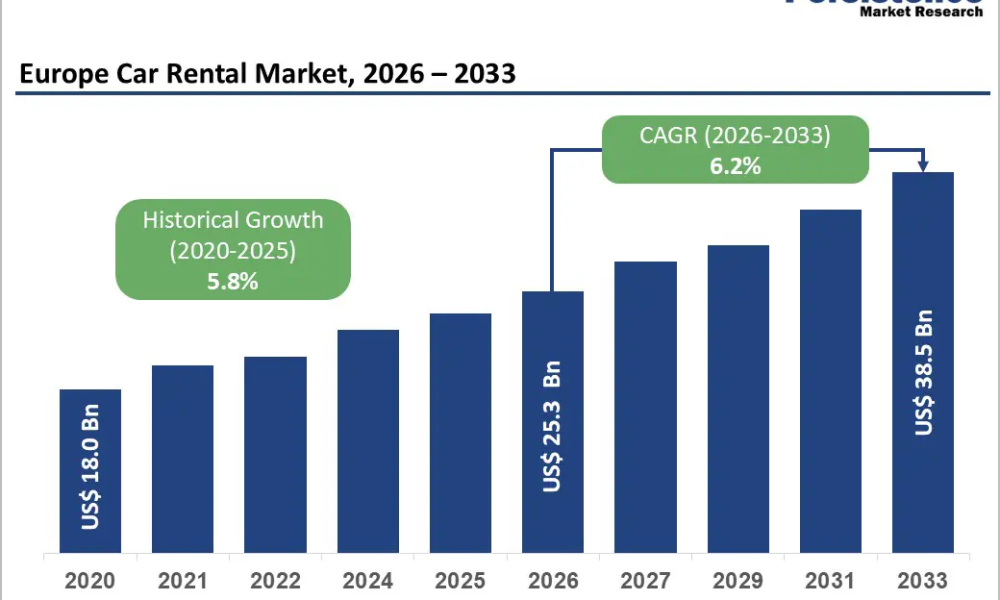
The Europe Car Rental Market is poised for significant growth in the coming years, driven by a variety of factors including rising tourism, business travel, and the increasing preference for flexible mobility solutions. According to Persistence Market Research, the market is expected to be valued at US$25.3 billion in 2026, growing to an impressive US$38.5 billion by 2033. This represents a compound annual growth rate (CAGR) of 6.2% during the forecast period from 2026 to 2033. This robust growth trajectory is propelled by the need for convenient, flexible, and sustainable transportation options for both domestic and international travelers.
Several factors are contributing to the rapid growth of the European car rental market. With Europe being one of the world’s most visited regions for both leisure and business travel, the demand for car rentals continues to rise. Travelers are increasingly opting for short-term rentals, subscription-based services, and app-based on-demand rentals, which offer greater convenience and accessibility. Additionally, the digitalization of the booking process, including online reservations and contactless rental procedures, has significantly enhanced the customer experience. Furthermore, the industry’s transition to electric and hybrid vehicles, driven by the European Union’s strict sustainability and environmental regulations, is helping to shape the future of car rentals across Europe.
Get Your FREE Sample Report Instantly Click Now: https://www.persistencemarketresearch.com/samples/34538
The key players studied in the report include:
- SIXT SE
- Europcar Mobility Group
- Hertz Holdings
- Avis Budget Group
- Enterprise Holdings
- Auto Europe
- Green Motion
- Drivalia
- OK Mobility Group
- Virtuo & Getaround
Key Highlights from the Report:
➤ The Europe Car Rental market is projected to grow from US$25.3 billion in 2026 to US$38.5 billion by 2033, at a CAGR of 6.2%.
➤ Rising tourism and business travel across Europe are key drivers of market growth.
➤ Increased demand for short-term rentals, subscription services, and on-demand rentals is contributing to market expansion.
➤ Digitalization of booking platforms is enhancing customer experience through easy online reservations and contactless rentals.
➤ The shift toward electric and hybrid vehicle fleets is being influenced by EU sustainability regulations.
➤ The growing preference for flexible and convenient mobility solutions is shaping the future of the car rental market.
Market Segmentation
By Car Type
- Economy cars
- Executive Cars
- Luxury Cars
- SUVs
- MUVs
By Power Source
- Petrol
- Diesel
- Fully Electric
- Hybrid
By Duration
- Short-Term Rental
- Long-Term Rental
Customize This Report for Your Exact Requirements: https://www.persistencemarketresearch.com/request-customization/34538
Regional Insights
Western Europe remains the dominant regional market due to its well-established tourism sector, advanced transportation infrastructure, and strong presence of leading car rental companies. Countries with high international tourist arrivals contribute significantly to rental demand, particularly in urban hubs and popular travel destinations. The region also leads in the adoption of electric and hybrid rental fleets, driven by strict emission regulations and sustainability goals.
Southern and Central Europe are experiencing increasing growth due to expanding tourism activities and improved digital rental platforms. These regions are witnessing higher demand for flexible rental solutions, especially during peak travel seasons. The integration of mobile-based booking applications and subscription services is contributing to market penetration in emerging travel destinations across Europe.
Market Drivers
The primary driver of the Europe Car Rental Market is the steady growth in tourism and business travel across the continent. Europe remains one of the world’s most visited regions, attracting millions of international and domestic travelers annually. Travelers increasingly prefer rental cars for personalized itineraries, flexible schedules, and access to remote destinations not easily reachable by public transport. Business travel, conferences, and corporate mobility needs further strengthen demand for reliable rental services.
Another key driver is the growing shift toward flexible mobility solutions. Consumers are increasingly moving away from traditional car ownership due to rising costs associated with maintenance, insurance, and parking. Subscription-based and app-driven rental services provide cost efficiency and convenience. Additionally, digital transformation has revolutionized the booking experience, allowing customers to compare prices, access real-time availability, and complete contactless rentals, thereby improving overall satisfaction and repeat usage.
Market Restraints
Despite promising growth, the Europe Car Rental Market faces certain restraints. High operational costs, including fleet maintenance, insurance, and regulatory compliance, can impact profit margins. Fluctuating fuel prices and vehicle procurement costs also influence rental pricing strategies, potentially affecting customer affordability during economic uncertainties. Intense competition among established players further pressures pricing and service differentiation.
Regulatory challenges related to emissions standards and environmental policies may also pose short-term operational burdens. While the shift toward electric and hybrid fleets presents long-term benefits, the initial investment required for fleet electrification and charging infrastructure development can be substantial. Smaller operators may face financial constraints in adapting quickly to evolving sustainability mandates.
Market Opportunities
The ongoing transition toward electric and hybrid vehicles presents a significant opportunity for market expansion. Strict EU sustainability regulations are accelerating the adoption of low-emission vehicles, encouraging rental companies to modernize their fleets. Offering eco-friendly rental options enhances brand positioning and attracts environmentally conscious travelers. This shift aligns with broader green mobility initiatives across Europe.
Digital innovation also opens new avenues for growth. Advanced booking platforms, mobile applications, and AI-powered fleet management systems enable efficient operations and improved customer engagement. The expansion of subscription-based rental models and integrated mobility solutions can attract long-term users seeking flexible transportation. As tourism continues to rebound and digital adoption deepens, the Europe Car Rental Market is well-positioned for sustained expansion.
Ready to Dive Deep? Buy Full Report Today: https://www.persistencemarketresearch.com/checkout/34538
Recent Developments:
- January 2024 – A leading car rental operator expanded its electric vehicle fleet across major European cities to strengthen its sustainability portfolio.
- September 2023 – A major rental company enhanced its mobile booking platform with advanced contactless rental features and real-time vehicle tracking capabilities.
Frequently Asked Questions
➤ What are the main factors influencing the Europe Car Rental Market growth from 2026 to 2033?
➤ Which companies are the major sources in the Europe Car Rental Market industry?
➤ What are the market’s opportunities, risks, and general structure in the Europe Car Rental Market?
➤ Which of the top Europe Car Rental Market companies compare in terms of revenue and service offerings?
➤ How are rental types and applications, revenue, and value explored in the Europe Car Rental Market?
Future Opportunities and Growth Prospects
The Europe Car Rental Market is poised for steady growth as tourism rebounds and flexible mobility gains widespread acceptance. Continued digital transformation, fleet electrification, and subscription-based rental models will shape the competitive landscape. With sustainability initiatives and customer-centric innovations at the forefront, the market is expected to maintain its upward trajectory through 2033.




