

In today’s digital age, having a robust online presence is crucial for businesses in every industry, including the pest control sector. As potential customers increasingly turn to the internet to search for pest control services, pest control companies need to have a website that stands out and effectively converts visitors into customers.
This article will explore the nine essential elements that every pest control company’s website should incorporate to maximize its online success.
1. Clear and Informative Homepage
The homepage of your pest control company’s website is often the first point of contact with potential customers. This page must deliver a clear message about your services and expertise. Use concise and compelling language to describe your pest control solutions, and include high-quality images that showcase your work.
Ensure your contact information is easily accessible, preferably at the top of the page, so visitors can quickly contact you.
2. Engaging and Educational Content
Content is king in the digital world, and for a pest control website to stand out, it must offer valuable information to visitors. Create engaging blog posts, articles, and guides on pest control topics. Discuss common pests in your area, their habits, and their risks. Share tips for prevention and highlight the importance of professional pest control services. Educational content positions you as an industry authority and improves your website’s SEO.
3. User-Friendly Navigation
A well-structured and intuitive navigation menu is essential for visitors to find the information they’re looking for easily. Organize your services, blog, contact details, and other essential pages logically. Use drop-down menus for complex services or multiple service areas to keep the navigation clean and user-friendly.
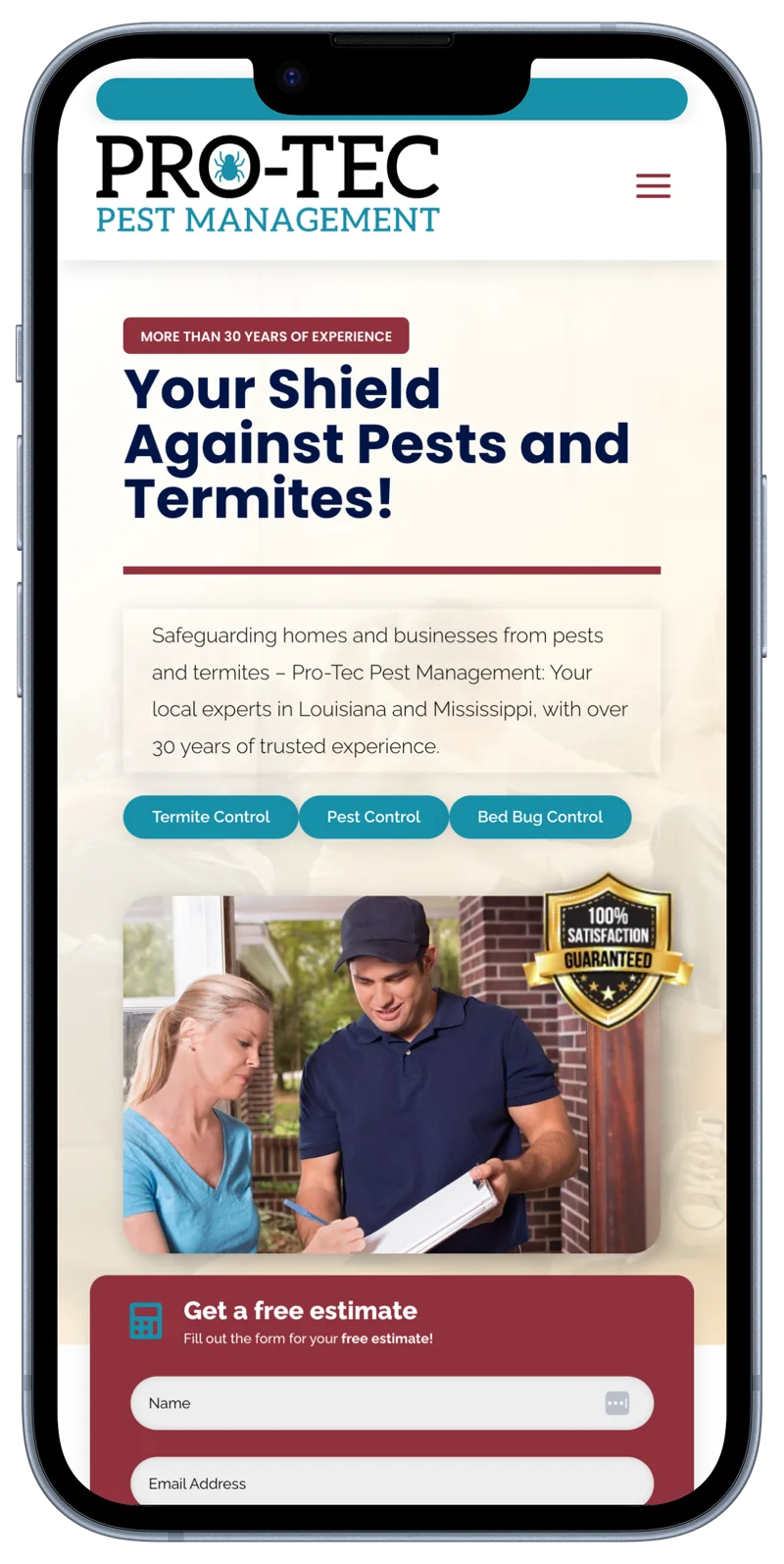
4. Mobile Responsiveness
With most internet traffic coming from mobile devices, your website must be fully responsive. A mobile-friendly website adapts seamlessly to various screen sizes, providing a consistent and enjoyable user experience. Google also prioritizes mobile-responsive sites in its search results, making it a critical element for SEO success.
5. Compelling Calls to Action (CTAs)
Consider this:
PartnerStack increased its conversion rate by 111.55% after tweaking its homepage CTA copy from “Book a Demo” to “Get Started.” CTAs are a great way to lead website visitors down the sales funnel, so don’t forget to include them on critical pages like your homepage, pricing page, and contact page.
Whether it’s a “Get a Free Quote” button, a “Schedule an Inspection” form, or a “Call Now” option, these CTAs guide visitors toward taking the desired action. Ensure they are strategically placed throughout your site, including in blog posts and service pages.
6. Testimonials and Reviews
A study by BrightLocal found that 87% of consumers read online reviews for local businesses, making testimonials and reviews crucial for building trust.
Building trust is essential in the pest control industry. Showcase your credibility and customer satisfaction by displaying testimonials and reviews from satisfied clients. Include before-and-after photos to demonstrate your successful pest control solutions visually. Honest and positive feedback goes a long way in convincing potential customers to choose your services.
7. Local SEO Optimization
46% of all Google searches have local intent, highlighting the significance of local SEO for businesses such as pest control companies.
Local search engine optimization (SEO) is paramount for a pest control company. Optimize your website for local keywords, such as “pest control in [Your City],” to ensure you appear in local search results.
Create a Google My Business profile and ensure your business details are accurate and current. Encourage satisfied customers to leave reviews on your Google My Business page, which can significantly impact your local rankings.
8. Professional Imagery and Videos
Visual content is a powerful tool for engaging website visitors. Include high-quality images and videos that showcase your team, equipment, and the results of your pest control services. Professional visuals not only enhance your website’s aesthetic appeal but also convey a sense of trust and reliability.
9. Contact Information and Accessibility
Last but certainly not least, make it as easy as possible for potential customers to contact you. Ensure your contact information is prominently displayed on every website page, including your phone number, email address, and contact form. Additionally, consider adding a chat feature for immediate customer inquiries.
In conclusion, a well-crafted website is a powerful asset for pest control companies. By incorporating these nine essential elements into your website design and content strategy, you can create a digital platform that ranks well on Google and effectively converts visitors into loyal customers.
Remember that your website is often the first impression potential customers have of your business, so investing in its quality is an investment in the future success of your pest control company.
Ready to transform your pest control business with a website that dominates the online landscape?
Trust BlakSheep Creative, the experts in pest control website design. Visit our services page to discover how BlakSheep Creative can elevate your pest control business with a website that dominates the online landscape. Let’s build a website that attracts and converts customers. Get started now by visiting our services page!