
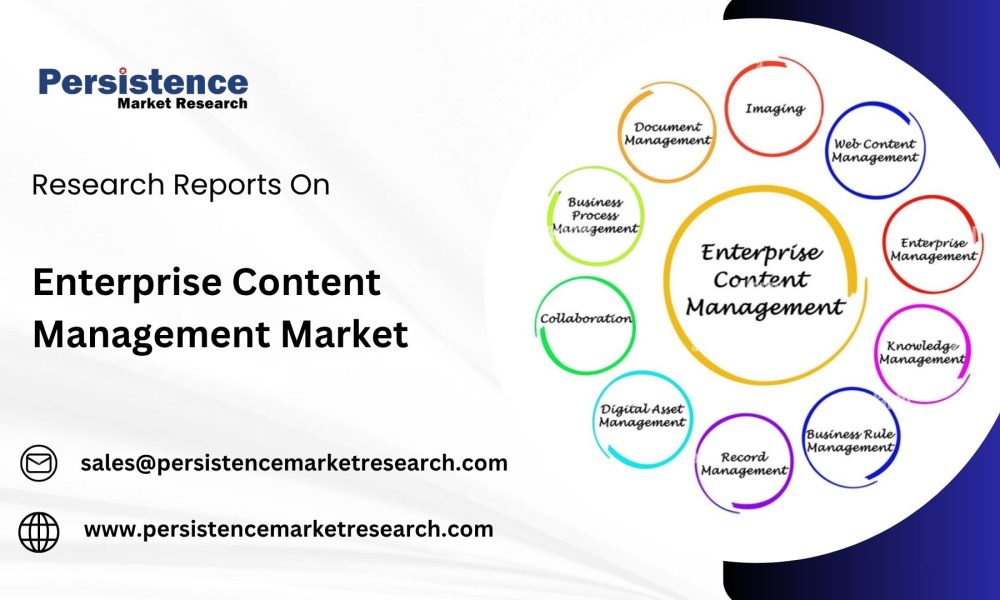
The global enterprise content management (ECM) market is undergoing a rapid transformation as businesses across industries increasingly embrace digitalization, data-driven workflows, and cloud-based solutions. According to recent projections, the ECM market is set to grow from US$25.6 billion in 2023 to US$46.5 billion by 2030, expanding at a compound annual growth rate (CAGR) of 8.9% during the forecast period. This substantial growth reflects the mounting need for organizations to effectively manage vast amounts of unstructured data, streamline business operations, and ensure regulatory compliance in an increasingly digital economy.
Understanding the Enterprise Content Management Market
Enterprise content management refers to a suite of strategies, methods, and tools used to capture, store, manage, and deliver an organization’s content and documents. It encompasses everything from document management and workflow automation to records retention, compliance, and collaboration systems.
The goal of ECM is simple yet powerful: to provide the right content to the right people at the right time. With information emerging as a critical business asset, ECM solutions play a central role in enabling businesses to gain visibility, efficiency, and control over their data — whether structured or unstructured.
In the past, ECM systems were primarily used for document archiving and retrieval. However, in today’s cloud-first and AI-driven environment, ECM has evolved into a more dynamic and intelligent framework that supports business agility, real-time collaboration, and decision-making.
Market Dynamics: What’s Fueling ECM Growth
- Rise in Digital Transformation Initiatives
The rapid acceleration of digital transformation across industries has created a massive demand for ECM platforms. Enterprises are generating and consuming data at unprecedented rates — from emails and social media interactions to IoT devices and enterprise applications. Managing this data efficiently has become essential to maintaining productivity and competitiveness.
ECM solutions enable organizations to integrate data from multiple sources, automate content workflows, and enhance operational transparency. As more businesses move toward hybrid and remote work environments, cloud-based ECM tools are becoming indispensable for enabling seamless access and collaboration.
- Growing Need for Regulatory Compliance and Data Security
In today’s data-driven world, compliance with stringent regulations such as GDPR (General Data Protection Regulation), HIPAA (Health Insurance Portability and Accountability Act), and SOX (Sarbanes-Oxley Act) has become a business imperative. ECM systems are designed to ensure that documents and records are securely stored, managed, and easily retrievable for audits or legal purposes.
By providing audit trails, user authentication, and document retention controls, ECM platforms help organizations mitigate compliance risks while improving information governance. Industries like healthcare, banking, insurance, and government are especially reliant on ECM solutions to safeguard sensitive information.
- Integration of Artificial Intelligence and Machine Learning
AI and ML technologies are revolutionizing ECM capabilities by automating repetitive tasks, enhancing content discovery, and improving decision-making. Intelligent document processing (IDP), for instance, uses AI-powered optical character recognition (OCR) and natural language processing (NLP) to automatically extract data from documents and classify them based on context.
This reduces manual effort, increases accuracy, and accelerates workflow efficiency. Moreover, AI-driven analytics can provide actionable insights into how content is used across the organization, allowing enterprises to optimize their content strategies.
- Cloud-Based ECM Solutions Transforming Enterprise Infrastructure
The shift from on-premises ECM systems to cloud-based content management platforms is one of the most significant market trends. Cloud ECM offers scalability, flexibility, and cost-efficiency — making it ideal for enterprises of all sizes. It supports remote collaboration, data accessibility from any device, and simplified software updates without heavy IT maintenance.
Leading vendors are investing heavily in cloud infrastructure to meet this growing demand. The rise of Software-as-a-Service (SaaS) and Platform-as-a-Service (PaaS) ECM models is helping organizations streamline deployment, enhance mobility, and reduce operational complexity.
Market Segmentation Overview
The global enterprise content management market can be segmented based on component, deployment model, organization size, and industry vertical.
By Component:
- Software: Document management, records management, web content management, digital asset management, and case management.
- Services: Consulting, integration, implementation, support, and maintenance.
By Deployment Model:
- On-Premises: Offers greater control and data security but requires significant infrastructure investment.
- Cloud-Based: Provides scalability, accessibility, and lower costs — gaining rapid adoption across sectors.
By Organization Size:
- Large Enterprises: Drive major demand due to complex workflows and high data volumes.
- Small & Medium Enterprises (SMEs): Increasingly adopting affordable cloud ECM solutions to improve efficiency and agility.
By Industry Vertical:
- BFSI (Banking, Financial Services, and Insurance)
- Healthcare and Life Sciences
- Government and Public Sector
- Manufacturing
- Retail and E-commerce
- IT and Telecommunications
- Education
- Legal and Professional Services
Each of these sectors utilizes ECM solutions to manage records, streamline workflows, and ensure regulatory compliance.
Elevate your business strategy with comprehensive market data. Request a sample report now: https://www.persistencemarketresearch.com/samples/33625
Regional Analysis: Global ECM Market Landscape
- North America – The Innovation Hub
North America remains the dominant region in the global ECM market, driven by the strong presence of technology giants, advanced IT infrastructure, and early adoption of digital technologies. The U.S. market is leading the charge, with companies like Microsoft, IBM, Oracle, and OpenText spearheading ECM innovation. The growing use of AI, machine learning, and hybrid cloud deployments is further enhancing the market’s growth in this region.
- Europe – Strong Focus on Data Compliance
Europe’s ECM market is witnessing robust growth, particularly due to strict data privacy regulations like GDPR. Countries such as Germany, the UK, and France are emphasizing data protection and information governance, making ECM a strategic investment for enterprises. Public sector organizations and financial institutions are major adopters of ECM in Europe.
- Asia-Pacific – Fastest-Growing Regional Market
The Asia-Pacific (APAC) region is projected to experience the highest CAGR during the forecast period. Rapid industrialization, the rise of digital startups, and expanding IT infrastructure in countries like India, China, and Japan are driving ECM adoption. Moreover, government initiatives promoting digital transformation, such as Digital India and Smart City programs, are fueling ECM deployments across industries.
- Latin America and Middle East & Africa – Emerging Opportunities
Emerging economies in Latin America and the Middle East & Africa (MEA) are increasingly adopting ECM systems to modernize legacy infrastructure and support digital business operations. Sectors like oil & gas, telecommunications, and banking are particularly investing in ECM solutions to enhance information management and operational efficiency.
Competitive Landscape: Key Players and Innovations
The global ECM market is moderately consolidated, with several major players dominating the landscape. However, competition is intensifying as new entrants and cloud-native vendors introduce innovative, flexible, and AI-powered content management platforms.
Prominent ECM Vendors Include:
- IBM Corporation
- Microsoft Corporation
- OpenText Corporation
- Oracle Corporation
- Hyland Software, Inc.
- M-Files
- Box, Inc.
- Laserfiche
- Newgen Software
- Alfresco Software (now part of Hyland)
These companies are focusing on strategic acquisitions, product innovations, and partnerships to expand their global reach. For instance, OpenText’s acquisition of Micro Focus significantly strengthened its information management portfolio, while Microsoft continues to enhance SharePoint and OneDrive with AI and cloud capabilities.
Emerging Trends Shaping the Future of ECM
- Content-as-a-Service (CaaS) Models
As enterprises seek greater flexibility, Content-as-a-Service (CaaS) is gaining popularity. This approach enables organizations to deliver structured content through APIs, allowing seamless integration across applications and devices. It supports omnichannel experiences, a key advantage for industries like e-commerce and media.
- Hybrid ECM Systems
Hybrid ECM systems that combine the best of on-premises and cloud deployments are emerging as a preferred solution for enterprises with diverse compliance and performance needs. This model ensures data sovereignty while offering scalability and collaboration capabilities.
- Mobile and Remote Accessibility
With the rise of remote work, ECM platforms are increasingly optimized for mobile access. Employees can now capture, review, and share documents securely from anywhere, improving productivity and reducing delays in decision-making.
- Automation and Intelligent Workflows
Intelligent automation is transforming ECM systems into smart content hubs. Robotic process automation (RPA), AI, and machine learning algorithms are now being integrated to automate tasks like document classification, data extraction, and workflow routing.
- Data Analytics and Insight-Driven ECM
Advanced ECM solutions are going beyond document storage — they are providing real-time analytics on content usage, user interactions, and workflow efficiency. These insights enable organizations to make informed decisions and optimize business processes.
Challenges in the ECM Market
Despite its promising growth, the ECM market faces several challenges:
- High Initial Implementation Costs: Traditional ECM systems require significant upfront investments in infrastructure and integration.
- Data Migration Complexities: Migrating legacy data to new ECM systems can be time-consuming and risky.
- User Adoption Barriers: Resistance to change and lack of employee training often hinder ECM success.
- Cybersecurity Threats: As ECM systems store sensitive data, ensuring robust security remains a top priority.
Vendors are addressing these challenges by offering flexible subscription models, intuitive user interfaces, and enhanced security features such as encryption, identity management, and zero-trust architectures.
The Road Ahead: ECM as the Backbone of the Digital Enterprise
The future of enterprise content management lies in intelligent, connected, and automated ecosystems. As organizations continue to digitize operations and embrace hybrid work environments, ECM will become the backbone for managing business-critical content.
By 2030, ECM systems are expected to be more deeply integrated with other enterprise applications such as Customer Relationship Management (CRM), Enterprise Resource Planning (ERP), and Human Capital Management (HCM) platforms — creating a unified digital workplace. Furthermore, as AI and analytics capabilities mature, ECM will evolve into a strategic tool for driving innovation, compliance, and competitive differentiation.
Conclusion
The global enterprise content management market is on a remarkable growth trajectory, expected to reach US$46.5 billion by 2030, growing at a CAGR of 8.9% from 2023 to 2030. This expansion underscores the critical role ECM plays in today’s data-driven economy — helping organizations manage vast content repositories, enhance collaboration, and ensure compliance.
As cloud computing, AI, and automation continue to reshape the digital landscape, ECM will no longer be viewed as a back-office tool but as a strategic enabler of digital transformation. Enterprises that invest early in modern, agile, and intelligent content management solutions will be best positioned to thrive in the next decade of digital business.
Related Reports:




