
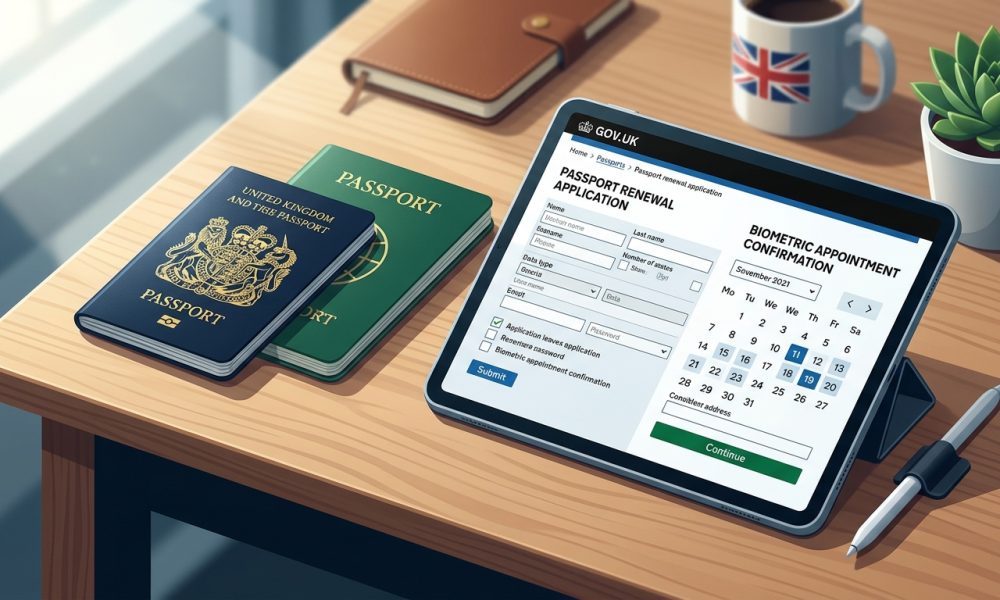
An additional nationality may offer lasting residence and mobility rights. Still, expiration dates, renewal procedures, changing personal information, and replacement delays can limit the immediate usefulness of a second passport when unexpected international travel becomes necessary.
WASHINGTON, DC, November 4, 2026 — For Americans and internationally mobile families who maintain a second nationality, passport renewal is emerging as an essential part of contingency planning because legal citizenship alone does not guarantee possession of a document acceptable for immediate international travel.
A backup passport may support relocation, family visits, employment, or a sudden change of circumstances. Still, its practical usefulness depends on expiration dates, document condition, government processing arrangements, and the destination country’s entry requirements.
Families who carefully researched ancestral citizenship or made substantial investments in mobility arrangements can still face unexpected travel disruption when a foreign passport has expired, was reported lost, or contains personal information that no longer matches other identity records.
The central planning lesson is that acquiring another citizenship and keeping its travel documents ready are separate responsibilities, each requiring accurate records, timely decisions, and an understanding of the issuing government’s procedures well before those travel options become necessary.
Nationality Can Continue After a Passport Expires
Citizenship generally does not disappear merely because the passport documenting it reaches its expiration date. Still, an expired booklet may not be accepted for airline boarding or international entry, even when the holder’s underlying nationality remains valid.
An individual whose Canadian or Irish passport has expired can retain citizenship rights. Yet, exercising those rights during an urgent journey may depend on obtaining a replacement or another form of evidence accepted by relevant authorities.
The distinction matters because legal entitlement to reside in the issuing country does not automatically satisfy the documentary requirements of commercial carriers, transit authorities, or foreign border officials checking the traveler’s current passport, even when the traveler has previously entered without difficulty.
Renewal Becomes More Relevant When Citizenship Is a Contingency
A family maintaining another nationality primarily as insurance against future uncertainty may rarely use the associated passport, increasing the risk that its expiration or changing administrative requirements go unnoticed until a journey becomes necessary, especially when other Identification receives more regular attention.
Regular document reviews can identify approaching expiration dates, unavailable original certificates, changed surnames, and inconsistent family records. At the same time, you still have enough time to obtain official corrections without disrupting urgent travel plans or facing deadlines that create unnecessary logistical and financial pressure.
The objective is not to predict an emergency but to preserve genuinely available options, because a contingency arrangement cannot deliver the expected convenience when essential government documents remain missing or unusable, precisely when flexibility matters to the household.
Canadian Renewal Expanded Online During 2026
A July 28, 2026, Canadian Press report on expanded online passport renewals described Canada’s removal of daily application limits for eligible adult renewals, allowing qualifying residents to begin applications without waiting for a limited online opening.
The report explained that applicants still needed professionally prepared passport photographs and had to satisfy conditions involving their existing documents and Canadian address, illustrating why digital convenience does not eliminate administrative eligibility rules, even though the service reduces administrative inconvenience.
Canada’s expansion provides a useful example of modernized passport services. Still, citizens living abroad or renewing children’s documents may need different processes from the adult online option available to eligible applicants within Canada, particularly for households spanning multiple countries and generations.
Online Service Is Not Universal for Canadian Citizens
Canadian online renewal procedures generally apply to eligible adults applying from within Canada, so citizens residing overseas should consult instructions for the appropriate embassy, consulate, or overseas application channel before assuming the domestic online service applies; overseas renewals may require consular coordination instead.
Canada also distinguishes renewal of qualifying adult passports from applications for children, since children’s passports cannot simply be renewed using the adult simplified procedure and generally require a new application when they expire, according to the relevant rules for younger applicants.
Family members with the same citizenship may therefore face different submission procedures, especially when an adult lives abroad. At the same time, dependent children need new photographs, proof of parentage, or additional consent documentation, especially when several relatives live in different countries.
American Online Renewal Has Separate Eligibility Conditions
The U.S. Department of State’s official online passport renewal guidance specifies that qualifying applicants generally must be at least twenty-five, possess an eligible ten-year passport, and apply while physically located in a United States state or territory.
The program also requires routine processing, with no international travel planned for at least six weeks, and excludes applications involving certain changes to personal information, showing why online submission is not appropriate for every traveler, especially when travel dates are approaching quickly.
Crucially, the existing passport is canceled or invalidated during online renewal, so a person should not assume the old document remains valid for international travel merely because the physical booklet is still in their possession, even if the applicant owns another valid passport.
Application Timing Includes Delivery and Verification
Processing estimates describe only part of the renewal experience, because mailing, appointment availability, document corrections, and transporting a completed passport can add time beyond the government’s published review period, especially when overseas delivery or postal services are unpredictable.
For Americans planning to depart within weeks, official passport services distinguish routine processing from expedited or urgent arrangements, and applicants should confirm eligibility directly rather than assume it from an advertisement, since changing circumstances may affect available options.
A sensible approach is to review renewal timelines well before committing to nonrefundable travel, especially when several family members need new documents issued by different governments or consular offices, and when family travel coincides with school vacation schedules.
Passport Validity Rules Can Begin Before Expiration
Some destinations require foreign visitors to hold passports valid for several months beyond intended arrival or departure, meaning a booklet nearing expiration may become unsuitable well before its printed date, particularly for trips involving multiple international border crossings.
These requirements differ by country, traveler nationality, visa category, and transit arrangements, so families should review the rules for their specific itinerary rather than rely on a universal six-month assumption, and confirm any additional restrictions before purchasing tickets.
A second passport creates another set of validity dates to monitor, and travelers should confirm which nationality’s document applies to each journey without assuming that switching passports eliminates applicable entry conditions, particularly when multiple immigration authorities will inspect documentation.
Dual Citizens Must Follow Their Countries’ Passport Rules
American dual nationals generally must use United States passports when entering and departing the United States. At the same time, another country may require its own citizens to use domestic travel documents or establish nationality through prescribed evidence, making advance coordination essential for complex international journeys.
These obligations can affect complete itineraries rather than a single border crossing, particularly when a person lives in one country, holds another citizenship, and plans to travel through several intermediate destinations, especially if the traveler has recently changed nationality.
Renewal planning should therefore consider both passports, ensuring the departure document remains valid and the second nationality can be demonstrated where its legal rights matter, especially when travel documentation has recently been renewed.
Name Changes May Prevent Simple Renewal
A legal name change after marriage, divorce, adoption, or court proceedings can complicate passport renewal when the document no longer matches current Identification, airline reservations, or other supporting civil records, particularly when official identity updates have not followed.
Some governments permit simplified changes in particular circumstances. In contrast, others require a different application category and documentary proof, making official instructions more reliable than assumptions based on a previous ordinary renewal, even when the previous passport was accepted elsewhere.
Families should coordinate legitimate updates across passports and related records, because holding authentic documents with different names can create avoidable questions even when each document was validly issued earlier, and can cause needless uncertainty during subsequent identity checks.
Lost or Stolen Passports Require Prompt Official Action
A passport reported lost or stolen may become invalid for travel even if its owner later finds it, meaning a physically intact booklet may not be returned to normal use, depending on the formal cancellation rules that apply.
Replacement procedures may involve official reports, new photographs, Identification evidence, and additional review. At the same time, emergency documents issued abroad can have restricted validity or limited acceptance for onward journeys, especially when the traveler must return home urgently.
Families preserving backup citizenship options should store accurate records of their documents securely and contact the issuing authority when a document is lost, rather than relying on informal assurances that an old passport remains usable, before committing to nonrefundable international family travel.
Children Need Different Document Maintenance
Children’s passports often have shorter validity periods than adult documents, and renewal procedures can require parental consent, evidence of legal guardianship, or in-person attendance, depending on the issuing country and the child’s age; sometimes both parents must provide evidence.
A parent whose own passport remains valid for several years may therefore discover that a child’s document has already expired, especially when a family rarely travels internationally and does not routinely review every passport, while renewal requirements differ across the family’s nationalities.
Families should also confirm whether birth registrations or citizenship certificates are needed for first-time passports, since a child’s inherited nationality does not automatically produce the government travel document required for international departure, particularly when travel is contemplated in the near future.
Citizenship by Descent May Require Recognition First
People who believe they possess Canadian, Irish, or another foreign citizenship through ancestry should distinguish proof of nationality from passport renewal, particularly when no passport has previously been issued under that nationality, because first-time recognition can require extensive documentary examination.
Some descendants may already be citizens under applicable law but require an official certificate or registration before submitting a first passport application, a process substantially different from renewing a previously issued document, particularly when several relatives apply across generations.
Historical birth certificates and parental records can support recognition. Still, processing uncertainty means newly discovered citizenship should not be treated as an immediately available emergency passport until the responsible government has completed the required steps, before relying on those rights for urgent relocation.
A Second Passport Does Not Guarantee Another Country’s Admission
Another nationality can provide residence and entry rights within its issuing country. Still, visa-free travel elsewhere remains subject to applicable conditions, diplomatic arrangements, and decisions by foreign immigration authorities, so destination-specific verification matters before each departure.
A valid passport also cannot remove professional licensing requirements, automatically establish foreign tax residence, or guarantee that an accompanying spouse and adult children possess identical immigration rights in the intended destination, especially when the family expects to relocate together.
The most effective relocation plan therefore combines maintained travel documents with lawful residence arrangements, family eligibility reviews, available funds, and realistic preparation for the country’s housing and healthcare systems, so legal permissions and financial arrangements align beforehand.
Biometric Chip Checks Have a Narrower Purpose
Modern biometric passports contain electronic information and cryptographic protections that compatible readers may examine, helping users identify certain technical issues but not independently establishing the booklet’s current administrative status or continuing travel validity, particularly when a document has been reported missing.
Amicus International Consulting explains that distinction in its guide on how to scan a passport’s NFC chip and understand the results, which describes why reading chip information differs from authenticating electronic data and confirming permission to travel, even though that distinction matters during airport inspections.
A passport can pass a technical authenticity check while expired, canceled, or otherwise unsuitable for use, so renewal and replacement questions must ultimately be resolved with the responsible issuing authority rather than relying on a smartphone reader alone.
Emergency Readiness Involves More Than Document Storage
Families planning sudden international travel should establish who holds each passport, how to access replacement records, and which official contacts to use when a document is damaged or unavailable, especially if the issuing government has changed its procedures.
Secure copies can help organize information for replacement applications. Still, photocopies or digital images generally cannot replace a valid passport at an international border just because they show an authentic document’s details, especially where multiple carriers will examine travel credentials.
The practical benefit of this preparation is continuity, allowing a family to distinguish documents ready for use from those needing renewal, official recognition, or additional visa and residence authorization when unexpected departures become necessary.
The Value of Backup Citizenship Depends on Usable Documentation
Another citizenship may preserve important rights over a lifetime. Still, its immediate mobility value depends on having acceptable evidence when you plan a journey, not on discovering an expired document at check-in, especially during periods of unusual travel disruption.
Regular renewal reviews, accurate identity records, and attention to each government’s administrative requirements can help preserve those options while avoiding unsupported claims that dual nationality guarantees unrestricted international travel, especially when destinations enforce their own document validity conditions.
Ultimately, passport renewal becomes part of backup citizenship planning because nationality creates legal possibilities, while valid documents and realistic preparation determine whether a family can exercise those possibilities when they need them or when destination conditions change unexpectedly.




