
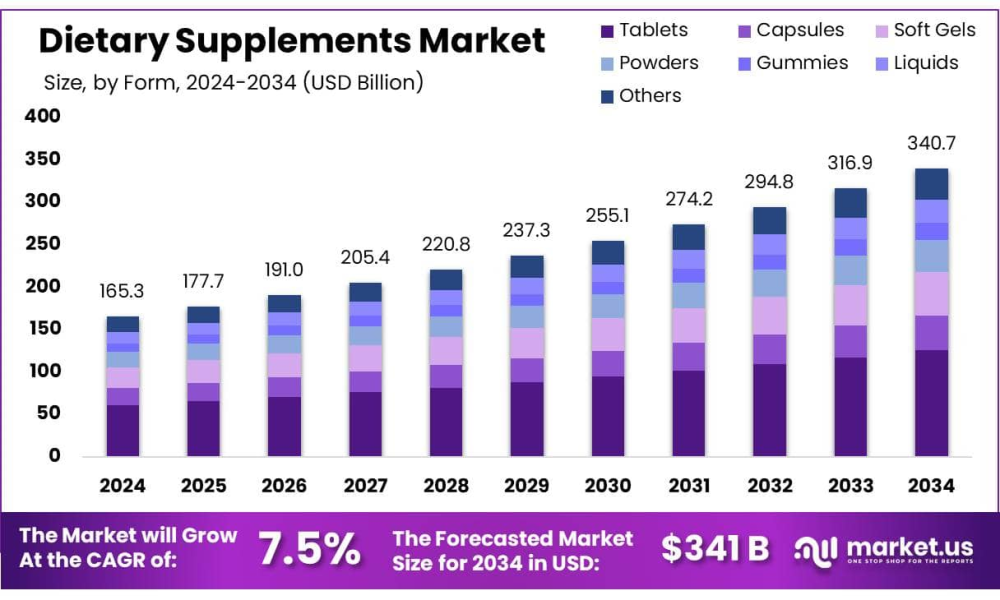
New York, NY – July 02, 2025 – The Global Dietary Supplements Market is growing fast, driven by increasing health awareness and demand for wellness products. In 2024, the market was valued at USD 165.3 billion and is expected to reach USD 340.7 billion by 2034, growing at a 7.5% CAGR from 2025 to 2034.
People are turning to supplements for better nutrition, immunity, and fitness, boosting market demand. Key growth factors include rising chronic diseases, aging populations, and a shift toward preventive healthcare. Vitamins, minerals, and protein supplements are especially popular, with sports nutrition and herbal products gaining traction.
The market is expanding due to e-commerce growth, making supplements more accessible, and innovations like personalized nutrition. North America leads the market, but Asia-Pacific shows high potential due to rising disposable incomes and health trends. Opportunities lie in plant-based supplements, probiotics, and clean-label products. With more people focusing on health and wellness, the dietary supplements market is set for strong growth, offering brands a chance to expand into new regions and product categories.
Important Revelation
- Dietary Supplements market size is expected to be worth around USD 340.7 billion by 2034, from USD 165.3 billion in 2024, growing at a CAGR of 7.5%
- Vitamins held a dominant market position in the Dietary Supplements sector, capturing more than a 38.40% share.
- Tablets held a dominant market position in the Dietary Supplements sector, capturing more than a 37.50% share.
- Supermarkets and Hypermarkets held a dominant market position in the Dietary Supplements sector, capturing more than a 48.30% share.
- Energy & Weight Management held a dominant market position in the Dietary Supplements market sector, capturing more than a 33.50% share.
- Adults held a dominant market position in the Dietary Supplements market sector, capturing more than a 47.30% share.
- Multivitamins are the most commonly used dietary supplements in the US, with over 50% of adults reporting their use.
➤ Download Exclusive Sample Of This Premium Report (Including Full TOC, Table & Figures): https://market.us/report/dietary-supplements-market/request-sample/
Report Segmentation
Type Analysis
- In 2024, vitamins commanded the largest share of the dietary supplements market, holding over 38.4% of the sector. Their dominance stems from their critical role in supporting overall health, boosting immunity, and preventing chronic diseases. Heightened health awareness, amplified by the global health crisis, has driven demand for vitamin supplements as consumers prioritize proactive wellness.
- Botanicals maintain a strong presence, valued for their natural origins and perceived safety compared to synthetic alternatives. Proteins & Amino Acids are a growing segment, particularly among fitness enthusiasts, supporting muscle repair and growth amid rising fitness trends. Fibers & Specialty Carbohydrates and Omega Fatty Acids are gaining traction for their benefits in digestive and heart health, respectively, backed by research on gut health and cardiovascular wellness. Prebiotics & Probiotics are increasingly popular due to their role in enhancing gut health, immunity, and mental well-being, driven by growing awareness of the gut-brain connection.
Form Analysis
- Tablets led the dietary supplements market in 2024 with a 37.5% share, favored for their convenience, precise dosing, and long shelf life. Their cost-effectiveness appeals to a broad consumer base. Capsules hold a significant share, valued for masking unpleasant tastes and protecting oil-based supplements like fish oil from oxidation.
- Soft Gels are growing steadily due to their ease of swallowing and faster absorption, particularly for oil-based vitamins like D and E. Powders appeal to fitness enthusiasts for their dosing flexibility, ideal for protein shakes and smoothies. Gummies are surging among younger consumers and those avoiding pills, combining nutrition with a palatable, chewable format. Liquids are preferred for fast absorption and ease of use, especially for children and those who struggle with solid supplements.
Distribution Channel Analysis
- In 2024, supermarkets and hypermarkets captured a 48.3% market share, driven by their convenience, wide product range, and competitive pricing. Consumers appreciate the ability to compare brands while shopping for daily essentials. Online Platforms are rapidly growing, fueled by e-commerce convenience and access to a broader product selection through marketplaces like Amazon and specialized health stores. Pharmacies and Specialty Stores remain vital, offering trusted brands and expert advice for health-conscious consumers. Direct Sales and Multi-Level Marketing play a smaller but relevant role, particularly for niche brands.
Application Analysis
- In 2024, energy and weight management supplements held a 33.5% share, driven by consumer focus on active lifestyles and combating obesity. General Health supplements are also significant, addressing nutritional gaps as preventive healthcare gains traction. Bone & Joint Health, Immunity, and Cardiac Health segments are growing steadily, fueled by an aging population and post-pandemic health consciousness.
End-Use Analysis
- Adults accounted for 47.3% of the market in 2024, driven by a focus on preventive health, fitness, and immunity. Multivitamins, minerals, and proteins are popular for addressing nutritional gaps and stress. The Geriatric segment is growing due to demand for supplements supporting bone, heart, and cognitive health. Pregnant Women represent a key segment, with prenatal vitamins and minerals critical for maternal and fetal health.
Market Key Segmentation
By Type
- Vitamins
- Botanicals
- Minerals
- Proteins & Amino Acids
- Fibers & Specialty Carbohydrates
- Omega Fatty Acids
- Prebiotics & Probiotics
- Others
By Form
- Tablets
- Capsules
- Soft Gels
- Powders
- Gummies
- Liquids
- Others
By Distribution Channel
- Supermarkets/ Hypermarkets
- Pharmacies
- Specialty Stores
- Online Platforms
- Others
By Gender
- Women
- Men
By Application
- Energy & Weight Management
- General Health
- Bone & Joint Health
- Gastrointestinal Health
- Immunity
- Cardiac Health
- Diabetes
- Anti-cancer
- Others
By End-user
- Adults
- Geriatric
- Pregnant Women
- Children
- Infants
Regional Analysis
North America Leads, Asia Pacific Grows Fastest
North America holds a 35.40% share of the global dietary supplements market, valued at USD 58.5 billion, driven by high consumer awareness, personalized nutrition, and a strong regulatory framework in the U.S. Europe follows, with Germany, the UK, and France leading due to strict EFSA regulations and demand for botanicals and probiotics.
Asia Pacific is the fastest-growing region, fueled by rising incomes and urbanization in China, Japan, and India, with China excelling in herbal supplements. The Middle East & Africa see steady growth, particularly in Gulf countries, while Latin America, led by Brazil and Mexico, grows due to fitness trends and natural supplement preferences. North America remains dominant, but Asia Pacific shows the highest growth potential.
Factors Affecting the Growth of the Dietary Supplements Market
- Rising Health Awareness: Growing consumer focus on wellness and preventive healthcare drives demand for the dietary supplements market. People are more aware of nutritional gaps and seek vitamins, minerals, and probiotics to boost immunity, energy, and overall health, especially post-pandemic, as they aim to maintain a balanced lifestyle.
- Aging Population: The increasing number of older adults globally fuels demand for supplements targeting bone health, cognitive function, and immunity. Geriatric consumers prioritize products like calcium, vitamin D, and omega-3s to address age-related health issues and maintain quality of life.
- Fitness and Sports Trends: Rising interest in fitness and bodybuilding boosts demand for proteins, amino acids, and sports nutrition supplements. Athletes and gym-goers use these products to enhance performance, muscle recovery, and endurance, driving market growth among younger, active demographics.
- E-commerce Growth: Online platforms make supplements more accessible, offering convenience, variety, and home delivery. The rise of e-commerce, including marketplaces and specialized health stores, expands market reach, especially in regions with increasing internet penetration and mobile shopping trends.
- Personalized Nutrition: Advances in nutrigenomics and digital health tools enable tailored supplement solutions based on individual needs, genetics, and lifestyles. Customized vitamin packs and subscription services appeal to consumers seeking effective, personalized health solutions, boosting market innovation.
Competitive Landscape
- Amway Corporation
- Abbott Laboratories
- Nestlé S.A.
- ADM
- Pfizer Inc.
- Herbalife International of America, Inc.
- Nu Skin Enterprises, Inc.
- Nature’s Sunshine Products, Inc.
- Bayer AG
- Glanbia PLC
- Sabinsa Corporation
- Sanofi S.A.
- NOW Foods
- Procter & Gamble
- Koninklijke DSM N.V.
- Other Key Players
Get in Touch with Us:
Market.us (Powered By Prudour Pvt. Ltd.)
Address: 420 Lexington Avenue, Suite 300, New York City, NY 10170, United States
Send Email: [email protected]
Refer More Related Reports:
Drillship Market
Packaged Substation Market
Plant Based Collagen Market



