
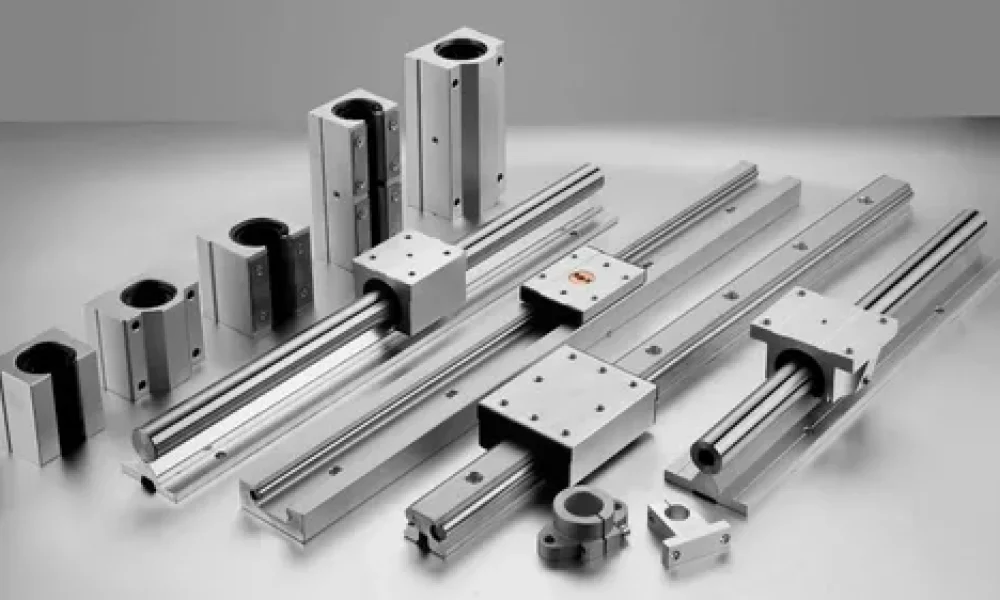
The global railway sliding bearing industry is expected to experience steady growth, with a projected CAGR of 6.4% over the forecast period. The market’s value is anticipated to rise from USD 1,061.1 million in 2022 to approximately USD 1,973.2 million by 2033, reflecting the increasing demand for reliable and durable rail components.
The Railway Sliding Bearing Market is expected to witness significant growth as rail operators and manufacturers prioritize durability, efficiency, and reliability in train components. Sliding bearings, which play a crucial role in reducing friction between moving parts, are essential for the smooth and efficient operation of various railway systems, including high-speed trains, metro systems, and freight rail.
The push for more efficient rail transport, combined with the need for minimal maintenance and longer component lifespan, is driving innovations in sliding bearing materials and designs. Key industry players are investing in advanced materials, such as self-lubricating and high-resilience composites, that enhance performance while reducing the maintenance requirements for rail operators. Additionally, as governments continue to modernize and expand rail infrastructure to meet sustainable transportation goals, demand for durable and high-quality sliding bearings is anticipated to grow.
Get Ahead with Our Report: Request Your Sample Now!
Key Takeaways:
- Demand for High-Performance Materials: Rising requirements for sliding bearings that can withstand extreme loads and environmental conditions are leading to the adoption of advanced materials, such as self-lubricating and composite-based options.
- Focus on Durability and Reduced Maintenance: The need for reliable rail systems with lower maintenance demands is driving innovations in sliding bearing design, making them more resilient and longer-lasting.
- Support for Rail Modernization Initiatives: Government investments in rail modernization, including high-speed and metro networks, are contributing to the increased demand for durable sliding bearings to support infrastructure expansion.
- Enhanced Safety and Efficiency: Sliding bearings improve the operational safety and efficiency of rail vehicles by minimizing friction and wear, ensuring a smoother and safer ride.
- Growth Opportunities in Emerging Markets: Developing regions with expanding rail networks present substantial growth opportunities, as demand for efficient rail components rises alongside infrastructure investments.
Category-wise Insights
Among the Different Types of Bearing, the Thrust Bearing is anticipated to overtake the Radial Type Sliding Bearing Segment Soon
Several components and subsystems, including steering systems, engines, axles, stabilizers, shock absorbers, and doors, still use radial sliding bearings. So, plain radial bearings constituted the largest portion of the market, as per the FMI insights. During the upcoming years, the need for radial railway sliding bearings would be significantly affected by the growing demand for metro or light trains, as well as high-speed trains.
However, thrust-type bearings are getting more popular nowadays because of their numerous benefits. Their ability to handle large radial and axial loads, besides lubrication-free design, makes them superior to the former. Moreover, its durability for a longer lifespan and abrasion resistance has made it an affordable choice for many of its end users.
Bogie Application Segment for Sliding Bearings is Anticipated to be the Largest Throughout the Forecast Period.
Based on the application of the railway sliding bearings, the market is currently being led by the Bogie category, with up to 50% of the revenue share. A typical bogie contains 10 -12 sliding bearing units in total that are expected to retain the dominance of this segment in the future. Several parts, including a wheel assembly, stabilizer, bolster supports, absorbers, swing links, and tilting mechanisms, are used in a railway bogie.
According to estimates, from 2023 to 2033, the market for sliding bearings would be dominated by metallic-type bearings against non-metal materials. Since metallic sliding bearings can endure high loads and temperatures, they are predicted to remain the proffered choice for end users. Furthermore. as its utilization in high-stakes applications is irreplaceable, it would lead the railway sliding bearing industry over the projected period. Some external parts like wheel sets and internal engine parts such as the crankshaft, camshaft, and valves are expected to retain their dominance.
Key Players Profiled in the Railway Sliding Bearing Market Report
- NSK Ltd.
- The Timken Company
- JTEKT Corporation
- MinebeaMitsumi Inc.
- Fujian Longxi Bearing Company Limited
- RBC Bearings Incorporated
- Saint-Gobain Performance Plastics Pampus GmbH
- GGB Bearing
- National Engineering Industries Limited
- Amsted Rail Company
- NTN Corporation
- Schaeffler Group
- SKF AB
- Canam Group Inc.
Explore Now: How Automotive Technologies Are Shaping Tomorrow’s
Key Segmentations
By Bearing Type:
- Linear bearing
- Thrust bearing
- Radial bearing
- Angular contact bearing
- Other bearings
By Material:
- Metallic
- Non-metallic
By Application:
- Engine
- Brakes
- Bogie
- Interior
- Exterior
By Railway Type:
- Locomotive
- Diesel Multiple Unit (DMU)
- Electric Multiple Unit (EMU)
- Coach
- Wagon
- Light and Metro rail
- High-speed train
- Others
By Region:
- North America
- Latin America
- Europe
- East Asia
- South Asia and Pacific
- Middle East and Africa (MEA)




