
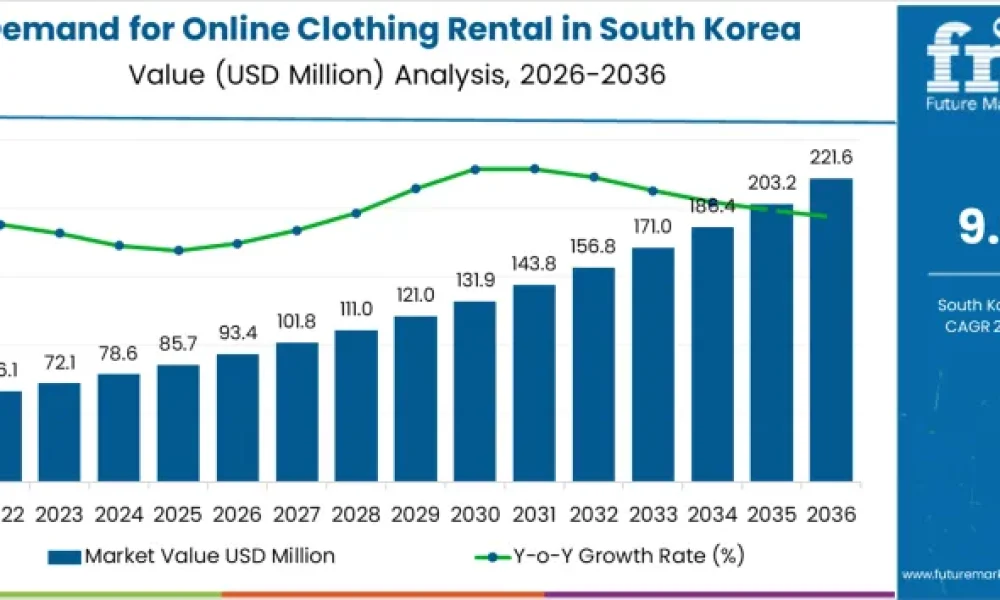
The online clothing rental market in South Korea is entering a transformative growth phase, driven by changing consumer attitudes toward ownership, sustainability, and digital convenience. According to the latest industry outlook, demand for online clothing rental in South Korea is projected to rise from USD 93.4 million in 2026 to USD 221.6 million by 2036, expanding at a robust CAGR of 9%. This rapid growth positions the sector as a strategic opportunity for both established fashion manufacturers and emerging rental-focused innovators looking to expand their footprint through new technologies and circular business models.
As sustainability becomes a defining factor in consumer decision-making, online clothing rental is evolving from a niche service into a core component of South Korea’s fashion and e-commerce ecosystem. Rental platforms are reshaping how apparel is produced, distributed, and consumed—unlocking new revenue streams for manufacturers while reducing textile waste and inventory risk.
Explore the full market insights and exclusive data breakdowns – Request Your Sample Report Now
Market Growth Outlook: A Decade of Accelerated Expansion
The online clothing rental market in South Korea is forecast to demonstrate steady year-on-year growth throughout the 2026–2036 period. Starting at USD 93.4 million in 2026, the industry is expected to cross USD 143.8 million by 2031 and surpass USD 200 million by 2035, ultimately reaching USD 221.6 million in 2036.
This expansion reflects a broader shift toward the sharing economy, with consumers prioritizing access over ownership—especially for occasion wear, premium fashion, and seasonal clothing. For manufacturers, this creates long-term demand for garments designed for durability, repeated use, and efficient lifecycle management.
Why Demand for Online Clothing Rental Is Rising in South Korea
Several structural and behavioral factors are driving demand:
- Urban lifestyle changes and limited living space encourage wardrobe flexibility
- Cost-efficient access to premium and designer apparel
- High smartphone and e-commerce penetration, enabling seamless rental journeys
- Growing sustainability awareness, particularly among younger demographics
- Data-driven inventory management, improving garment utilization rates
For apparel manufacturers and suppliers, rental platforms offer valuable demand insights, enabling smarter production planning and reduced overstock.
Opportunities for Established and New Manufacturers
The growth of online clothing rental in South Korea is not limited to platform operators—it also opens new doors for fashion manufacturers, textile suppliers, and technology providers:
- Established brands can extend product lifecycles through rental-optimized collections
- New manufacturers can enter the market with garments designed specifically for high-rotation rental use
- Technology innovators can scale solutions in AI-based personalization, RFID tracking, and smart inventory systems
- Logistics and garment care providers benefit from rising volumes of reverse logistics and cleaning demand
Manufacturers that align product design with rental durability standards are well-positioned to form long-term partnerships with rental platforms.
Key Segments of the Online Clothing Rental Market in South Korea
By Product Type
- Ethnic Wear (Leading segment – 31%)
- Knitwear
- Trousers & Jeans
- Jumpsuits
- Coats & Jackets
- Performance Wear
- Other Apparel Categories
By End User
- Business-to-Business (B2B) – 94.1% market share
- Business-to-Consumer (B2C)
By Province
- South Gyeongsang
- North Jeolla
- South Jeolla
- Jej
Product Type Trends Shaping Market Demand
Ethnic wear leads the online clothing rental market due to its high cost, occasional usage, and cultural significance. Rental models allow consumers and businesses to access premium ethnic garments without long-term ownership.
Knitwear and everyday apparel are gaining momentum as casual dressing becomes mainstream. Meanwhile, coats, jackets, and jumpsuits remain popular for both professional and social occasions.
Performance wear, though currently smaller in share, is emerging as a growth segment as consumers seek short-term access to specialized apparel for fitness, travel, and outdoor activities.
B2B Dominance Creates Scale for Manufacturers
The B2B segment accounts for 94.1% of total demand, driven by fashion retailers, event organizers, production houses, and corporate clients. These organizations rely on rental platforms for large-volume, short-term apparel needs—creating consistent demand cycles.
For manufacturers, B2B rental demand supports bulk production, predictable replenishment schedules, and long-term supply contracts, making it a stable revenue channel compared to traditional retail.
Regional Growth Highlights: Jeju Leads the Way
Regional analysis shows Jeju as the fastest-growing province, with a projected CAGR of 10.8%, supported by tourism and eco-conscious consumers.
- South Gyeongsang (9.5%) benefits from rising digital adoption
- South Jeolla (8.6%) shows steady growth tied to sustainable fashion awareness
- North Jeolla (7.2%) represents an emerging opportunity driven by younger consumers
Localized strategies and region-specific collections are becoming key success factors for rental companies and suppliers alike.
Competitive Landscape: Innovation Meets Scale
The South Korean online clothing rental market features a mix of global leaders and specialized innovators, including:
- Rent the Runway – subscription-driven, tech-enabled inventory management
- H&M (H&M Rental) – integrating rental into omnichannel retail strategies
- MyWardrobeHQ – luxury-focused, designer-led rental offerings
- Le Tote – flexible plans supported by styling personalization
- GlamCorner – formal and occasion wear with strong logistics standards
These players are investing in AI-powered personalization, garment tracking technologies, and sustainability-focused operations, setting new benchmarks for the industry.
Outlook: A Defining Decade for Fashion Rental in South Korea
As consumer acceptance of rental fashion accelerates, the online clothing rental market in South Korea is set to become a critical growth engine for the fashion industry. Manufacturers that embrace circular production models, collaborate on rental-exclusive designs, and integrate digital supply-chain technologies will be best positioned to capitalize on this momentum.
With strong fundamentals, rising regional adoption, and continuous innovation among leading players, the market presents compelling expansion opportunities for both established brands and new entrants shaping the future of sustainable fashion.
Have a specific Requirements and Need Assistant on Report Pricing or Limited Budget please contact us – [email protected]
About Future Market Insights (FMI)
Future Market Insights, Inc. (FMI) is an ESOMAR-certified, ISO 9001:2015 market research and consulting organization, trusted by Fortune 500 clients and global enterprises. With operations in the U.S., UK, India, and Dubai, FMI provides data-backed insights and strategic intelligence across 30+ industries and 1200 markets worldwide
Why Choose FMI: https://www.futuremarketinsights.com/why-fmi



